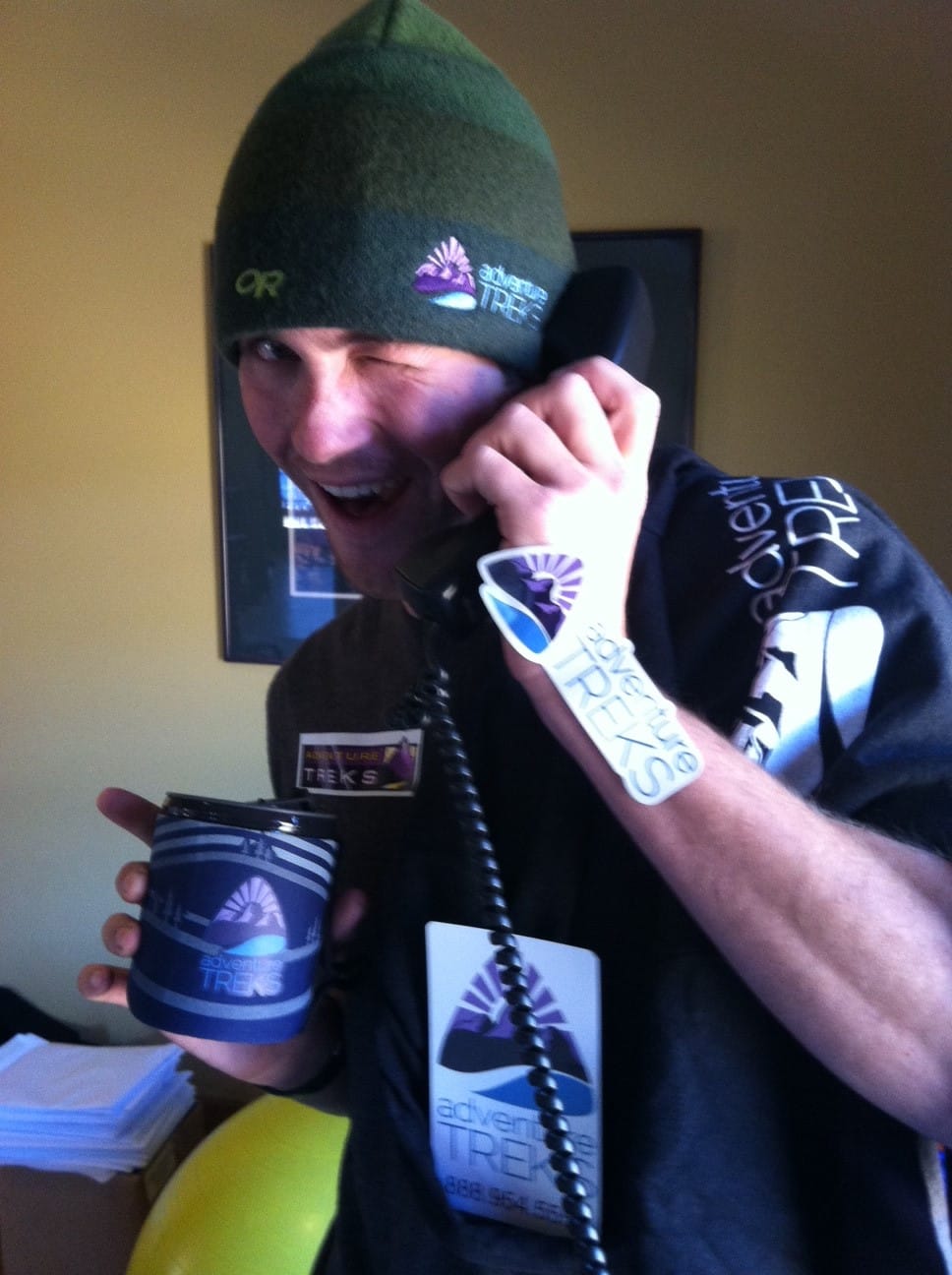
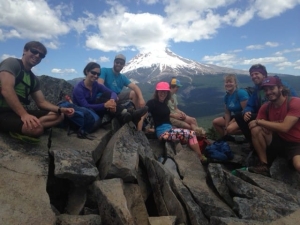
Trip leaders taking a break for some fun outside!

Trip leaders taking a break for some fun outside!

Every year, Adventure Treks kicks off the summer with our five-day Trip Leader Retreat in Oregon, where our leadership team gathers in a cabin near Mt. Hood, next to the Salmon River, for senior staff training.

Our 14 trip leaders and four regional directors hail from 11 states, average 29.5 years old, and have 129 collective years of Adventure Treks experience, with an average of 7.3 seasons of AT experience each. (Two were former Adventure Treks students!) I’m proud to be a part of this group of mentors who will be training our new instructors and overseeing the success of our trips. As an Adventure Treks parent myself, I’m also thrilled to have these role models interacting with and inspiring my own kids!
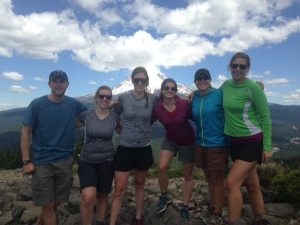
The other half of our awesome trip leader team.

The other half of our awesome trip leader team.

So what do we do at Trip Leader Retreat? Besides forming our leadership team community, we apply leadership theory and current child psychology and brain theory to Adventure Treks. We also learn and relearn the specific details of each trip itinerary, and we use this time to review safety and the policies and procedures that lead to successful trips. Together, we share the tips and tricks we’ve gleaned as we work hard to make every trip exceptional.
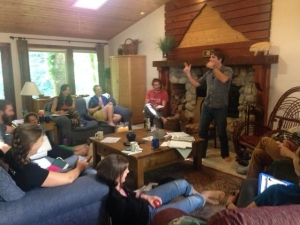
DMAC loves talking to our trip leaders!

DMAC loves talking to our trip leaders!

As we prepared for our all-staff orientation that began June 9, I wanted to share what we have been reading this winter. It’s our job to stay on top of the latest youth development trends and literature so we can make sure that the Adventure Treks program remains relevant to parents. Besides being a ridiculous amount of FUN, as your partners, we want Adventure Treks to be a tool that helps kids develop the skills, mindset, optimism, confidence, character, and resilience that will help them become happier and more capable adults.

Topics from these and other books will be featured in our instructor orientation sessions as we facilitate the best possible learning and growing experience for your child. Below are our 2015 suggestions for those who share our obsession in helping teenagers experience personal growth.



Our Kids

From Harvard’s Robert Putnam, the expert on community who wrote the seminal book, Bowling Alone, we have a treasure trove of data on how kids succeed among the tremendous inequality brewing in our country. One of his many conclusions is that it matters deeply who your kids go to school (and camp) with. He also stresses that non-cognitive skills (communication, collaboration, creativity, grit and resilience—the things we teach and practice at Adventure Treks) are very often the key to adult success.

Two generations ago, the vast majority of “our kids” went on to live lives better than those of their parents and society generally aided them. But their children and grandchildren (the current generation) have had less opportunity amid diminishing prospects and less help from the “bigger community.” Putnam tells the tale of lessening opportunity through poignant life stories of rich and poor kids from cities and suburbs across the country, drawing on a formidable body of research done specifically for this book.

Find the book here.

The Road to Character

Responding to what he calls the culture of the “Big Me” (which emphasizes external success), David Brooks challenges us, and himself, to re-balance the scales
between our “résumé virtues”—achieving wealth, fame,
and status—and our “eulogy virtues”— those that exist
at the core of our being: kindness, bravery, honesty, or faithfulness—focusing on what kind of relationships we have formed. (Read more about how we focus on character development at Adventure Treks in this blog.)

Looking to some of the world’s greatest thinkers and inspiring leaders, Brooks explores how, through internal struggle and an understanding and appreciation of one’s own limitations, people have built a strong inner character.

Find the book here.
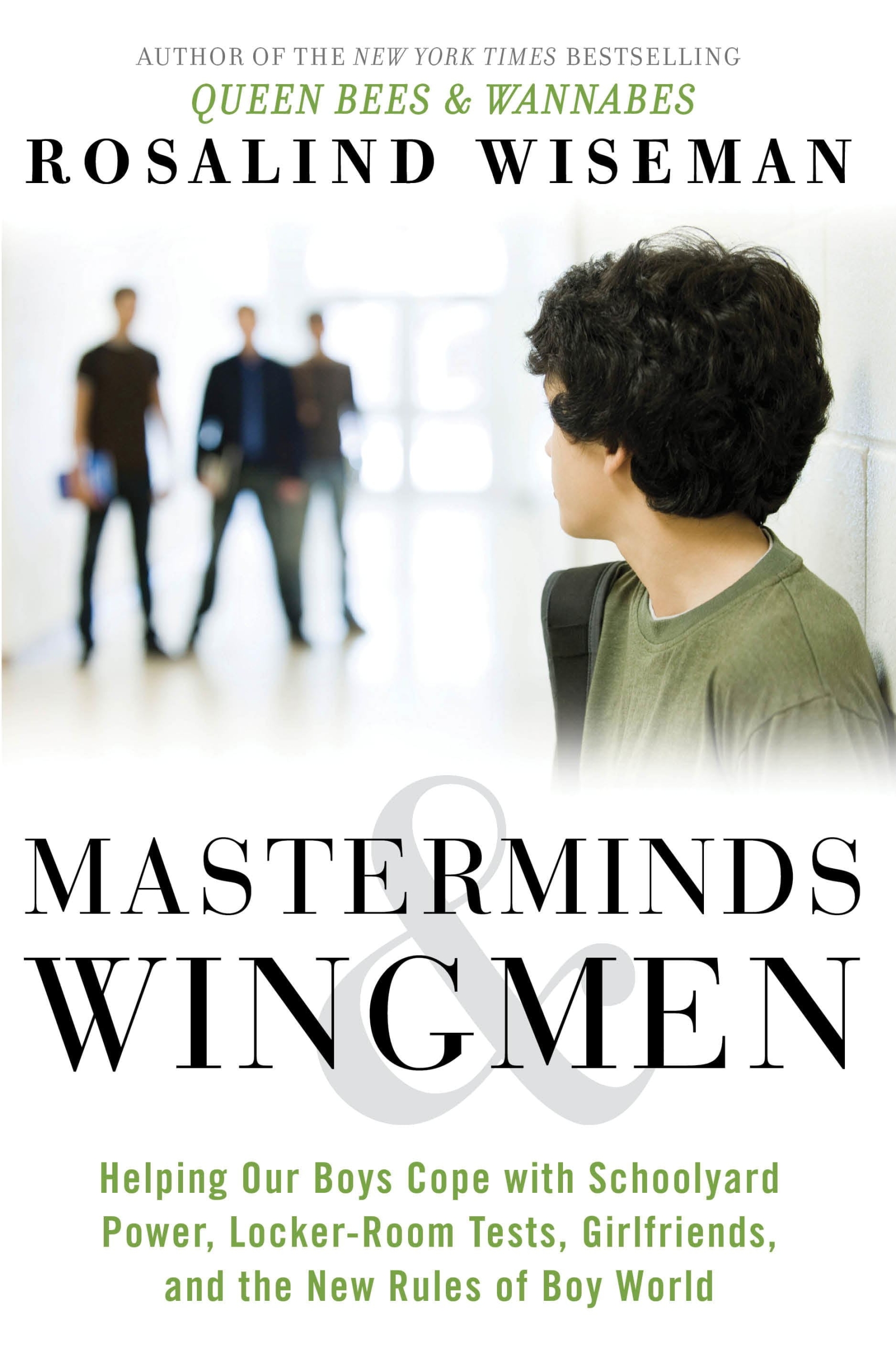
Masterminds and Wingmen

The author who brought us Mean Girls and Queen Bees and Wanna Bees, Rosalind Wiseman has now written the definitive book on boys: Masterminds and Wingmen. Using a panel of more than 160 boys (including at least one Adventure Treks alum), Wiseman exposes us to the world of teenage boys and gives us great insight into the lives our boys are experiencing, the rules of boys’ world, and how male teenage power structures work. She introduces the “Act like a Man Box” and the effects attempting to live up to these expectations can have on young male behavior. As school and the economy change, we are concerned that boys are falling behind, and we hope the culture we create at Adventure Treks will help our male students succeed in life outside camp.

Find the book here.


Below are books we still use frequently and have included on previous lists.
Mindset Carol DweckIn Mindset, Stanford researcher Carol Dweck explains why it’s not just our abilities and talent that bring us success, but whether we approach challenges with a fixed or a growth mindset. Praising intelligence and ability isn’t the best way to foster self-efficacy and confidence, and may instead actually jeopardize success. Instead, understanding that the brain is malleable, and that we are all works in progress, leads to the development of a growth mindset. By encouraging and rewarding effort and hard work over innate talent, we can better motivate our kids to more eagerly approach new challenges while building resilience. We use Dweck’s book in instructor orientation to show staff how to encourage our students to develop a mindset focused on continuous growth rather than accepting our talents and abilities as fixed.

Find the book here.

Childhood Roots of Adult HappinessHarvard professor Edward Hallowell gives us a
wonderful five-step program to help give our kids a childhood that creates a footprint for them to
become happy adults. In The Childhood Roots of Adult Happiness, Hallowell promotes childhood as a time to provide opportunities to feel connected to others, to play and be joyful, to practice and attain mastery in numerous activities, to fail and build resilience, and to receive recognition.

We use Hallowell’s model in our staff training and
wrote a blog about how his model applies to Adventure Treks.

We love this book!

Find the book here.

The Big DisconnectOne of the Wall Street Journal’s “most important reads for 2013,” The Big Disconnect: Protecting Child and Family Relationships in the Digital Age discusses how technology is affecting family relationships and how parents’ involvement with technology at home affects family connections. Renowned clinical psychologist and author Catherine Steiner-Adair explains that families are now in crisis around this issue. Not only do chronic technology distractions have deep and lasting effects, but children desperately need warm interactions with the adults in their lives.

Drawing on real-life stories from her clinical and consulting work, Steiner-Adair offers insights and advice on how parents can achieve greater understanding and confidence as they come up against the tech revolution happening in their living rooms. When Adventure Treks students have an amazing experience and succeed beyond all expectations without any technology, they are often given a unique perspective on how technology fits into their lives. Read a recent blog we wrote about her book.

Find the book here.

T-minus 6 days until our first trip starts!
—Dock
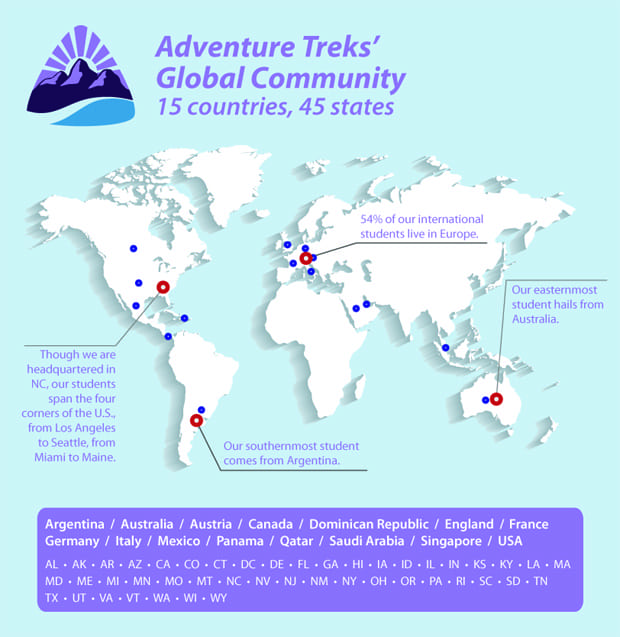
Every year, Adventure Treks welcomes students from all over the United States and even the world. So far in 2015, our student population comes from a whopping 45 states and 15 countries!

We love having so much diversity on all of our trips, and we know the students truly enjoy getting to know others from different cultures and backgrounds. Through the welcoming community and super-fun activities on the trips, the students easily find common ground and quickly make great, long-lasting friendships.

Check out the graphic below to see where our 2015 students come from.

Global community blog

Our map may expand as we add our last few students. North Carolina and California are neck-and-neck in the race for our most-represented state. Next is Florida, followed closely by New York. Rounding out our top states are Illinois, Georgia, Massachusetts, Texas, Maryland, and New Jersey. This year, we’re happy to welcome a Hawaiian student and an Alaskan student!

Regardless of your native country, state, or tongue, we are so excited to see you on opening day!

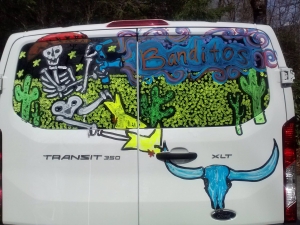
Two weekends ago, I found myself joining a coed team of 12 runners (the Banditos) and embarking on a 28-hour race called the Smokey Mountain Relay. The race started in our backyard (Pisgah National Forest) and ended at the Nantahala Outdoor Center—212 (hilly) miles away. It’s much quicker to drive there, or even hike in a straight line, but everyone knows that races don’t always take the most direct path. While I could write about how great the run was, how much fun I had, or how sleeping for only one hour out of 36 is hard, I’m going to pass on all of that. What I want to write about instead is the brand-new Ford Transit van that we used for our team vehicle.116

The Ford Transit is replacing the old Ford Econoline as the new passenger van for the entire Ford fleet. Adventure Treks uses only brand-new vans each year, so we will also be making the switch to the Transit for the 2015 season. I will happily admit that I am very excited about the switch.

Our office team had checked them out at the dealership, but I had not had the opportunity to test drive one until the race. Driving the Transit was so much nicer than the Econoline. It was easier to drive and handled like it was much smaller than it truly was. Riding in the back was even better. Each person has his/her own seat—instead of bench seating for three. And the windows are massive! They are about twice the size as the Econoline’s – Perfect for great views this summer!

But the best things were the unseen things. The standard safety advances are incredible. Here are a few:

  • Air bags. Not just for the driver and passenger, but for the entire van.11059555_10205925424202350_6736544707560290877_o
  • Lower center of gravity. With higher side walls, this ensures that the van will only roll over in the most extreme of situations. Plus, people up to 6 feet tall can walk down the aisle without bending over.
  • Center aisle. While this may not seem like a big deal, it now means that weight is distributed evenly throughout the entire van.
  • Rain-sensing wipers. Not that we ever drive in the rain without our wipers on, but this is just one more way to help with the sudden splash of water on the windshield.
  • Advance Trac with Roll Stability Control. The most advanced stability control system out there; it automatically brakes and/or shifts power to wheels.
  • Trailer sway control. This passive feature keeps the trailer more stable in crosswinds or at highway speeds.

As safety is the most important thing at Adventure Treks, we work hard to make sure we use the most reliable vehicles to transport our students. But we can’t rely solely on the safety options of our new vans. Each instructor attends an eight-hour course on van driving and procedures, and then is tested and ultimately approved by Dock or myself. Then we practice driving for more than 1,000 miles before we get our first students.
 
While I imagine that most people are not as excited as I am about these new vans, I hope that you share our desire to have the best possible equipment for our trips, in order to provide the best possible experience for our students.

And for those of you that are interested, the Smokey Mountain Relay is a great way to spend a weekend running through the woods!

We will be picking up 20 brand-new Ford Transit vans on June 3, but we  cannot wait till June 22 arrives (when our first three trips open!), and we can get these vans loaded with students and finally get on the road.

All the best,
DMAC

Congratulations to our class of 2015! We are always impressed—but never surprised—at the remarkable colleges Adventure Treks students will soon be attending.

Below is the list of the colleges our students have chosen. We feel privileged and grateful to have been a topic of many of your college essays. We know that navigating through the college “sorting hat” has been difficult, and we want to applaud every one of you for all the hard work you have put into your successful high school careers.

We’re happy that our students have chosen schools that are a good fit for their personalities, abilities, and interests. We’d like to emphasize that what you will take away from your college experience has little to do with the prestige or rank of a given college, and everything to do with the mindset and attitude with which you approach your collegiate career. Success in college is about the effort poured into the experience, your desire to fuel your passions, the relationships formed with new friends and faculty, and your ability to thrive in new and sometimes ambiguous situations.

At a time when only 58 percent of students at four-year colleges graduate within six years, we’re proud that the graduation rate of Adventure Treks students remains consistently at 98 percent! We believe the resilience, social confidence, collaboration, and community mindset skills you’ve strengthened through your Adventure Treks experiences will help you thrive in college and in the world beyond.

Having talked to dozens of our graduates currently in college, here are some examples of how the Adventure Treks experience helped them prepare for college life:

“AT did a phenomenal job preparing me for the transition to college. I had the ability to adapt to new and changing situations. I knew how to meet friends and how to work with different kinds of people. I have seen many of my friends struggle with the transition, but it’s been easy for me.”
— Christopher, University of Richmond

“AT made me more comfortable in my skin; when I got to college, I didn’t have to try to be anybody but myself. It was refreshing and empowering.”
— Max, Stanford University

“At AT, you learn how to help out and look out for others, how to thrive when things aren’t easy, and how to see a bigger picture beyond yourself. AT gave me the confidence to lead a school organization my freshman year, and it means I am always the one doing more than my share in project groups.”
— Jake, University of Nevada, Reno

Here are the colleges many of our Adventure Treks students will be attending:

  • Renee Hastings: University of Pennsylvania
  • Chase Brown: Colorado College
  • Matt Shepherd: Reed College, Washington University, or Northeastern University
  • Mara Hoplamazian: Yale University or Gap Year
  • Lilly Calman: Whitman College
  • Bennett Hermann: Washington and Lee University
  • Jeffrey Krasnow: University of Pennsylvania
  • Sam Bartusek: Princeton University
  • Isabel Licata: Scripps College
  • Luke McGreivy: University of Vermont
  • Kyle McGreivy: St Mary’s College
  • Silas Crews: North Carolina State University
  • Kendel Craig: Gap Year, than Oregon State University
  • Vitaly Zaytseva: University of Toronto or Purdue University
  • Lucas Gaylord: Hong Kong University of Science and Technology
  • Kristian Gaylord: Columbia University / Sciences PO, French Campus
  • Dylan Plunkett: Temple University
  • Max Binder: Muhlenberg College
  • Hannah Haines: Skidmore College
  • Caroline Purkey: Arizona State University – Honors Program
  • Jonathan Micay: Ryerson University
  • Samantha James:  University of Alabama
  • Isabel Licata: Scripps College
  • Sidney Anderson:  Appalachian State University
  • Elizabeth Duniec: University of Delaware
  • Kyle Hennings: University of Arkansas
  • Hannah Proudman: University of Denver
  • Danny Nelson: Tufts University
  • Sara Hakala: California Maritime Academy
  • Avery Coombe: Carleton College
  • Justin Friedman: Washington University, St Louis
  • Kaylin Lattimer: Grand Canyon University
  • Peter Baumbacher: University of Michigan, University of California at Los Angeles, or University of California at Berkeley
  • Nicholas Moy: Rensselaer Polytechnic Institute
  • Patrick Callahan: University of St. Andrews in Scotland
  • Dylan Torpey: St. Thomas Aquinas College
  • Jack Hougaard: Boise State
  • Nick Hougaard: Boise State
  • Michael Bateman: University of Virginia – Jefferson Scholarship
  • Adam Schwartz: University of Florida
  • Dylan Butts: St  Lawrence University or University of Vermont
  • Noah Perron: Queens College
  • Jacob Sage: University of Central Florida
  • August Howell: University of Oregon
  • Eleanor Palmer: Appalachian State University
  • Sasha LeTourneau: Queen’s College
  • Matt Friedland: University of Indiana
  • Cole Pierce: University of Iowa
  • Erin Reisman: Providence College
  • Sophia Laroche: University of Michigan
  • Michael Lowry: Brevard College

Congratulations! We will always be proud of you, and we sincerely thank you for your contributions to our Adventure Treks communities over the years. We hope you will bring the AT culture of kindness and your strong work ethic to college. This next phase will be a time of intellectual exploration, meaningful contribution, and wonderful new friends. We hope that the lessons you have learned at AT will be a source of strength when you encounter the inevitable challenges that are part of the college experience. Please continue to pursue outdoor activities in college; you might consider joining your school’s outdoor club. Time spent engaged in outdoor activities is a great way to meet like-minded folks, and a wonderful way to stay grounded and gain perspective as you navigate the exciting whirlwinds ahead.

Here is some recent research you might find interesting:

  • Students who get to know professors are the ones most likely to rate their college experience the highest.
  • The sense of connection one feels towards their college community is directly correlated with one’s graduation rate.

We are excited to see many of you on Leadership Summit this summer and gratified that so many of our former AT students currently in college will be working with us this summer as counselors at our Camp Pinnacle campus.

You’ve enrolled your teenager on the adventure of a lifetime, you’ve booked the flights, and now you’re counting down the seconds until the trip starts. But there’s one more pesky thing waiting to be ticked off: getting the packing list together!

One advantage to choosing an Adventure Treks program is having gear like a tent, sleeping bag, and sleeping pad included in the trip price. Clothing, hiking boots, and personal items like toiletries are your responsibility, but they don’t have to cost an arm and a leg.

We at Adventure Treks have carefully constructed thorough and detailed lists for each trip, which you can find under the “Itinerary and Packing List” tab on each trip’s page. You can also watch the fun video on packing below. Here, though, we’ve simplified the list into “Worth the Money” and “Don’t Break the Bank.”

Worth the Money

  • Hiking boots

Hiking boots can make or break a trip. The key to getting the right pair is trying on multiple pairs at the store. (Buying online can save you money, but walk around the store in the boots first to give you the best idea of how they’ll fit. Plus, many stores have ramps that mimic up- and down-hill hiking.)

What to get: Three-quarter to full-height, mid-weight, durable boots made from nylon and leather. All-leather boots are hotter, stretch more, and are harder to break in. A quick note about waterproofing: Buying waterproof boots adds an extra cost, and is not required or necessary. The only exception applies to our Alaska and Ultimate Northwest students.

Popular brands: Merrell, Vasque, Montrail, Asolo, Salomon

  • Rain gear (pants and jacket)

This is one of the best clothing investments for your teen. Waterproof, not water-repellant, will protect from rain, snow, wind, and cold. It’s also important to look for a jacket labeled “waterproof / breathable”; your teen may be hiking (and thus sweating) while wearing the jacket, and the breathability will allow that sweat to evaporate without leaving your student sticky or damp.

What to get: A jacket with a hood and ventilation zips (typically near the armpits), and that’s long enough to cover the hips. Don’t worry about getting an insulated rain jacket (like a ski jacket); this rain jacket should be roomy enough to fit a baselayer and a fleece underneath. Many brands will have similar or matching waterproof rain pants. These should also be roomy enough to wear hiking pants or baselayers underneath.

Popular brands: REI, Patagonia, Marmot, Sierra Designs, Mountain Hardwear

  • Headlamp

You can find a great headlamp for under $30. Students will wear these every night and on summit attempts.

What to get: A headlamp with a comfortable strap and LED lights—they are lighter, last longer, provide more light, and are more efficient. Pack extra batteries.

Popular brands: Petzl, Black Diamond, Princeton Tec

  • Socks

As important as it is to break in your hiking boots, it’s equally important to bring the right socks. Buy synthetic or wool socks to keep feet warm when wet, dry more quickly, and wick sweat away to prevent blisters.

What to get: Mid-weight, wool or synthetic hiking socks. Make sure they come up above your hiking boots. You can also bring some lighter, thinner cotton socks to wear with your tennis shoes around camp.

Popular brands: Smartwool, Icebreaker, Darn Tough, Wigwam, Fox River


Don’t Break the Bank

  • Baselayers

Aka long underwear, baselayers are next-to-skin layers that keep you warm and move sweat away from your skin.

What to get: Light- to mid-weight, synthetic or wool (non-cotton) layers. Synthetic and wool fabrics dry more quickly and still keep you warm when wet. If you buy synthetic (polyester or polypropylene), wash before wearing, as those fabrics tend to retain odor. Wool does not absorb odor, retains more warmth than wet, and is more durable, but is more expensive.

Popular brands: Any non-cotton baselayers are fine, like Duofold (by Champion), Hot Chillys, or Columbia. If you’re willing to spend a little extra, look at Under Armor, Patagonia, Smartwool, REI, EMS, and Columbia.

  • Fleece/pullover

This is the middle piece of the layering pie: warm, breathable, and a great outer layer when it’s not that cold out. Fortunately, inexpensive fleeces (from Old Navy, for example) perform just as well as the more expensive brands, like Patagonia.

What to get: A 200-weight (mid-weight) fleece. “Windproof” jackets aren’t necessary, as the rain jacket will take care of that.

Popular brands: Old Navy, Columbia, Under Armor.

  • Gloves/mittens, hats, sunglasses, water bottle, camp chair

All are essential items, but none needs to make a huge dent in your wallet.

What to get: Plain fleece gloves or mittens. Gloves provide more dexterity, while mittens provide more warmth. A fleece beanie and a baseball cap or wide-brimmed sun hat. Inexpensive polarized sunglasses from big box stores are best, in case they fall off or get scratched up during rafting or climbing activities. Bring a sunglasses or glasses strap to prevent loss. A durable Nalgene is a good investment, but a quart-sized Gatorade bottle works just as well. A legless, REI-brand or Coleman folding camp chair will cost almost half as much as the Crazy Creek brand.

  • Toiletries

Small toiletries items will need to be packed together to prevent loss and disorganization.

What to get: Ziplock baggies to hold a toothbrush, toothpaste, etc. will do the trick.

Other money-saving tips:

  • Shop around online! REI Outlet, Backcountry Outlet, Sierra Trading Post, and Campmor all offer past-season gear at (sometimes heavily) discounted prices.
  • Check out local thrift and consignment shops. You’d be surprised at how many almost-new fleeces and rain jackets are out there for a tiny fraction of the original cost.

Not only do our Adventure Treks students spend three or more weeks in nature, surrounded by surreal beauty and involved in action-packed outdoor activities, but they have the time of their lives without their phones or technology. That’s one of Adventure Treks’ principles: unplugging from technology to reconnect with our natural surroundings and each other.  Living in the absence of technology allows our students to focus on building strong, inclusive, and kind communities that focus on “face to face communication.”  When one thrives without technology, it puts technology into proper perspective as a “useful tool” rather than a “must have.”

This video artfully and eloquently describes why we unplug for the summer.

It’s Monday morning during rush hour traffic. Cars are whizzing by, morning news shows are blaring, and the daily grind is apparent everywhere. For some, this can be a source of adrenaline, but for many there exists a strong desire for an escape into a space encompassed by tranquility and calmness. The idea of going outside to find peace from the everyday stresses of life is certainly not a new one. Literature from the romantic period, such as William Wordsworth’s poem about clouds, to the more modern books like “Last Child in the Woods” by Richard Louv and the forever comical “A Walk in the Woods” by Bill Bryson, talk about the benefits of being in nature. Until recently, though, there have not been many studies on the physiological reasons behind why going into nature causes one to relax and destress. We all feel the relief that washes over when winding down a trail with the distant sound of cars and people slowly fading, but does something in our body actually change from being outside?

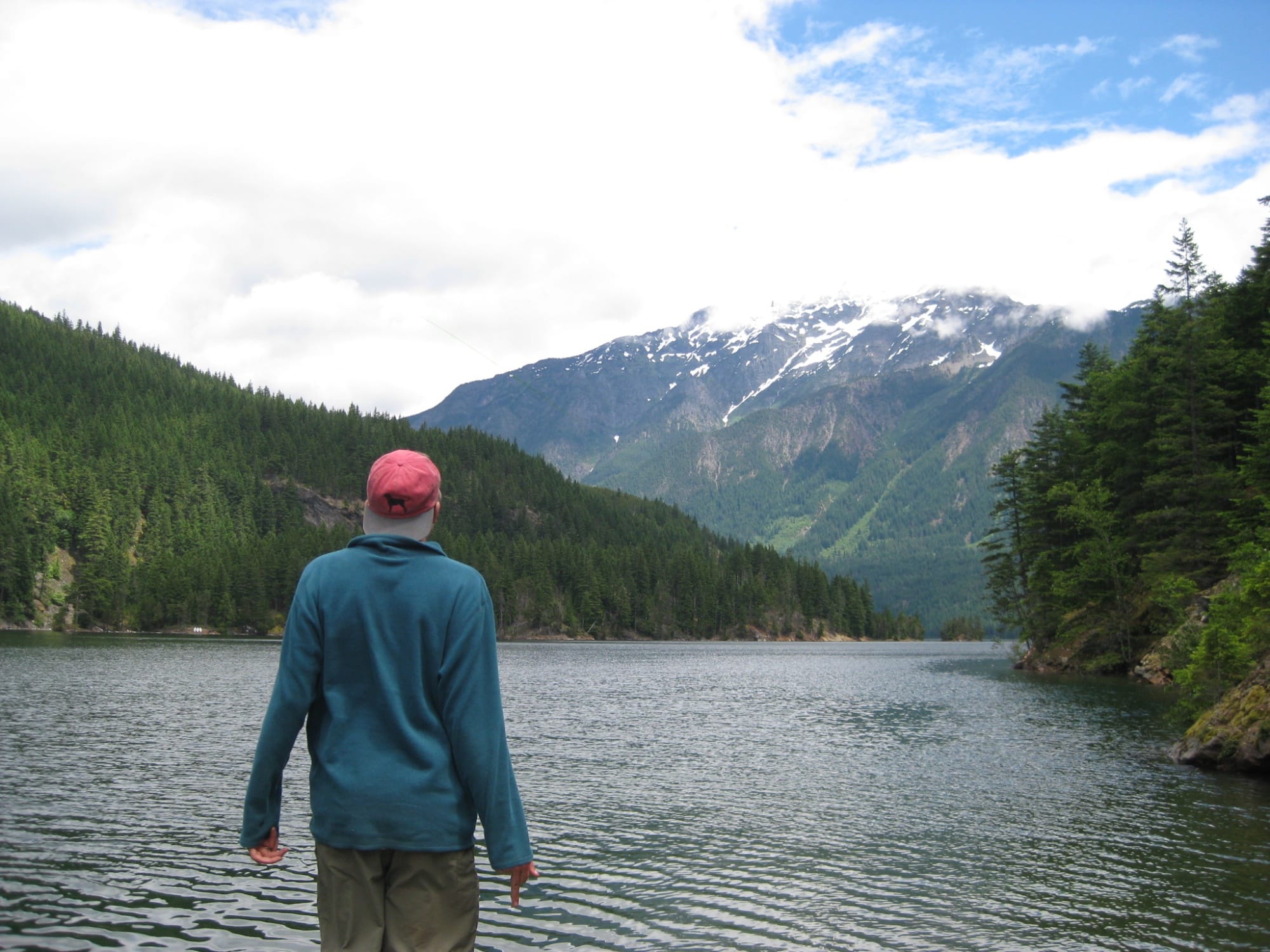
Looking out at the North Cascades

In 1982, the Japanese government under the Ministry of Agriculture, Forestry, and Fisheries created the concept of shinrin-yoku, which roughly translates to “forest bathing.” It basically means taking in with all of your senses when in nature. With 64 percent of Japan covered in forest, but a majority of the population living in crowded urban areas, around 92 percent, the government wanted to promote health by inspiring people to get out in nature. They were interested in finding scientific data behind the effects of walking in a forest.

A study by the Center for Environment, Health, and Field Services at Chiba University was conducted on 500 adults, looking at the difference between walking in an outdoor setting versus a non-outdoor setting—on a crowded street, for example. The Japanese researchers found that “20 minutes,” in nature, “(compared with 20 minutes in an urban setting) altered cerebral blood flow in a manner that indicated a state of relaxation.” Participants’ hemoglobin levels, which are normally high when the body experiences heightened stress, decreased when in the forest. The study also found a link between phytoncide, chemicals secreted by evergreen trees, and improved immune functions. A similar study published by the National Institutes of Health showed subjects with a decrease in pulse rate and blood pressure. No physiological negatives from going outside occurred in the study.

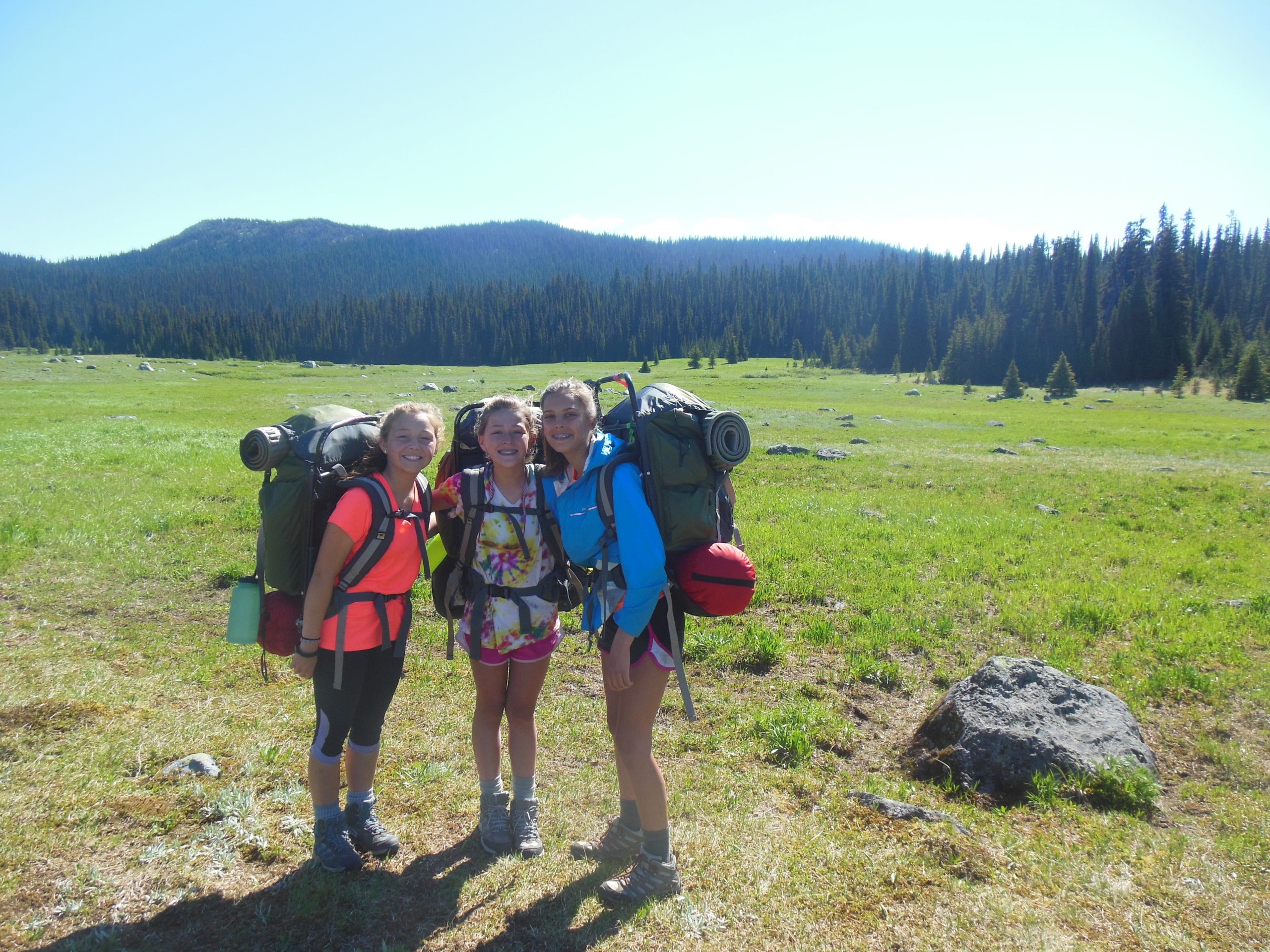
Backpacking in British Columbia

Backpacking in British Columbia

Many outdoor enthusiasts are already well aware of the amazing perks from being a nature-seeker. (Maybe that’s why Adventure Treks instructors are always smiling in their photos!) Basically, these studies emphasize that seeking better personal health requires more than just looking out the window at the view, but physically going out and experiencing what happens when surrounded by nature. While a trip to Japan’s forests sounds exhilarating, the United States has tons of outdoor places to offer as well.

There are 155 forests that the National Forest Service manages which collectively make up roughly 249.1 million acres out of a total of 2.3 billion acres in the United States. Forest area in the U.S. accounts for roughly 33 percent of the total land area. Aside from the number of national forests, there are hundreds of national parks, state parks, and other outdoor areas to explore, many of which are not as far from your hometown as you might think. The links below show by state the amazing areas that await your exploration. Adventure Treks’ trips go to many of these outdoor areas as well! Whether the science behind a forest is interesting or not, it’s time we lift our heads up toward the sun and head out for our own dose of shinrin-yoku.


List of National Forests by State

http://www.fs.fed.us/recreation/map/state_list.shtml

List of National Parks by State

http://parks.mapquest.com/national-parks/national-parks-by-state/

List of State Parks, State Forests, and State Wildlife areas

http://www.stateparks.com/usa.html


Sources

http://www.ncbi.nlm.nih.gov/pmc/articles/PMC2793346/

http://www.motherearthnews.com/natural-health/forest-bathing-ze0z1301zgar.aspx?PageId=1

http://data.worldbank.org/indicator/AG.LND.FRST.ZS

http://www.epa.gov/agriculture/forestry.html

http://www.ers.usda.gov/media/249896/eib14_reportsummary_1_.pdf


Recent advances in brain science support the concept that “disruption” can make the brain more receptive to learning. What do we mean? We all go through life in some sense of routine in which our brain operates on a type of “autopilot.” When we have a dramatic break from our routine (or a cognitive dissonance), it causes our brain to “wake up” and activate at a higher level until the brain has rationalized the external stimuli and returned to a stasis. It is these times of increased activation when the brain is more receptive to learning, entering a state that can be described as almost sponge-like.

These are the instances when we have opportunities to really make learning stick. We all can probably remember times in life when an unexpected event occurred, and as a result, we gained an insight, made an observation, or learned something that has stayed with us forever. For example, we remember our first day of college but not our 43rd.

Let’s face it: Adventure Treks is a disruptive experience. While it’s a fun and healthy disruption, it is still a giant step out of one’s comfort zone. But the reward for willingly leaving comfort behind is a powerful learning and growing experience. Let’s look at some of the disruptions inherent in the AT experience.

  • Leaving home and its associated comfort for three weeks.
  • Spending three weeks with new people from all over the world and being away from the comfort and familiarity of friends from home.
  • Substituting parents with larger-than-life instructors who are different role models and “authority figures.”
  • Removing social media, smart phones, and computers, and replacing digital media with nonstop face-to-face communication.
  • Replacing the comforts of home with the “rigors” and excitement of living and cooking outdoors, as well as sleeping in tents instead of beds.
  • Replacing the familiarity of a neighborhood with a beautiful and dramatic outdoor environment where the scenery constantly changes.
  • Constantly trying new activities in new and different places.
  • Living in a large community of folks with emphasis on a culture of kindness and contribution, which may be inherently different than school.
  • The power of nature, which research shows improves nerve receptors and make’s one more receptive to stimulus.

Adventure Treks creates a constantly changing environment that stimulates an adolescent brain. Students have the opportunity to absorb life lessons and change one’s narrative. We all have a series of stories (this narrative) running through our heads that affects the way we look at the world; some narratives are healthy and productive, while others are limiting. (Ex: “I am just not naturally athletic,” or “I’m not great at making friends.”)

Research by Carol Dweck of Stanford (growth vs. fixed mindset) shows the powerful effect one’s mindset can have in determining future success. Knowing we have an incredible and unique learning environment at Adventure Treks, it becomes our inherent responsibility to use these moments of disruption and our students’ resulting receptivity to subtly help students craft narratives that will help them lead more successful lives. Here are some of the narratives we hope our students will realize.

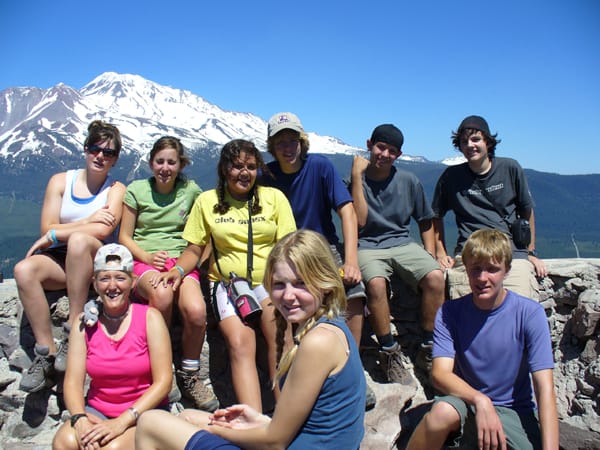
The summit of Black Butte - Mt Shasta, CA

The summit of Black Butte – Mt Shasta, CA

  • I am capable of more than I ever thought possible.
  • When the going gets tough, I can dig deep, work harder, and I will eventually succeed.
  • Together as a group, we can accomplish more than I ever could individually.
  • It feels really good when I help others, do more than my share, and even anticipate what needs to be done to help the community succeed.
  • Success is the result of contribution and hard work.
  • I can be a leader.
  • More comfort does not necessarily mean more happiness.
  • I don’t have to have electronics or social media to have fun. In fact, I can thrive without them.
  • I have had glimpses of “my best self.” I like what I see, and I will try to bring that person back home with me.
  • People like me for who I am, not for a specific role I may play at home or school.
  • I can become great friends with people who are very different from me and that I may not naturally be friends with at school or home.

Most of our students already possess some of these narratives when they arrive at Adventure Treks, but reinforcement can be a powerful ally. Our goal this summer is for our staff to tune into these natural opportunities for learning and growth, and use these times of natural disruption to frame life lessons that will remain with our students long after the Adventure Treks summer experience ends.

Bottom line: We know disruption can be stressful, but it is also the source of powerful growth. We put a strong focus on making the experience as fun as possible while capitalizing on the growth opportunities. We work hard to help students feel a sense of belonging or connection to the group  and make sure our students know that their instructors and directors care about them. We know students are more receptive to learning when they are having fun and feel connected and valued.

Goldbach, Josh AT

AT Superstar Josh Goldbach is unafraid to fly his AT Colors!

A comment that I hear often from people when I tell them I am work at Adventure Treks is, “what could you possibly be doing in the winter?” To put it simply, a lot! The surprising thing about running a summer (and fall) program is, it takes almost 3 times as much work in the off season to run those 6 months of programs. Here are some things that we are doing:

Talking with families; prospective, new and returning. You form the basis of Adventure Treks, and it is because of you that our program is as successful as it is. We feel fortunate that we are small enough, so when you call, we can get to know you as a parent, family and partner in how we operate our programs.

We are also working to get new students to come for their first time! We have several trips that are already full, and several more that are close. There are already 250 students committed to come for the summer of 2015, which is over 60% of capacity!

Josh is in the process of hiring new instructors and inspiring veteran instructors to return (Josh will talk more about this next week). Interviews have begun, and we have already hired several great new instructors. Again, we are anticipating a 70% return rate for our veteran instructors!

We have already begun to plan Instructor Orientation and Trip Leader Retreat. Staff training is 2 weeks long and we want to make every moment count!

Kate is well into logistics, and she is currently reserving campgrounds, talking with outfitters about the summer, and the biggest one of them all; getting all of our permits renewed on federal lands. Each permit takes at least 5 hours of time to complete (and we have 15 permits).

The brochure took a few weeks to create, but we hope it has arrived at your house. If you did not receive a 2015 AT brochure or would like some to pass out to friends, let us know! We will happily send one out to you ASAP!

The new hat and t-shirts have been designed and are getting ready for the final proof. I must say, that I am really excited about how they look (and I promise the hats will fit better this year!) If you really want to know what they look like, you’ll have to wait till your trip starts. I just can’t spoil the surprise.

On top of all of this, Dock and Josh will be doing a little traveling.  Dock was in Durham, NC last weekend at Triangle Day School. Later this winter, he or Josh will be in Nashville, Florida, Boston and New York. If you are interested in having us come to your area, please let us know. We will try to work a trip to your area.

While there is always a lot going on, we are eager and excited to talk with our parents and students. So, if you have any questions, comments or concerns, or just want to say, “Hi” please give us a call. We’d love to hear from you and hear about any adventures you are having this winter!

All the best for a great 2015 and happy Groundhog Day! Since the Groundhog saw it’s shadow today – only 140 days until our first students arrive! We are excited!

DMAC

As School starts across the country signaling the end of summer, our Adventure Treks Instructor Team wanted to say “thank you” to parents for sharing their wonderful children with us. Enjoy the short video tribute below:

Thanks for a Great Summer! from Adventure Treks on Vimeo.

Even though our summer students have left us, we are only halfway through our season which doesn’t end until Halloween. Each fall, from our base here in Western North Carolina, we work with Schools and operate outdoor education and adventure programs which also emphasize science and community building. This year almost 900 students from 14 different schools in six different states will be joining us for their “best week of school!”

We are also hard at work planning for next summer. We are looking for ways to make Adventure Treks even better and will soon be finalizing our 2015 summer schedule. We are excited that over 60 students have already signed up for summer 2015! We anticipate that some trips may be full before the end of the year.

We wish our students a wonderful and productive school year and we can’t wait to see you next summer.

Thank you,

Dock, D-Mac, Jan, Josh, Stacey, Joan, Neil and Your Adventure Treks Instructor team