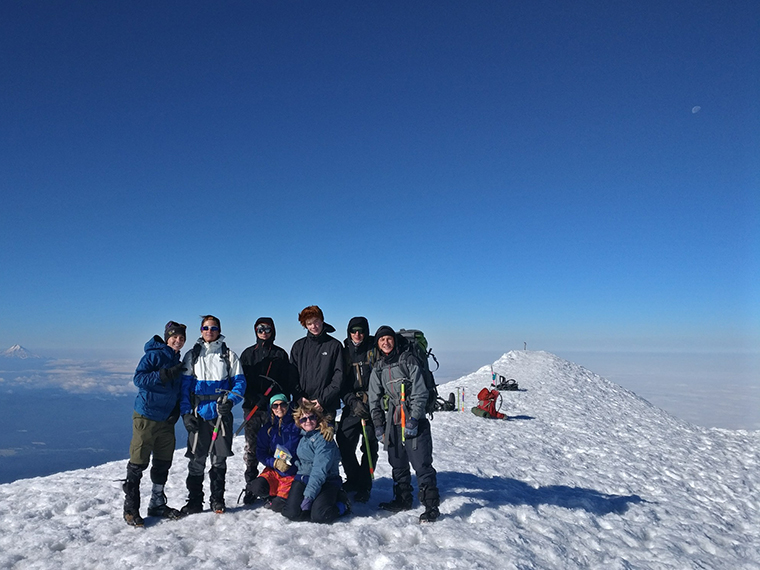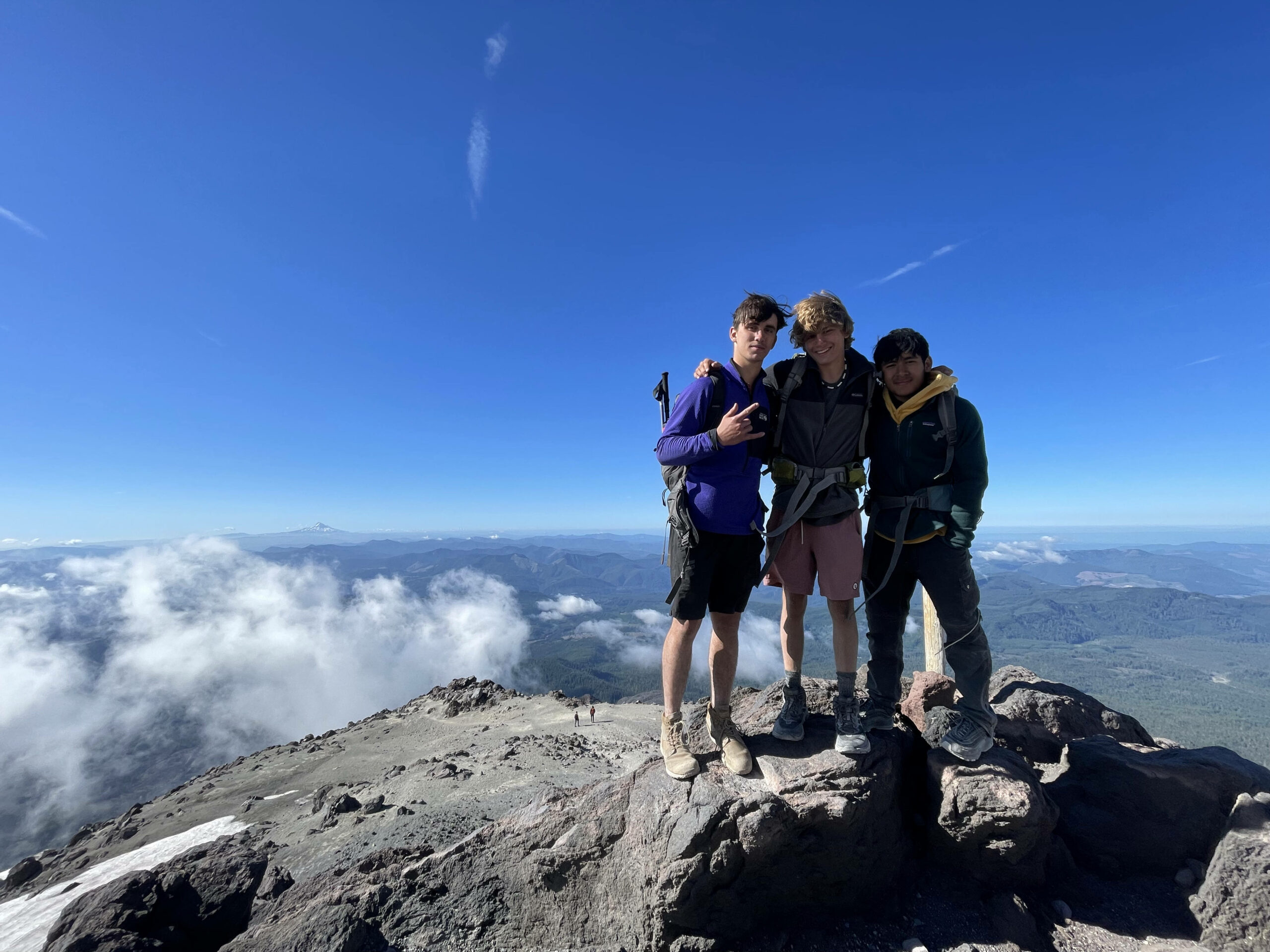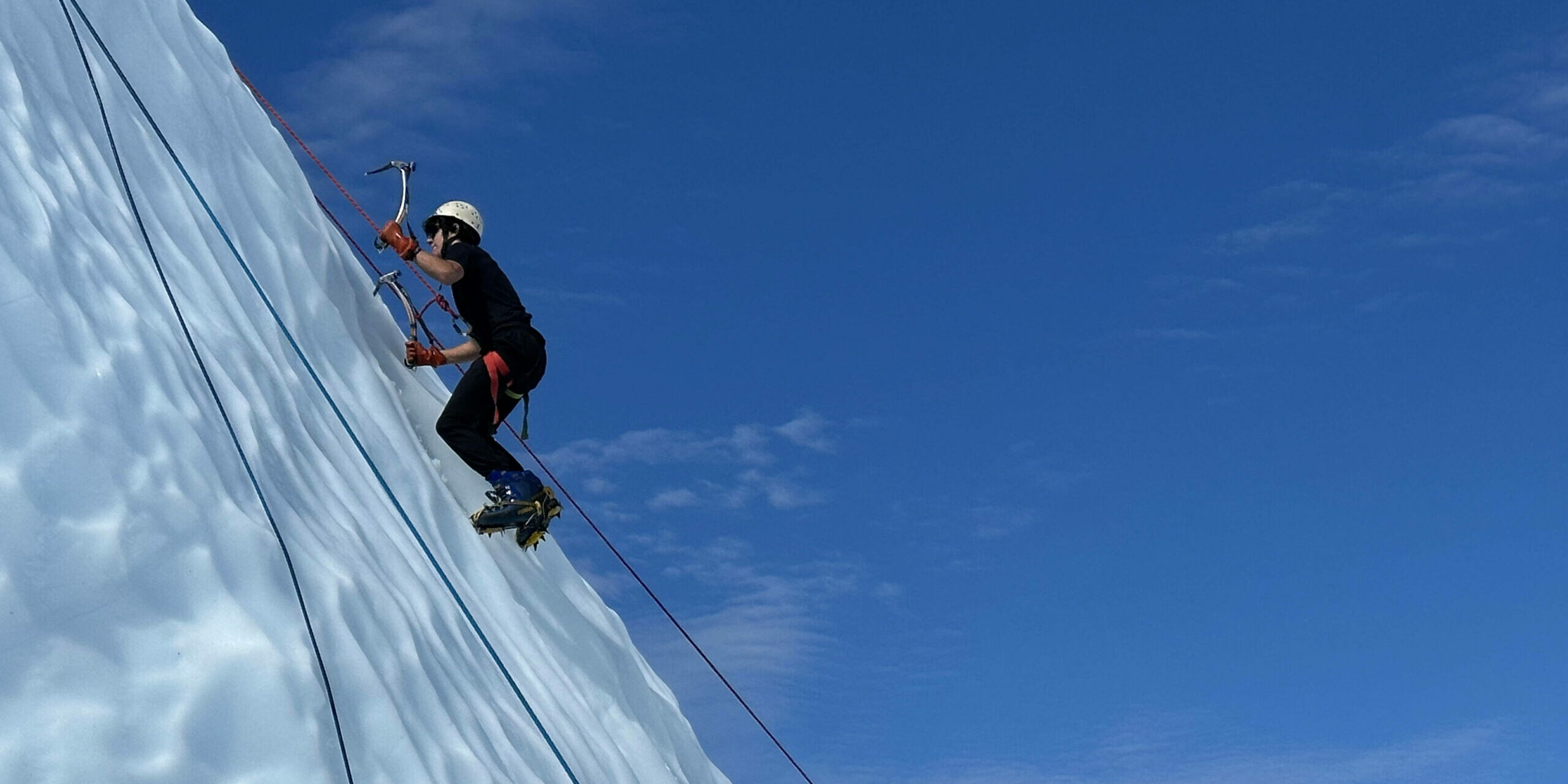
students summiting mt adams with ice axes and cramponsUpdated 12/20/2024

Every year in December, I begin searching for the “perfect gift” for my kids. There are things that they want or “need,” but many of those things are not what I am excited about giving them.

The marketing aimed toward consumers, especially at this time of year, erases the line between “want” and “need.” We are being told we need this or that and that we will be happier, more beautiful, better people with whatever they are trying to sell. Of course, we know that isn’t true, but I know it’s easy to get caught up in it. On top of that, our kids are feeling social pressure to have the latest and coolest… whatever.

Like other parents, I want to give my kids something special that they really want. We all want to see that look of pure joy and almost disbelief at what they see under the wrapping. But I also know that look is fleeting. It is pure and true at that moment, and even for days or possibly weeks afterward. But soon the anticipation, the novelty, and the excitement of getting something they wanted so badly wears off. And soon it is just another thing they have in a world of too much stuff.

Most of us have limited resources, and we have to choose to buy one thing over another. While we sometimes succumb to the pressures and temptations of advertising, our family is trying to place more emphasis on experiences over things. Over the past decade, an abundance of psychology research (as well as personal reward) has shown this to be a wise strategy.

Experiences help us feel more connected to others, in no small part due to the memories they create; they also lead to greater feelings of gratitude and more emotional reactions—thus cementing the positive relationship-building even more.

Experiences are like three gifts in one:

  1. First, there is the anticipation of the experience. Thinking about the trip, or the Broadway show, or summer camp is sometimes the best part! Even better, it’s a great family conversation starter around the dinner table.
  2. Second is the experience itself. How great to finally see the band that we love, or board the plane en route to a long-dreamed-about destination, or put well-loved hiking boots to use on a trail.
  3. Lastly, the experience gives memories to relive for years to come. Applauding through two encores, taking your first subway trip, or swimming near a waterfall are all stories to be told and retold. And sharing these memories can help forge family unity. Even if things don’t go as planned (a rainy week at the beach, a missed flight connection, or getting lost in the woods), it’s still a fun story and thus a cherished memory.

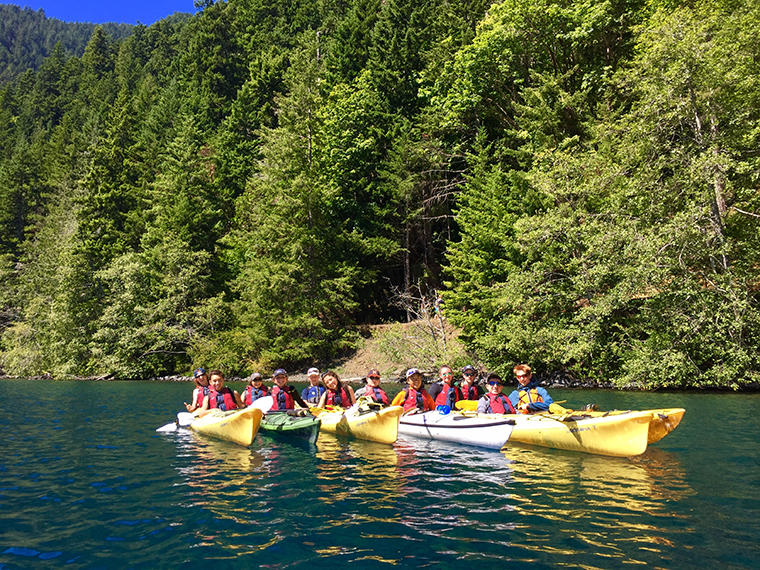
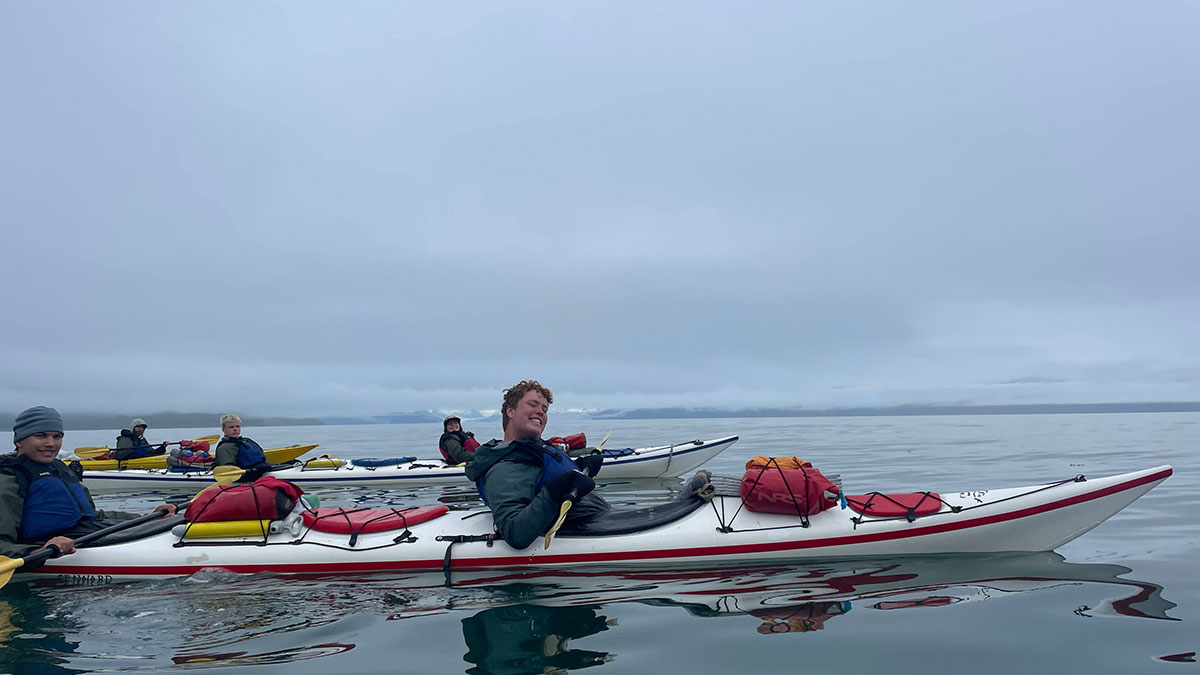
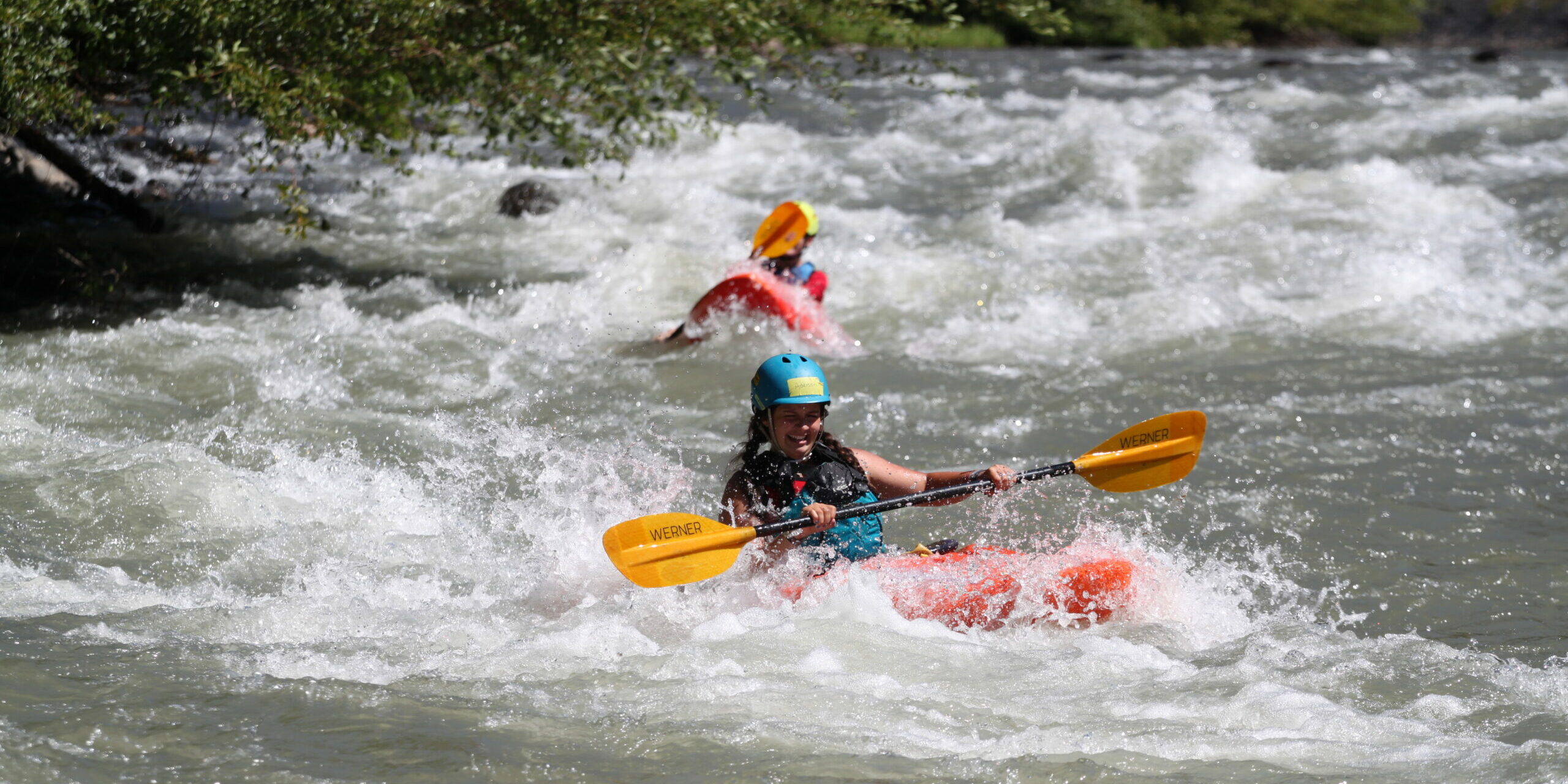
students sea kayaking in port angeles washingtonThe idea that experiential purchases are more satisfying than material purchases has long been the domain of Cornell psychology professor Thomas Gilovich. In the journal Psychological Science (August 2014), Gilovich looked specifically at anticipation as a driver of that happiness. He discovered that the enjoyment his subjects derived from anticipating experiences was greater than for purchasing material goods. This supplemented his previous research, which found that people also receive more retrospective enjoyment and satisfaction from experiences than consumer goods.

Experiences fit perfectly into happiness research. Anticipating future experiences, as well as recalling those memories, makes us happy, according to Cornell researcher Amit Kumar. An experience can make a bigger impression because it’s usually something new and different from the daily routine. This activates the neurons of the brain to a heightened state, making the memories more likely to stick.

A big takeaway when purchasing experiences is to remember that because anticipation is such a big part of the enjoyment of the experience, it makes sense to purchase far in advance. The internet age provides endless opportunities for last-minute planning (why book the beach vacation until we know the weather forecast?) but by buying at the last minute, you are squandering a portion of what adds the intrinsic value to the experience.

Taking experiences a step farther, Gilovich says “societal well-being can be advanced by providing infrastructure that affords experiences, such as parks, trails, and beaches, as much as it does material consumption.” Perhaps it’s a case for more summer camps and fewer shopping malls!

“Gratitude can transform common days into thanksgivings, turn routine jobs into joy, and change ordinary opportunities into precious, precious gifts.” – William Arthur Ward

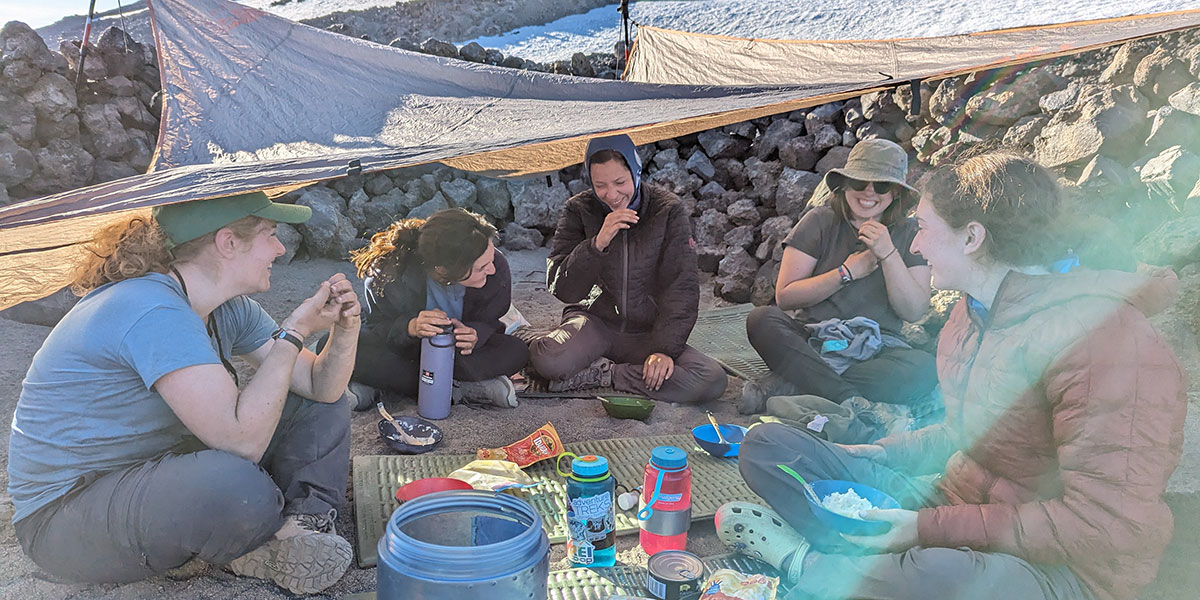
While on an Adventure Treks trip, life becomes simple again. No phones, no Internet or social media, and minimal distractions. This is all by design as we leave behind many of our creature comforts and our routines. We trade a bed for a sleeping pad and a kitchen sink for a three-bin. We get a bit dirty—even a bit smelly. We sit on the ground and enjoy meals in sitting in a circle.

For all those homey comforts we subtract during those few weeks at AT, we gain exponentially more in spirit and character. The greatest of those personal riches is a deep and lasting sense of gratitude.

Gratitude can be a wonderful feeling of thankfulness and appreciation, and it’s something we encounter quite often at Adventure Treks. And it’s much more than a fleeting feeling—rather, gratitude is a practice, a choice. It’s something that unlocks tremendous potential to transform the way you look at your own life.

Greeting each morning with a sense of gratitude helps our students connect with and value others; it helps them focus on the positive even through hardship; it helps them reflect, appreciate, and celebrate; and it helps foster a sense of confidence and courage. Seeing the world through a lens of gratitude instills a sense that the world will not grind you under, but rather it will lift you up.

Many social scientists and neuroscientists agree with us—like Michael McCullough and Robert Emmons at UC San Diego and UC Davis. They have found that gratitude-based practices make us happier, increase our self-esteem, and improve our psychological well-being. In their studies, the effects of a gratitude practice took as little as journaling for five minutes a day! On Adventure Treks trips, there’s even much more going on to instill this perspective. Below, how a summer camp like Adventure Treks can help students adopt a more grateful perspective.

Leaving creature comforts behind

When we leave our literal and figurative comfort zones for outdoor expeditions, we get to see how lucky we are to have such luxuries as fluffy beds and pillows, daily showers, and climate control in the “readl world.” No longer will a kitchen table or dishwasher be taken for granted. And with fewer distractions like constantly buzzing phones, our attention can be focused onto more meaningful things, like connecting with others and finding value in the small things we might normally miss.

Plus, being surrounded by some of the most beautiful scenery the outdoor world has to offer makes it easy to practice gratitude.

Living in a community

Although they may start out as strangers, students on an AT trip soon recognize that each of their peers has their own unique and interesting story. Where do they come from? How do they spend their time at home? What brought them to this exact moment? They learn about each other, begin to understand each other, and discover what they have in common—which is almost always much more than they initially assume. That commonality and understanding are the roots of strong interpersonal connection.

Plus / delta land!

This is perhaps our most hallowed tradition. At the end of every day, we share with each other all that we’re grateful for. This looks like highlighting our successes, “plussing” each other out for acts of kindness, and remembering the exciting and fulfilling moments of each day. This is also a time to reflect on how we as a community can improve to make our next day even more fun and impactful for everyone.

Adventure Treks trips provide a fantastic structure to live gratefully, which hopefully makes it easier to apply the same principles to students’ lives in the outside world. Because outside of AT, students still live in a community back home! It may not be the same as at Adventure Treks, but each of your neighbors and classmates have a wonderful story of their own. All it takes is the initiative to be curious and to lead by example.

No matter where we live, we can always step outside and appreciate the nature we have access to. The sky, the clouds, the trees on your block, and even the little blades of grass pushing their way up through the cracks in the concrete are there waiting to be appreciated.

This Thanksgiving and holiday season, let’s remember to look past the distractions, to hold tight to what truly brings meaning and joy to our lives, and cherish all that we have to be grateful for.

As parents, it can be hard to imagine sending your child away for two to four weeks in the summer. Not having direct, continuous communication with your kids is rare these days, and often it’s parents who are more nervous about going to camp than their kids! (Here’s a great article about how parents can alleviate their own anxiety about their kids going to camp.)

But don’t forget: The many benefits of summer camp and outdoor adventures should far outweigh any parental hesitation. Below, we outline why tech-free summer programs are a necessary investment in your child’s future.

Friendships and social connections

In Jonathan Haidt’s recent book The Anxious Generation, he points out that kids’ time spent playing with friends (in real life, not online) has plummeted since the rise of smartphones. Summer camp has phenomenal benefits for children’s social development:

  • It helps combat anxiety and loneliness caused by lack of in-person connection.
  • It introduces them to a whole new group of people they probably otherwise never would have met.
  • It provides the opportunity to immerse oneself into a brand-new community, which teaches kids how to get along with peers from different backgrounds and varied hobbies, interests, personalities, and belief systems.
  • It shows kids how to find commonalities among new friends to create tight bonds and that our world is much bigger than they originally thought.
  • It also gives kids the chance to be themselves—not someone they’re pigeon-holed into being at school, or a persona they think they should adopt based on social media’s standards.

Yes, kids can—and should!—do hard things

All too often, children are told they cannot do something, as parents think it is too hard. Even not giving your child the chance to do something (because you’re not sure if they can handle it) sends the message that you don’t believe in their abilities or strengths.

Camps operate with the kids in mind and help them find their inner strength. Adventure Treks has 33 years of experience working with kids in the outdoors. We know our students can climb Mt. St. Helens and conquer 10 miles in a day with 4,500 feet of elevation gain. We know they can hike in the woods for five days, with everything they need on in their backpack. We know they can learn to manage negative feelings in a constructive way and receive feedback on how to grow. We know they can navigate an airport by themselves. We know they can have fun outside in bad weather. In fact, we know that not only can do they do it, but they’ll thrive with the opportunity!

Challenges are important for adolescents because it allows them to push the boundaries of what they thought was possible. Facing challenges helps them:

  • Build confidence in themselves.
  • Develop problem-solving skills.
  • Adopt a more positive and growth-oriented mindset because they might not actually succeed the first time. And that’s OK! They should be given the opportunity to fail (at AT, it’s in a safe, supportive environment)—and the chance to pick themselves back up and try again.
  • Grow a stronger sense of resilience and work ethic, and the attitude that “I can do anything if I put the work in.”

Letting kids face challenges and do hard things at camp translates seamlessly to life at home. On the first day of school, they’ll stand a little taller, less intimidated by new faces because they learned at camp that they can indeed make friends with anyone. They’ll try to run a little faster at track because they believe in themselves, or be inspired to join the science club because they found a new passion at camp, or better prioritize their homework because they learned time management skills during the summer.

Don’t sell your kids short. Give them some credit and let them do hard things. It’s not only good for them—it’s crucial to their development into healthy, competent young adults.

Tech-free

I’ll reference Anxious Generation again (we’ll be posting a longer blog on this book soon), which dives into the decline of a play-based childhood and the rapid rise of the phone-based childhood. It’s no secret that kids spend too much time immersed in social media or video games. Parents oftne lament the difficulty of prying their children’s eyes away from screens. But there is hope!

Adventure Treks (like many camps) is completely tech-free—students hand over phones immediately upon arrival. They soon learn how rewarding and refreshing it is to not be bombarded with everything the digital world throws at them. They don’t worry about how many likes they got an TikTok because they’re feeling liked and appreciated in person! It is probably one of the most important resets to their brains that we can give them.

Leadership and responsibility

Adventure Treks allows teenagers to step up and lead their peers with guidance and support from our instructors. Back to Anxious Generation: As we continue to give our kids more freedoms as they mature, so too should their responsibilities increase. Trusting teenagers and charging them with productive tasks gives them a greater sense of purpose and helps them feel useful and valued. It also keeps them grounded and more deeply connected to the people around them. At Adventure Treks, teens have endless opportunitities to take on leadership roles, like:

  • Taking responsibility for themselves at the airport, for example, when they’re flying to Adventure Treks (often traveling solo for the first time).
  • Becoming leader of the day for their backpacking groups, helping plan the day and navigate on trail.
  • Cooking meals for each other, ensuring that everyone gets enough food to eat.
  • Taking part in food shops and learning how to navigate a grocery store, manage a budget, and buy food for a large group.

Harvard agrees: In an ongoing 75-year study, researchers found that kids who do chores are more successful as adults because they adopted a solid work ethic early on. At Adventure Treks, students will take on different tasks around camp to make sure our trip runs smoothly; they’ll help wash dishes, set up and take down camp, organize gear, and so on. They learn how valuable pitching in is, and they see it as not just work—but as a way to connect with those around you, and as a way to care more deeply about the community you’re in.

Our instructors guide our students into these roles and then take a step back, giving students a real voice. Staff will provide feedback if and when needed, and debrief how that student’s leadership role went. What a great “low consequence” way to learn to lead!

Positive social environment

As teens go through middle and high school, the pressures of drugs, alcohol, and the “party side” of being a teenager increase. Summer camps show students that they can have even more fun and make greater friendships without those kinds of pressures. Our traditions, like plus / delta during evening meeting, shows students the value of publicly recognizing others for their hard work and acts of kindness and service, which in turn encourages everyone to be their best self.  Our instructors act as role models, helping espouse great values that every family can appreciate, like kindness, selflessless, respect, and wholesome silliness.

Personal challenges

Your child will at some point struggle in life—it’s important to learn at a young age that this is not a bad thing, but rather something that makes us stronger and better. At camp, a personal challenge might look like homesickness, or learning how to have interpersonal conflict, or pushing yourself forward on an uphill trail. If we see our students engaged in too challenging a struggle, we’ll step in and provide support and guidance—they won’t be alone. By facing personal challenges at camp, they’ll learn strategies to help them face anything head-on—and they’ll be well-equipped to leave home after high school and live on their own.


Being able to lead a group, make genuine social connections, do hard things, be a crucial member of a thriving community—these are all important in the workplace and life! When you send your child to camp, you’re not only setting them up for a life-changing summer, you’re also providing them with the tools to succeed later in life.

[button url=”https://www.adventuretreks.com/enroll/” target=”_blank”] Commit to the investment now and enroll for the summer [/button]

I was reading through college essays the other day, shared by current and former Adventure Treks students who’d written about the impact their AT experiences (climbing Mt. Shasta, backpacking in Alaska, etc.) have had on their lives. I then came across an essay on letgrow.org by a student named Finn Fox. One quote in particular stood out to me: “We don’t know how to solve some of the biggest problems in the world today, but if we’re willing to be flexible, get lost a little, and accept failure as part of the process, we can create innovative solutions to complex problems. All we need is a mindset of exploration.”

Letgrow.org is a site dedicated to helping parents give their children some freedom to explore, play, and be kids without the distractions of phones, parental safety-ism (or “overprotection,” as some call it), social media, and other hindrances. This led me down the rabbit hole of blogs from the American Camp Association and a few recent articles from The Atlantic, including one titled “End the Phone-Based Childhood Now,” written by social psychologist Jonathan Haidt.

This article dives not into into current statistics about youth mental health, but also when studies started showing increases in loneliness and depression, while scores in reading and math began to decline. Though changes have been happening for decades, the real shift began in the 2010s when—you guessed it—smartphone use became more and more prevalent. And what came along with smartphones? Drastically higher rates of social media use.

One of the most interesting things I read in the Atlantic article: “Young people do not like their phone-based lives.” In fact, many young people are actually in favor of new laws regulating social media in kids and teens. He also refers to the 2021 Facebook debacle that showed that “teens blame Instagram for increases in the rates of anxiety and depression.”

“Once young people began carrying the entire internet in their pockets, available to them day and night, it altered their daily experiences and developmental pathways across the board. Friendship, dating, sexuality, exercise, sleep, academics, politics, family dynamics, identity—all were affected. Life changed rapidly for younger children, too, as they began to get access to their parents’ smartphones and, later, got their own iPads, laptops, and even smartphones during elementary school,” Haidt writes.

Essentially, it’s nearly impossible to escape the internet’s influence these days.

As someone who got his first cell phone at age 19, and a smartphone many years later, it’s staggering to take a step and think about Gen Zers who never had to get creative with contacting their parents or accessing the internet or figuring out a ride home from school. The younger generations have grown up with the entire world accessible 24/7 at their fingertips.

Research has shown that the younger generations—the kids with the “phone-based childhood”—are shyer and more risk-averse, and they’re even less likely than previous generations to get jobs as teenagers. Sam Altman, founder of OpenAI—arguably one of the most relevant technology products available today—said in an interview last year that he was surprised at how few young people dominate the tech scene in Silicon Valley today.

Side note and fun fact about Sam Altman: He is an Adventure Treks alumni!

Phone-based life and its implications

Haidt puts it simply: “Smartphone-based life, it turns out, alters or interferes with a great number of developmental processes.”

As a tech-driven society, we have stolen play-based childhood away from children and replaced it with phones. In the past, children had social groups to interact with, they had to be creative when they got bored, they were able to take risks and problem-solve. Now, they are connected to a screen of some sort at all times, without any guidance on what to do or where to go with it. Children are rarely afforded the opportunity to fail in low-consequence situations, leading to their unwillingness to go outside their comfort zones. Screens used as distractions for very young children deeply ingrains a habit that is incredibly hard to break.

Haidt says one of the most far-reaching consequences of a phone-based childhood is the dramatic decline in face-to-face social interactions, and the loss of developing communication skills in what he calls “embodied” interactions (using body language, gestures, facial expressions, etc.). Kids’ skills in “synchronous” interactions have also declined—that is, the ability to learn and read social cues in timing and natural conversation/dialogue. They are also less motivated to work hard to create meaningful relationships in online communities—instead, much more likely to “dispose” of a friendship after any kind of disagreement (rather than face conflict and practice coming to an understanding). There aren’t as many stakes with online friends whom you may never meet in person.

Parents have been trying to keep their children safe from the real world, while doing very little to protect them from the online world.” Children are kept indoors, with a device to occupy their time. They have access to an incredible wealth of information, content (both wholesome and harmful), and data. There are laws in place that should keep teenagers off social media sites, but getting around that only takes a few clicks or swipes. Once that happens, kids get to contend with the algorithms of billion dollar companies that feed on the insecurities of teenagers and build FOMO (fear of missing out).

How does Adventure Treks relate to all of this?

Our philosophy was built upon the concept of forming real, meaningful, genuine, and long-lasting relationships with peers and role models—friendships that lead to lifelong bonds that are not easily broken. As we always say, outdoor challenges bond people together like no other environment.

Our tech-free environment allows this to happen in real time, with those embodied and synchronous interactions in a community where everyone is valued. They can learn from others, embrace their differences, and celebrate each others’ strengths.

Kids’ lowered allowance for taking risks is an unfortunate outcome that cannot be overstated. Without a growth mindset—or one that’s not afraid to try new things and go out of the comfort zone and potentially fail—adolescence is severely stunted, leading to the inability to push and challenge oneself and learn and effectively self-regulate as adults.

Our trips take place in the great outdoors alongside experienced outdoor education instructors; they’re designed to allow students to not only take calculated risk, but to learn how to assess what risks are reasonable versus too risky—and to build a mindset well-versed in taking chances in environments where consequences aren’t too high.

Back to college essays and the “mindset of exploration”

All is not lost. In Finn Fox’s personal essay, he says his parents “just happen to believe that real world challenges are good for building problem-solving skills.” He expresses gratitude that his family allowed him to roam at the ripe age of 11 and build a sense of responsibility and independence.

His parents actually published his personal essay online because Finn sadly passed away from brain cancer before he could embark on his next adventures to university: “We’re sharing it in the hopes it encourages more parents to nurture and activate their children’s sense of exploration and independence.”

Finn had said, “I see the unknown as an adventure, something to go toward, not something to fear. The unknown to me as a kid was Chinatown in a city 30 miles from home. Now the unknown is the future. I can’t predict what comes next, but I trust that no matter what happens, it will be okay.”

Adventure Treks’ mission is to create the safest, most exciting, and most substantive outdoor summer adventures for teenagers through our personal attention to every student, our caring, and our competence. We hype our Great 8 Outcomes for a reason: kids who spend time outdoors, trying new things and pushing themselves while surrounded by good friends who genuinely care for them, are happier, healthier, and more well-adjusted, and become more confident, resilient, independent, capable, and optimistic people in the long run.

Let us help your child experience what it’s like to join an inclusive community of peers in gorgeous locations this summer!

[button url=”http://www.adventuretreks.com/enroll” target=”_self”] Enroll today! [/button]

Recently, I read Habits of a Happy Brain by Loretta Graziano Breuning and Dopamine Nation by Dr. Anna Lembke. Both of these books made me sit up and reevaluate my interactions with my phone and social media, and the ways in which we as a society seek gratification.

In Habits of a Happy Brain, the author talks about the balance of “happy” vs “unhappy” chemicals, and how we often neglect to remember that the unhappy chemicals (important for notifying us of threats, for example), are just as important as the happy ones (oxytocin, dopamine, endorphins). She also talks about how the concept of permanent happiness—never feeling those unhappy chemicals—is philosophically and quite literally unrealistic. As humans, we continuously experience a sine wave of ups (happy) and downs (unhappy). It’s a constant natural cycle.

[Habits also talks about habituation and the importance of making good choices for oneself (because even if you make a bad decision, it’s better to have made that decision yourself than to have given up control and made others choose for you). I highly recommend reading it!]

Dopamine Nation also addresses—you guessed it—dopamine’s omnipresence in our society and our tendency to constantly seek experiences that make us happy (whether that’s substance abuse or shopping or gambling addictions). This author talks about the addictive nature of technology and media (quite literally, how it’s been developed and refined to keep us glued to our screens as much as possible), and the inevitable lows we face after our fleeting dopamine encounters. Dr. Lembke encourages building resilience and self-regulation skills, and similar to Breuning, advocates for a more intentional mindset and making conscious choices to resist behaviors we find addicting.

Now, where does social media fit into all of this? As the owner of a tech-free camp for teenagers that hopes to lessen its participants’ dependency on social media, I started thinking more about this. Social media releases quick hits of dopamine. It gives us snapshots of happiness, and the more we seek it out, the more dopamine we release. And with higher highs comes lower lows. What does that sound like? That’s right—addiction to social media.

We know that there are more meaningful and long-lasting ways of experiencing our happy hormones. When we feel we’re a valued member of a community, for example, our bodies release oxytocin—a more stable “happy” hormone than dopamine. One could argue that social media gives us a sense of community, which in theory should release dopamine. The opposite, however, is true. People post photos and videos in exchange for likes and comments—or, put differently, an engagement score. When you get 100 likes on a photo, you’re happy… until you post the next photo, at which point you’ll hope for 101 likes and not be satisfied with a lower number. It’s an endless loop of chasing fleeting or even superficial happiness.

As I mentioned (and which comes to no one’s surprise), social media is purposefully addictive. Since Facebook, TikTok, Instagram, X, and most popular sites are free, you—the user—are the cost. The more time you spend engaging, the more ads in front of your face, the more data that is harvested, and the worse your mental and social health. Frances Haugen, a former Facebook employee, released thousands of documents that show Meta knew the harm that social media causes, especially for young people. Social media use has been linked to anxiety, depression, sleep issues and is predictive of suicide risk in teenage females.

We all crave human connection. We yearn to be with people who support us, care for us, connect with us, and accept us. Social media unfortunately exploits this need and steers us below our “baseline” of happiness, which leads us to “doom-scrolling” for hours on end—we literally cannot stop watching reels and shorts in an attempt to drive our dopamine levels back up. It also creates FOMO, which itself leads to more anxiety and depression, as our perception (not necessarily reality) is usually that others are doing way cooler things than we are.

Oof. That’s a heavy topic—but it’s important to address because we all want today’s youth to grow into strong, empowered, confident, and competent young adults. Into the next generation of resilient leaders. In both Dopamine Nation and Habits of a Happy Brain, the authors recommend a few common things:

  • Take intentional breaks from your phone
  • Surround yourself with a supportive community
  • Engage in real-life experiences
  • Show appreciation

Incidentally, these four things are intrinsic to Adventure Treks experiences. Students are in a caring, tech-free environment, having unforgettable, tangible adventures. And each night, we get to share our highlights of the day and thank those who helped make it special. We also get to address things that may not have gone as well, and discuss ways to make them better.

In many ways, Adventure Treks is the panacea for getting out of a social media funk and that vicious cycle of dopamine-chasing. Regardless of your plans for this summer, I recommend putting your phone down, telling someone (face to face) that you appreciate them, and going outside to do fun things!

One of the reasons that Adventure Treks travels to beautiful outdoor spaces—and why so many of those landscapes have become designated recreation sites like national parks—is because nature often inspires us to feel awe. Experiencing awe can lead to significant benefits in our lives and communities, especially for teenagers. As an Adventure Treks instructor, I have had the great joy of not only experiencing awe with my students, but also watching them encounter it on their own.

What is awe?

The Cambridge Dictionary defines awe as “a feeling of great respect sometimes mixed with fear or surprise.” The Greater Good Science Center at the University of California, Berkeley has a better working definition (at least, in my opinion):

“Awe is the feeling we get in the presence of something vast that challenges our understanding of the world, like looking up at millions of stars in the night sky or marveling at the birth of a child. When people feel awe, they may use other words to describe the experience, such as wonder, amazement, surprise, or transcendence.”

What does awe feel like? Physically, our expression shifts—our eyes widen and our heads tilt up. Sometimes we smile. Sometimes we remain motionless. Goosebumps or chills are common signs of experiencing awe, and it is not uncommon to cry what some might call “tears of joy”—not from sadness but of course, from awe.

We might feel awe when listening to an orchestra play, stargazing on a clear night, experiencing the change of seasons or a particularly beautiful day, watching children play, spending time with family and friends, meditating or participating in religious practices, and in endless other ways. It is usually related to the feeling of recognizing that there are bigger forces at work than our individual selves.

What awe means to us

Dacher Keltner, a psychology professor at UC Berkeley and co-director of the Greater Good Science Center, has dedicated many experiments to the study of this single emotion. His work has shown that evolutionarily, awe had a hand in shifting individualist ancient peoples into social groups and eventually into growing societies. He found that “awe binds us to social collectives and enables us to act in more collaborative ways that enable strong groups, thus improving our odds for survival.”

Awe still plays an important role in society today. Not only is it a magical feeling, but it inspires us to shift our perspective. When we experience awe, we realize that our annoyances and anxieties are one part of a massive whole of the human experience, and this automatically reframes our minds in a way that makes us more social. For me, this means that whenever I see something beautiful or find awe in an everyday moment, I feel the need to share it. My dad has fielded more than his share of phone calls during which I chatter about a beautiful view on a run, a meaningful moment with my mentee, or the red fox I saw in my yard. Dacher says, “Brief experiences of awe redefine the self in terms of the collective and orient our actions toward the interests of others.”

Awe also makes us curious! The emotion might be mislabeled as wonder or amazement, both of which can be stirred by awe. As it is often a positive emotion, and a connective one, it spurs us to ask questions and be excited in our pursuit of new knowledge. Keltner gives the example of a young child who is perpetually experiencing things larger than themselves (a significant part of the Adventure Treks experience) and completely out of their control (something else we learn at AT). What is their most common phrase? WHY! Just like a toddler, when we experience awe, we want to know more.

Experiencing awe at Adventure Treks

I have had the privilege over many trips to feel awe while simultaneously watching students experience it, so I have seen the immense power of this emotion to connect and inspire young people. The most obvious place to feel awe on an Adventure Treks trip might be during one of our most challenging activities, like a summit attempt: The conditions can be intense, our minds are laser-focused, the camaraderie is strong, and the views are beyond anything we’ve ever seen. I have seen faster and slower students supporting each other through hardship, all parties determined to see the top of the mountain and better understand their place in the world. I have also experienced awe in those “in-between” moments, like playing with freshwater slugs on the banks of a river in California with one of my students. We spent over an hour observing them and their habitat, watching the way they moved and clung to their chosen rocks. There was nothing intense or magical about this moment—we just observed the world and played together.

I encourage everyone to fall into a deep rabbit hole on why waterfalls make us feel good, as standing beneath falling water is another time I have been overjoyed to watch a student experience awe. On their first-ever hike in a forest, they zigzagged from side to side on the trail, taking in every new leaf and salamander and colorful flower. When we arrived at the waterfall that was our destination, this student carefully followed my steps up to the base, then stood, arms outstretched, and let the water fall on their giant smile. They walked back to the vans soaked but curious—why does the water make that sound? How high are the falls? What happens to the water from here? Is this why you’re supposed to pick up dog poop, so it doesn’t end up in the river and fall on me when I stand under the waterfall?

Spending time in nature is one of the best ways to feel awe, and it provides a wonderful backdrop for the myriad of wonders and queries that naturally follow. We at AT are so lucky to get to share some of the most beautiful places in the country and world with our students and encourage them to feel secure and happy in the natural world.

Take the time to pause and open your mind to those things which you do not fully understand. You will be the better for it—and, as your feelings of awe ripple out through acts of kindness, so will the rest of us. – Dacher Keltner

Recently, our office team was discussing the varying levels of independence we were given as teenagers. During my youth, I was often dropped off in a nearby national forest with a friend and a mountain bike. Long before the days of cell phones and GPS trackers, my parents told us what time and where they’d pick us up, and then my friend and I were given the entire day to roam the trails on two wheels. We had to fend for ourselves: We used a paper map to plan our routes, carried our own food and water, and sometimes learned the hard way about what extra clothing we should bring. It gave me a great sense of responsibility, knowing I had to make decisions that would keep us both safe. It also gave me the perfect amount of freedom, and I quickly grew to know the national forest like the back of my hand.

I recognize that in today’s world, my parents might be reported to child protective services.

The Washington Post recently published an article that explored the link between mental health and independence. Rather than pinpoint one specific cause of declining teenage mental health, it takes on a more holistic view and talks about screen time, more hands-on parenting, changing priorities, and, perhaps most important, the dearth of free play in today’s youth. Put more eloquently, “The landscape of childhood has transformed in ways that are profoundly affecting the way children develop—by limiting their ability to play independently, to roam beyond the supervision of adults, to learn from peers, and to build resilience and confidence.”

Along with the increase in mental health disorders since the 1960s, kids have been afforded less freedom than the generations ahead of them, which has led to a decrease in their confidence in problem-solving and facing challenges with grit and optimism. Essentially, this has restricted adolescent development as parenting gets more and more intensive and involved. This has also led to the never-ending study on screen time: Kids are blamed for being too dependent on their screens, with lowered socialization abilities. However, are kids on their screens because their freedom to play with friends has been dramatically restricted in recent decades?

I also wonder: If kids don’t get the right amount of unstructured play and independence when they’re younger, what happens when they leave home for college or work in their late teens or early 20s? How will they be set up to succeed if they’ve never had to fail, or figure things out on their own?

Teenagers have to be given the opportunity to explore, make decisions, and get themselves through situations. I’m not saying we should throw them in the deep end. However, we should make sure we give them space and time to be able to develop a healthy sense of independence. The Newport Academy has a great read on how to frame these conversations. My biggest takeaway from that article is letting teens know what they CAN do. If you only focus on what they CANNOT do, that is more likely to cause rebellion. Jack Hoiland, a former AT instructor and regional director, called this “getting to yes.” When a student askes us if we can go skydiving, it is easy to say NO—and students think that we don’t value their opinion. Instead, if we work out a plan to “get to yes,” students can see the process about what it would take to get there. For example, we could lay out the process of vetting a new outfitter, costs, liability, incidence of injury and risk management, getting the insurance company to sign off, getting parents on board, etc. They can see the likelihood of skydiving at Adventure Treks dwindle without us ever saying no.

It might seem like a daunting task to give your teenager some independence, but in the long run, it is not only worth it but necessary in helping shape happy, healthy, competent, confident young adults. If you are not sure where to begin with teen independence, check out this CDC article. Also, surprise! Summer camps and outdoor adventure programs are also a great way to help foster independence.

And don’t forget what the doctor in Yellowstone said to Monica and Kayce after he stitched up Tate: “Kids fall, they get back up. They made ’em like rubber for a reason.”

adults standing in a line at manna foodbank

From left: Nic, Jordan, Kent, Dmac, Amanda, Kilee, & Jess

Every year, the Adventure Treks team takes time out of the office to volunteer for local organizations. Most recently, we spent time with MANNA FoodBank in Asheville, NC! We have volunteered with MANNA before, but this time was even more special: Their new volunteer coordinator is none other than alumni instructor Nic Ames! Nic worked our Leadership Adventure Semester in spring 2022 and Colorado Explorer trips in summer 2022. Now, he’s in charge of coordinating nearly 3,000 volunteers who last year provided more than 50,000 hours of support for MANNA.

We got a full tour of MANNA’s warehouses in Asheville, getting to see how this organization distributed more than 18 million tons of food last year; in other words, 42,669 meals each day served nearly 110,000 people every month. MANNA partners with local grocery stores, farmers, retail businesses, individual donors, and public programs to source fresh and non-perishable food for distribution. Sourced food passes through these warehouses for sorting, quality control, and packaging to prepare it for distribution. MANNA then distributes food to their network of partnering agencies and MANNA Community Market partners to any member of the community who needs food and can attend these free distributions.

We spent the day in the sorting and quality control center with crates upon crates of bread and baked goods. Rose, one of MANNA’s employees, walked us through the process of ensuring that the expiration date allowed enough time for distribution and checking for damages in the packaging. We put our AT experience to good use as we sorted, re-packaged, and stacked food into pallets for distribution that week. The bread that was expired or otherwise unfit to distribute went to local pig farms—rather than into a landfill!

All of this food sorting got us excited for the summer, as we are now about two months away for the start of our instructor orientation! Adventure Treks prioritizes high-quality food—with fruits and vegetables, proteins, and grains at every meal—for our students and instructors throughout the summer. Last year, we built connections with local pig farmers near our west coast base in Washington to help convert our food waste into food for happy pigs! At the end of every season, the unopened and unexpired food from our programming gets donated to foodbanks like MANNA.

Programs like MANNA depend heavily on volunteers, and it was wonderful to play a small part in their operation! We are firm believers in service on a local level so that we can see how government, non-profit, and even for-profit organizations can build effective, supportive, and functional communities to care for its citizens. We hope our students can also learn to be engaged citizens in their hometowns to build empathy, discover new passions, and make new connections with people they otherwise may not have met!

Adventure Treks’ top goals for students include the building a supportive and inclusive community, experiencing personal growth, and—of course—having a TON of FUN!

For a moment, close your eyes and pretend you’re on an Adventure Treks trip in California. It’s a typical summer day… meaning it’s hot. After an adventurous day of rock climbing with your friends, you feel tired yet empowered and proud. It’s time to head back to camp, which means loading into the vans. To your pleasant surprise, the van is already cool, with the A/C running on full blast. Everyone’s energy surges with cold air drying sweaty heads. A Spotify playlist begins, and everyone starts singing along.

This is “wow” #1. 

You pull into the grocery store, and an instructor runs inside. The group hops out to play hacky sack while you wait. A few minutes later, the instructor returns with fresh food, and gloriously frozen treats—a perfect afternoon treat after a hot day of climbing.

This is “wow” #2. 

We all get back to camp, where the climbers will begin making student dinners for the entire group (the bikers are still out pedaling around Mt. Shasta). Your group brainstormed the menu, bought the ingredients, divvied out responsibilities, and are responsible for executing the entire meal from start to finish. Everyone gets dressed up and dances and sings while dinner is cooking.

This is “wow” #3. 

Most AT students know about the “WOW” factor that accompanies each trip. What we call “wow” are moments of fun and excitement and humor (planned or spontaneous) that accompany everything we do. The “wow” sometimes defines each trip, its community, and the memories students take home. This is largely a reflection of the unique individuals on each trip, and our instructors put a lot of thought into planning special events in between our outdoor pursuits.

Sometimes, “wow” moments are small gestures, like surprise popsicles on a hot day, a van that’s already been cooled off, an unplanned game in moments of downtime, a splash in a creek, a trail treat left for another group. At other times, they’re painstakingly extravagant events, like AT Olympics on the beach of a beautiful lake with Mt. Shasta in the background during sunset.

“Wow” is also what makes group chores and difficult challenges more fun. Because Adventure Treks is an expedition, we have quite a few logistics to manage, like packing and unpacking the U-Haul, setting up and taking down camp, and cooking three meals a day on backcountry stoves. Although these may seem like simple tasks on a checklist, they’re always accompanied by something to get people more excited and bought in, like our favorite Spotify playlist blasting on a Bluetooth speaker, dance parties as we “duffel shuffle,” riddles and trail games as we hike uphill, and fashioning “prom outfits” out of trash bags in the rain during a backcountry sea kayaking trip.

We have countless examples of how to make being outdoors and in an intentional community FUN, every single day. And instructors aren’t the only ones incorporating the “wow” into their trips—students often get involved as well! One of my all-time favorite events involves a student who led a Zumba class at camp. Not only did we have an absolute blast as a group, but leading a silly dance class outside helped that more reserved student come out of their shell. From then on, they displayed much more confidence in the group and fully embraced being their true self.

Many more “WOW!” moments come from our group journal. Every night during evening meeting, a student offers an account of the day from their perspective. There are infinite bounds to the creativity displayed here—students have written songs with original lyrics, performed skits with friends, played charades to act out the day, told the story from the perspective of a fictional (or non-human) being… It’s often a big source of hilarity and endless, uncontrollable giggles .

It’s safe to say that an unspoken goal of Adventure Treks is to have every student arrive home with fond memories of “WOW!” whether that’s nailing an Owen Wilson impersonation, winning the shaving cream Cheeto toss, experiencing a luxurious mud mask in Alaska, celebrating Canada Day or the 4th of July with sparklers, or making a Taylor Swift music video on a mountaintop!