
The moment students enter high school, the pressure to start “preparing for college” is on. Between AP classes, SAT prep, extracurriculars, and summer programs, teenagers are often overwhelmed by how much they’re supposed to do just to compete in today’s crowded admissions landscape.
So how can students rise above the noise?
By showing up as their authentic, passionate, and resilient selves.
 What colleges are really looking for
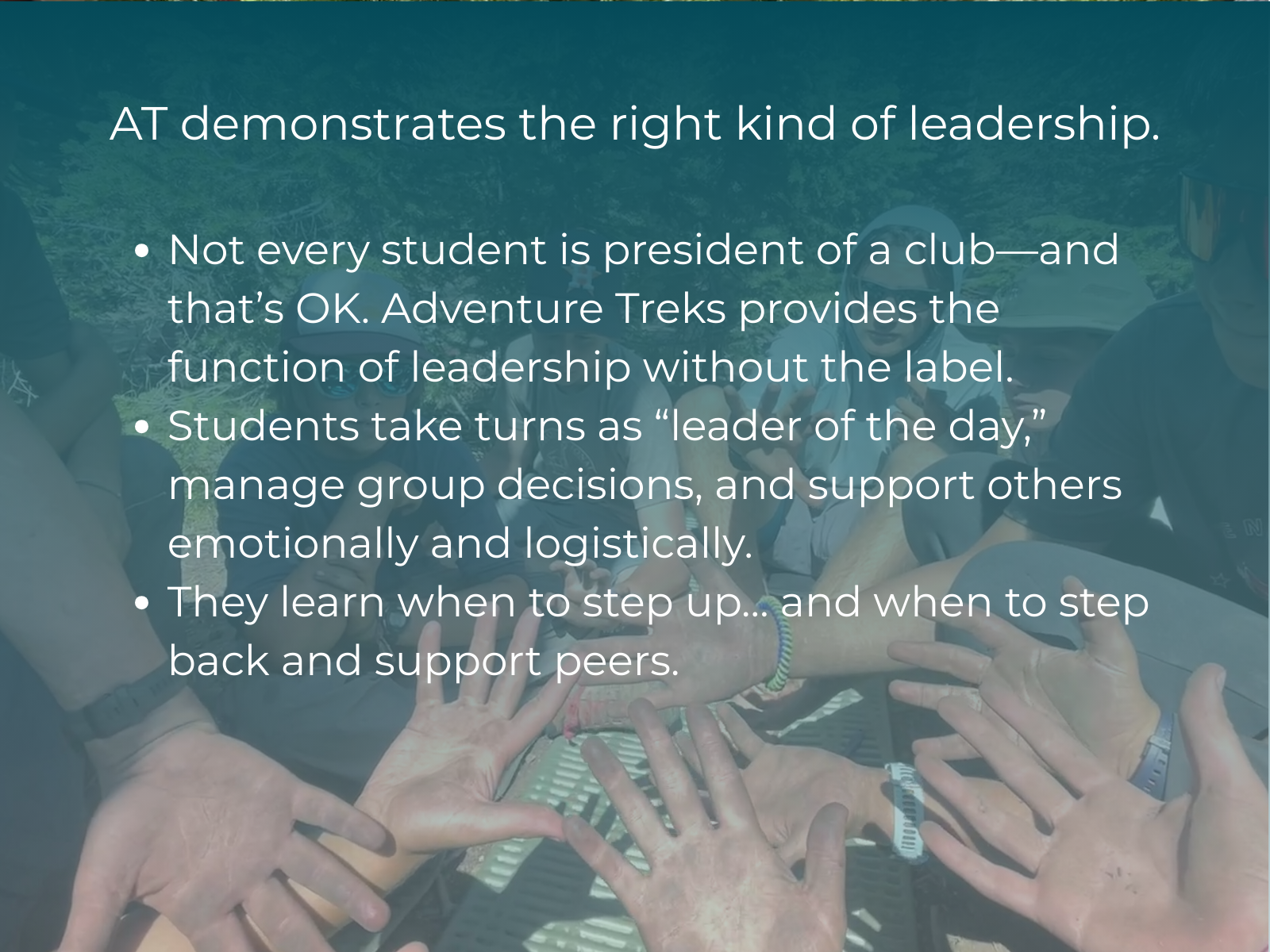
We’ve spoken with high school counselors, college advisors, and even admissions officers, and the message is clear and consistent: Colleges want to see more than grades and test scores. They want to understand who students are as people—what drives them, how they handle challenges, and what makes them thrive.
In a conversation with one college advisor, we learned that:
Admissions officers want students who are consistent, committed, and real. It’s not about cramming your resume with random activities—it’s about showing passion, perseverance, and growth.
Authenticity matters most in essays and interviews, where students can reflect on meaningful experiences. Demonstrating long-term engagement (i.e., consistency) matters, whether it’s through a part-time job, volunteering at the same local food pantry, or returning to a favorite summer program year after year.
How Adventure Treks fits into the college prep picture
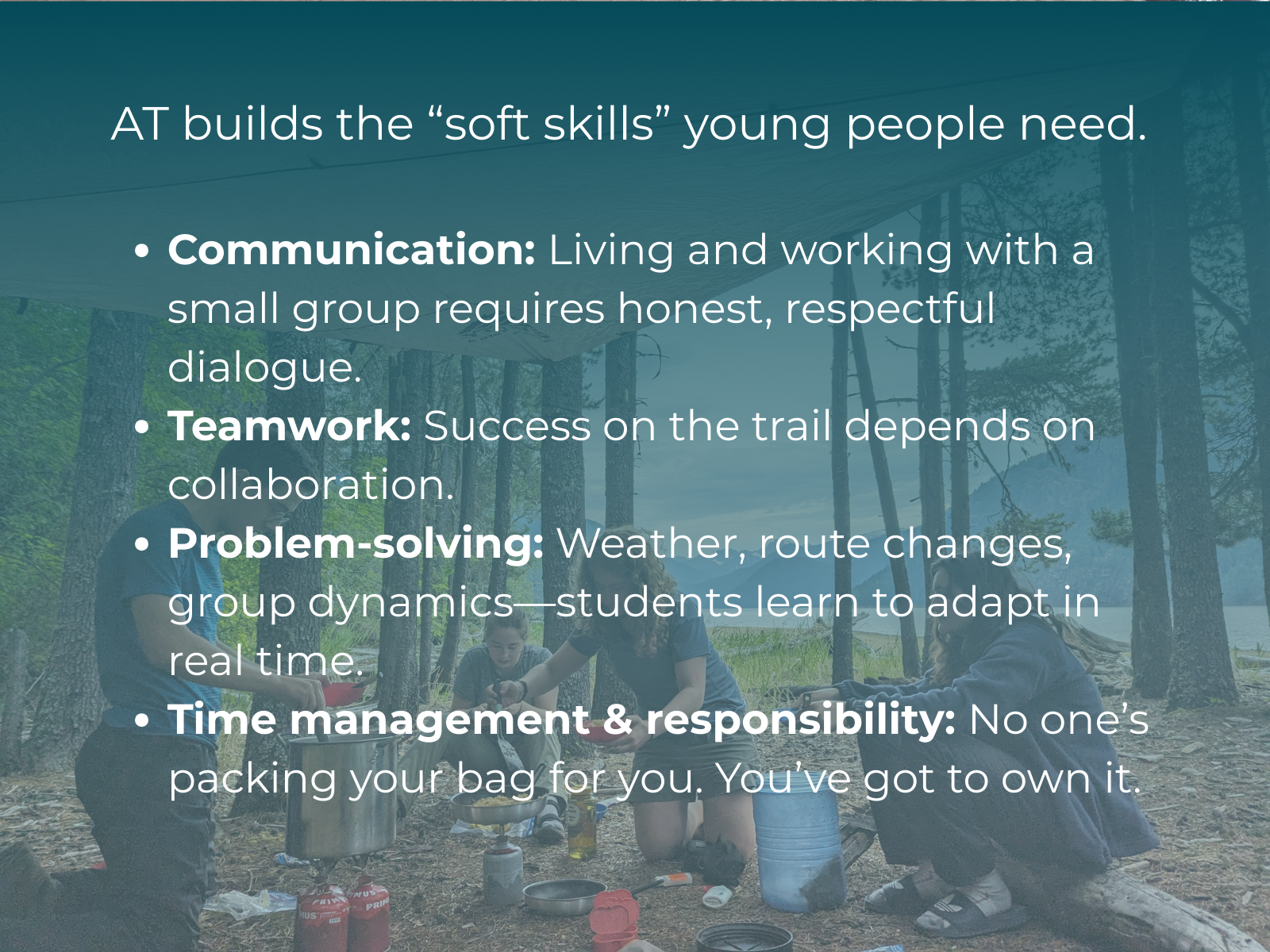
Authenticity is where Adventure Treks alumni shine. Our students build strong, authentic communities while engaging in fun outdoor challenges. Every summer, they:
- Collaborate and problem-solve in groups
- Take on leadership roles and support their peers
- Persevere through tough hikes, inclement weather, and new physical and social environments
- Reflect on personal growth and a real sense of belonging
And they love it. Their newfound passions—combined with meaningful growth—translate powerfully on college applications.
Real skills and real stories
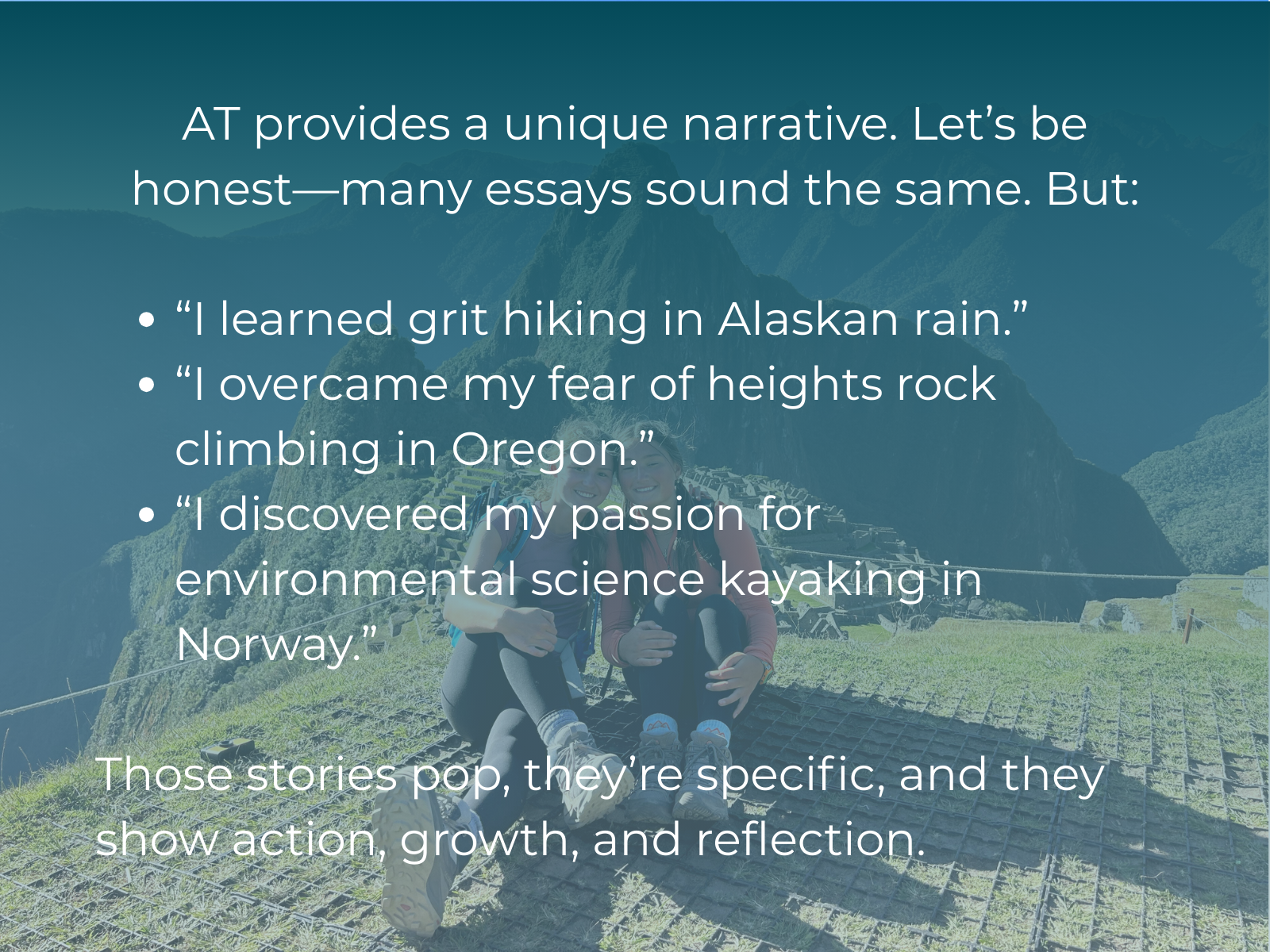
Whether it’s summiting Mount Shastina or St. Helens, navigating a Norwegian fjord by sea kayak, or cooking dinner for a group after two days of climbing at Oregon’s famous Smith Rock, AT students dig deep and develop independence, an optimistic mindset, and resilience. They learn to adapt, support others, and keep going even when things get tough—exactly the traits colleges want. And exactly the traits young people need in order to succeed later in life.
Their stories often become the foundation of remarkable college essays. Their essays don’t get lost in the noise because that authenticity of meaningful, real-life experience shines through.
What the experts say
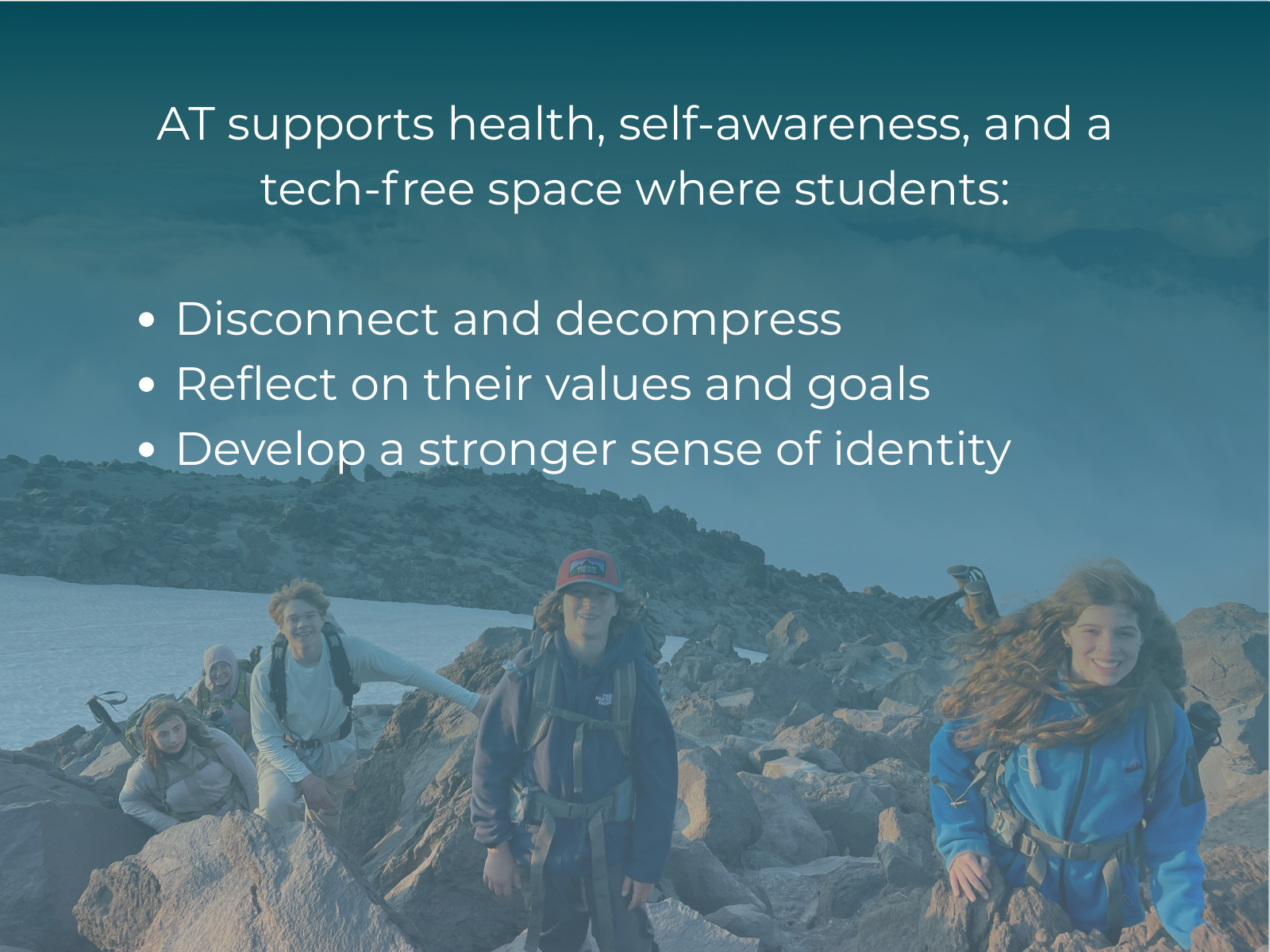
Daniella Friedman, a college advisor and Adventure Treks alumni parent, shared this insight:
“Adventure Treks is a worthy experience in and of itself. Students learn grit, teamwork, and leadership, all while having fun and making lifelong friendships in the great outdoors. At the same time, participating in Adventure Treks can strengthen a student’s college applications in many ways, including enhancing their activity list and college resume, giving them something to write about in their personal statement and supplemental college essays, and obtaining a strong letter of recommendation from an AT instructor.”
She adds:
“Outdoor experiences like Adventure Treks demonstrate to a college that a student is down-to-earth, adventurous, and willing to embrace challenge. But colleges also like to see that students have “stick-to-it-iveness” and real passion. So while one summer spent backpacking with Adventure Treks looks good, several summers spent backpacking with Adventure Treks looks even better.”
View more of Daniella’s advice here and here.
Bottom line

Adventure Treks helps students become the kind of young people colleges want to admit:
- Confident in who they are
- Resilient in the face of challenge
- Grounded in real experiences and communities, not just resume padding
- Authentic in how they express their values and passions
For students wondering how to stand out in a sea of applicants, the answer may be less about adding more activities—and more about going deeper in the ones that really matter to you!
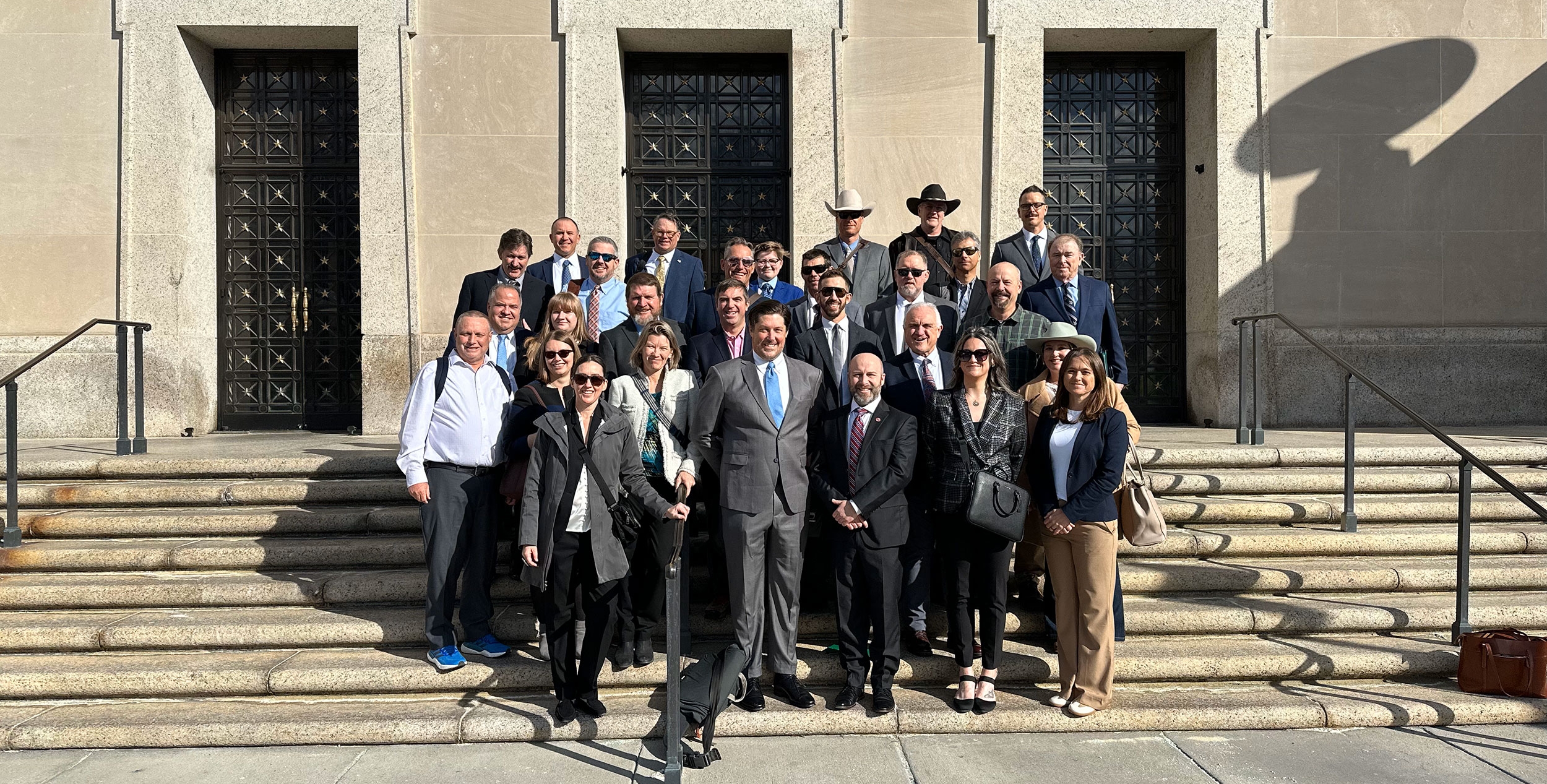
AO members represented here include Adventure Treks, Nantahala Outdoor Center, Northwest Rafting, Canyons Rafting, Western Rivers Expeditions, Cascade Raft & Kayak, Triangle X Ranch, Upper Canyon Outfitters, Idaho Outfitters and Guide Association, Ober Mountain, Grand Canyon Rafting Outfitters Association, Hatch River Expeditions, French Broad Adventures, Wilderness Voyageurs
By Dave “Dmac” McGlashan
On Monday, February 24, I went to Washington, DC, for an annual lobbying event hosted by the America Outdoors Association, which is the largest national guide and outfitter association in the United States. I am honored to serve as the president of the board and have been going to “Camp Washington” to lobby on behalf of the outdoors for the last eight years. With everything happening at the National Parks Service and National Forest Service, we at AO knew this would be one of our most important visits in recent years.
Our group, consisting of AO board members and outdoor recreation company owners, gathered for a dinner and strategy session on the night of the 24th. There, we were greeted with some good news: The NPS had received the green light to go ahead and hire their seasonal staff! By Tuesday morning, several hundred jobs were live, with almost 2,000 more preparing to launch. This helped alleviate some fears around operating in national parks this summer.
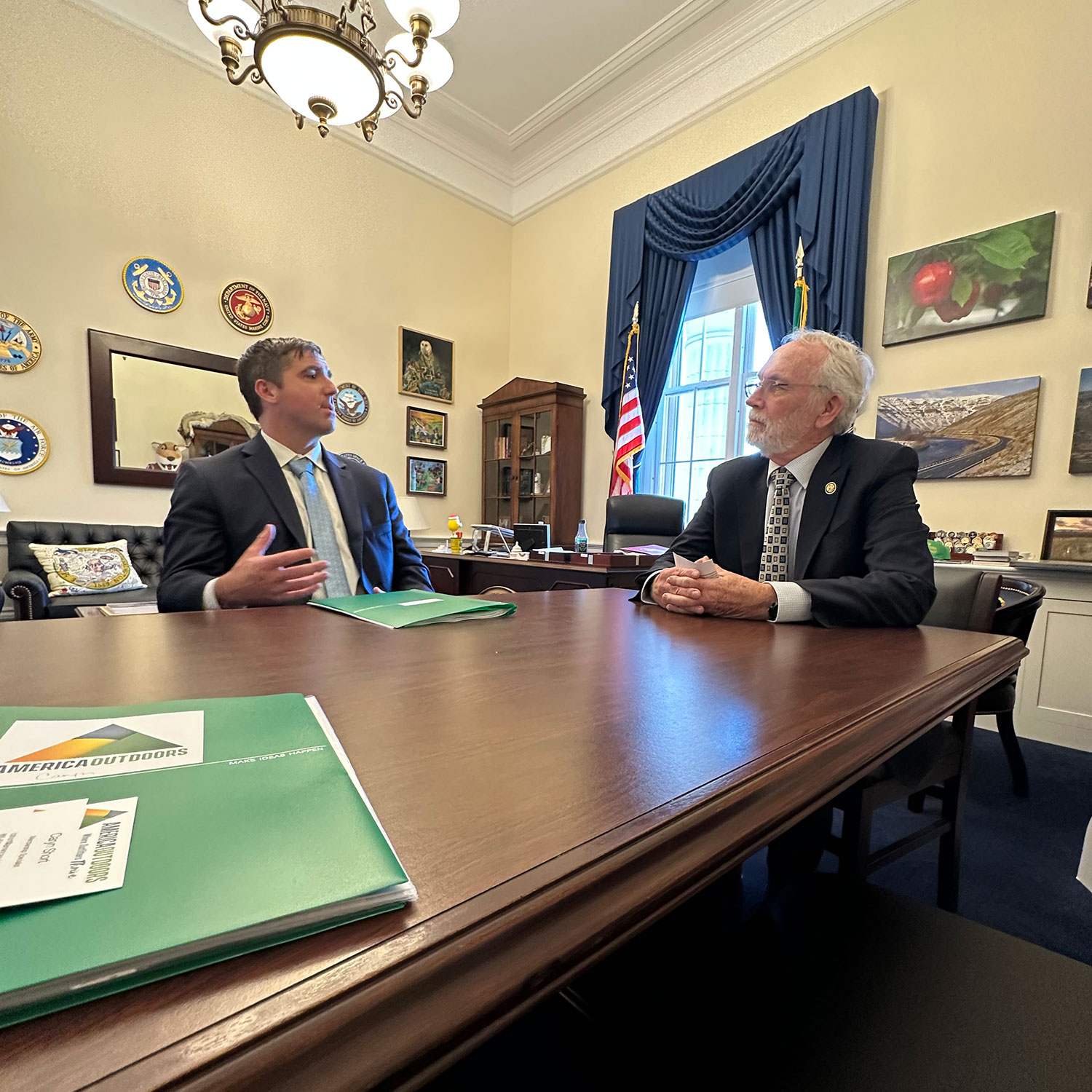
Dmac with Washington representative Dan Newhouse
The biggest event of Tuesday morning was a meeting with the recently installed Secretary of the Interior Doug Burgum. Though we were originally told that he would only be able to give us 10 minutes of his time, what unfolded was an hour-long meeting with approximately 25 business owners from our association. We pressed upon Secretary Burgum the importance of fully staffing the NPS, from their seasonal workers to those who had recently been laid off. Before the meeting was over, the secretary ensured us that he would meet with the current administration officials because, as he said, “The parks are the envy of most countries and one of our most prized posessions.” I couldn’t agree more.
Now, you can’t always believe a politician will follow through on their promises. However, I left this meeting with some faith that the secretary would try his best to support not only the National Park Service, but also those of us who operate in the outdoors, as many of our livelihoods rely on being able to run trips in the parks. Fortunately, Secretary Burgum is an avid outdoorsman and expressed his desire to keep the NPS running at the highest level possible.
The rest of Tuesday and all day Wednesday, America Outdoors held meetings with members of Congress from more than 30 states—on both sides of the aisle. We spoke with the offices of Patty Murray, Marie Gluesenkamp Perez, John Barrasso, Cynthia Lummis, Mark Kelly, Ruben Gallego, Mike Crapo, James Risch, Dan Newhouse, Virginia Foxx, Chuck Edwards, Thom Tillis, Lindsey Graham, Ted Budd, Michael Bennett, Brittany Petterson, Shelley Moore Capito, and many more from West Virginia, Georgia, Tennessee, Maine, Utah, Indiana, Montana, and Oregon.
Overall, the mood (as it related to the outdoor recreation industry) in DC was better than expected. By the end of the week, we received word that the NPS was able to hire back employees they’d had to terminate. The great thing about the outdoors is that it tends to bring people together, regardless of their political beliefs or backgrounds. I flew out of DCA feeling more positive than I anticipated.
Your question might be, how does this impact Adventure Treks?
I believe in our ability to operate as expected this summer. Just like any other year, there will be issues we’ll have to face. We operated through a government shutdown in 2013. In 2016, high snowpack in California led us to lower elevation hikes. In 2017, we had to switch our itineraries around in British Columbia due to wildfires, and then in 2022, we got creative with our backpacking routes with provincial park flooding. In 2020, we had COVID. In 2021, fires in California led us to raft instead on the Rogue River in southern Oregon, where we still operate today because it’s so fun! In 2022, severe flooding closed northern Yellowstone temporarily.
All this is to say that Adventure Treks can and will creatively problem-solve when the need arises, and we will always keep our students’ safety as our top priority, while still having lots of fun.
If you’d like to chat more about our involvement with legislative affairs in the outdoors, give us a ring at 828-698-0399!
How often do you get the chance to truly connect as a family—free from screens, packed schedules, and the hustle of everyday life? Nature offers a refreshing escape from modern distractions, creating space to reconnect, strengthen relationships, and build lasting memories. At Adventure Treks, we’ve seen firsthand how shared outdoor experiences can transform relationships. That’s why we’re thrilled to introduce our family and adult adventure programs, designed to help families enjoy these unforgettable moments together.
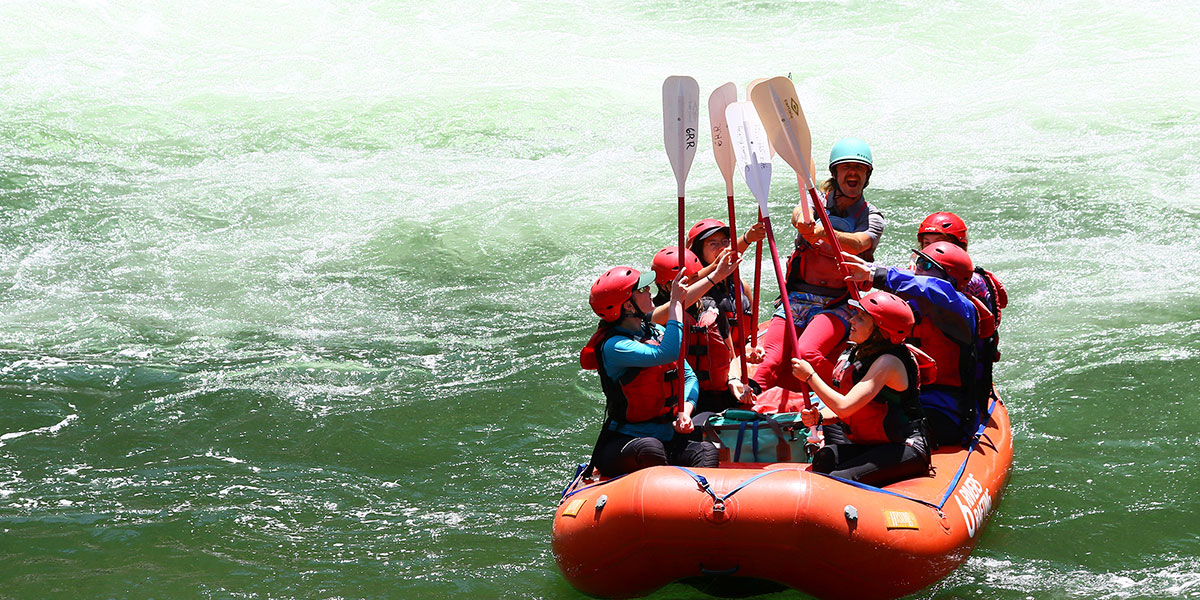
Create unforgettable shared memories
Shared outdoor adventures have a unique way of bringing families closer together. Whether it’s hiking to a scenic viewpoint, laughing around a campfire, or working as a team to set up camp, these experiences foster a sense of bonding for families. These moments away from daily distractions allow families to engage in meaningful conversations, experience new challenges together, and enjoy quality time without interruptions.
“I still tell people I was the happiest I’ve ever been on those trips. Being in the backcountry with a group of amazing leaders and friends was life-changing.” – Ally Krause, student from 2014–2016
The same transformative magic that shaped her experience as a teen is equally impactful for families venturing into the outdoors together, providing the chance to deepen connections with loved ones while surrounded by some incredible landscapes.
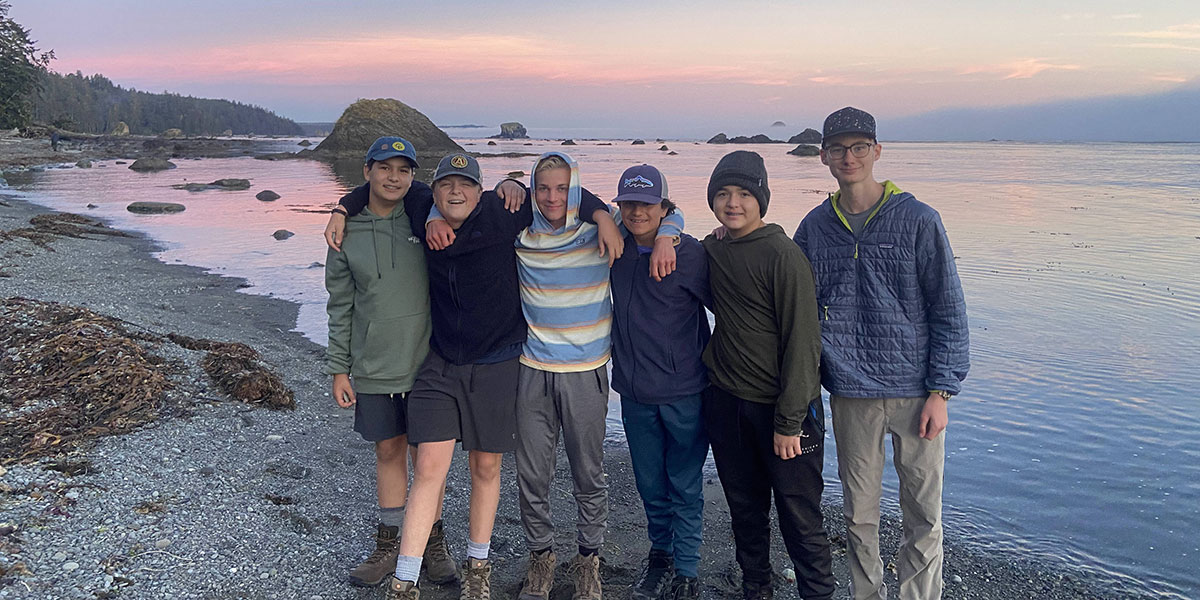
Build confidence and resilience as a family
Challenges in the wilderness—like navigating a steep trail, adapting to unexpected weather, or managing camp tasks—provide valuable lessons in resilience, problem-solving, and trust. These lessons aren’t just for individuals—they strengthen family dynamics, too, as kids and parents work together to overcome obstacles, celebrate achievements, and learn from setbacks.
Plus, outdoor trips help family members take on different responsibilities. Whether it’s setting up camp, cooking meals, or planning the next group activity, everyone plays a role in ensuring the success of the trip. Parents often see their children rise to the occasion, sometimes even taking on leadership roles or caring for the safety and well-being of others in the group. These moments of responsibility help develop a stronger sense of teamwork and give children opportunities to practice decision-making with the whole group in mind—and they’re skills that kids can take home and apply to everyday lives. We often hear from parents about how their teens become more involved in household chores (of their own accord) after an Adventure Treks trip!
“It’s hard to express how much I value the experiences I had on my Adventure Treks trips as a teenager. I look back on them so often and am just so grateful I had AT in my life. Not only did it help me develop a lifelong love of the outdoors and outdoor activities, but it gave me so much more confidence in myself at that point in my life. AT was the first time I felt truly comfortable and accepted away from my home community.” – Issy Schwartz, student from 2017–2020
Imagine the impact of building that confidence and resilience together as a family unit, while learning how to be responsible for the group and the environment.
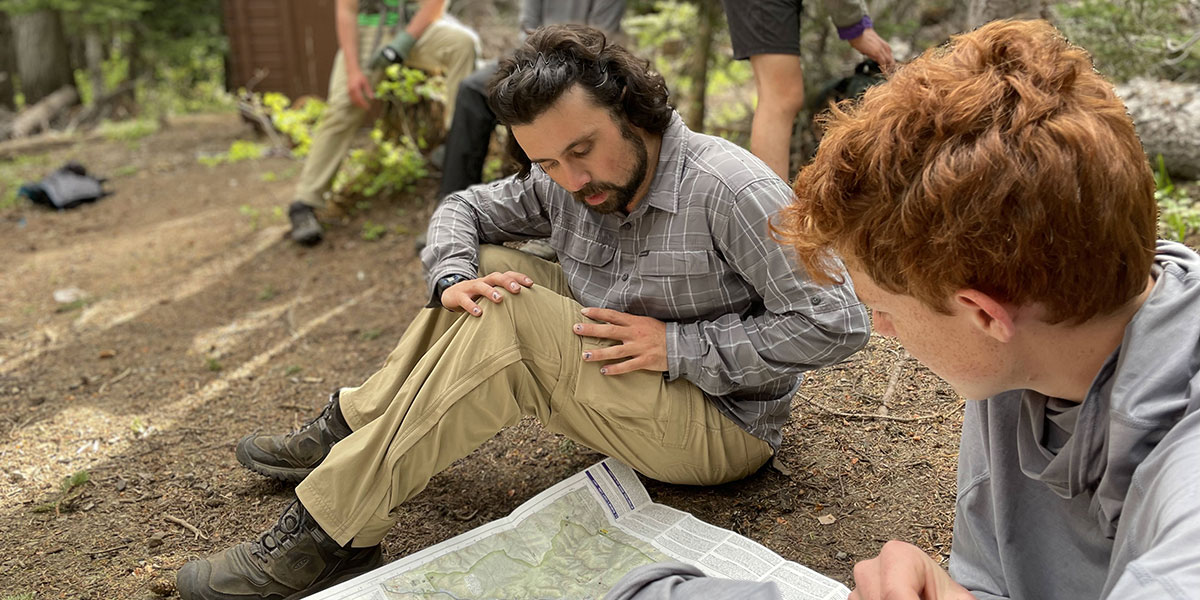
Encourage curiosity, creativity, and imagination
Time outdoors goes beyond physical activity—it’s a chance to spark curiosity, creative thinking, and a deeper connection to the natural world. Adventure Treks’ programs are designed to inspire families to explore, imagine, and learn together. Studies compiled by the Children and Nature Network show that time in nature encourages critical thinking and problem-solving in children—skills that are vital for lifelong learning and success.
Simple activities like identifying plants on a hike or creating stories about the shapes of clouds can inspire imagination, helping parents see the world through their kids’ eyes and vice versa. It’s an incredible opportunity to grow and learn together in nature’s classroom.
Better physical and mental well-being
The mental health benefits of spending time outdoors are well-documented. According to Connections Academy, outdoor play reduces stress, improves mood, and builds deeper bonds. Families who spend time together outside report feeling more connected, happier, and recharged.
Outdoor activities like hiking, kayaking, and backpacking are not only excellent ways to keep the whole family physically active, but they also promote better sleep. Unlike structured gym routines, these adventures feel more like play, making exercise fun and accessible for all ages and fitness levels. Physical activity in nature also encourages better sleep patterns by allowing families to unwind after a day of outdoor exploration.
Our family trips are designed to meet families where they are, providing activities that challenge and inspire without overwhelming or intimidating. Whether you’re new to outdoor adventures or seasoned explorers, our trips help everyone stay active while having fun together—and enjoy the added benefit of deeper, more restful sleep at night.
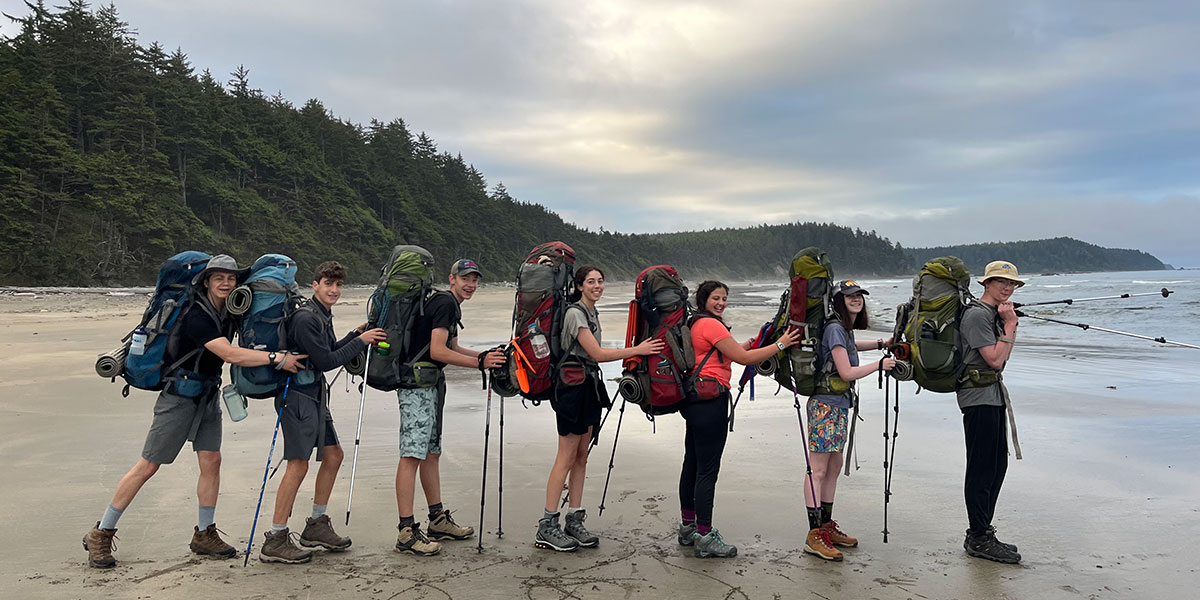
Increased collaboration, communication, and social skills
Outdoor adventures provide a natural environment for families to practice teamwork and communication. From sharing responsibilities like cooking meals to solving problems together on the trail, these activities help family members hone their social skills in a supportive, fun atmosphere.
“Adventure Treks had a profound impact on my life by building my confidence and reshaping the way I see myself and the world around me. It was with AT that I learned the basics of conservation and fell even more in love with nature. This exposure not only broadened my worldview but also strengthened my ability to connect with others on a more authentic level.” – Jessica Zied, student from 2014–2016
Whether it’s planning the day’s activities, navigating a challenge, or ensuring everyone’s needs are met, outdoor recreation provides plenty of opportunities for families to develop important communication skills that last long after the adventure ends.
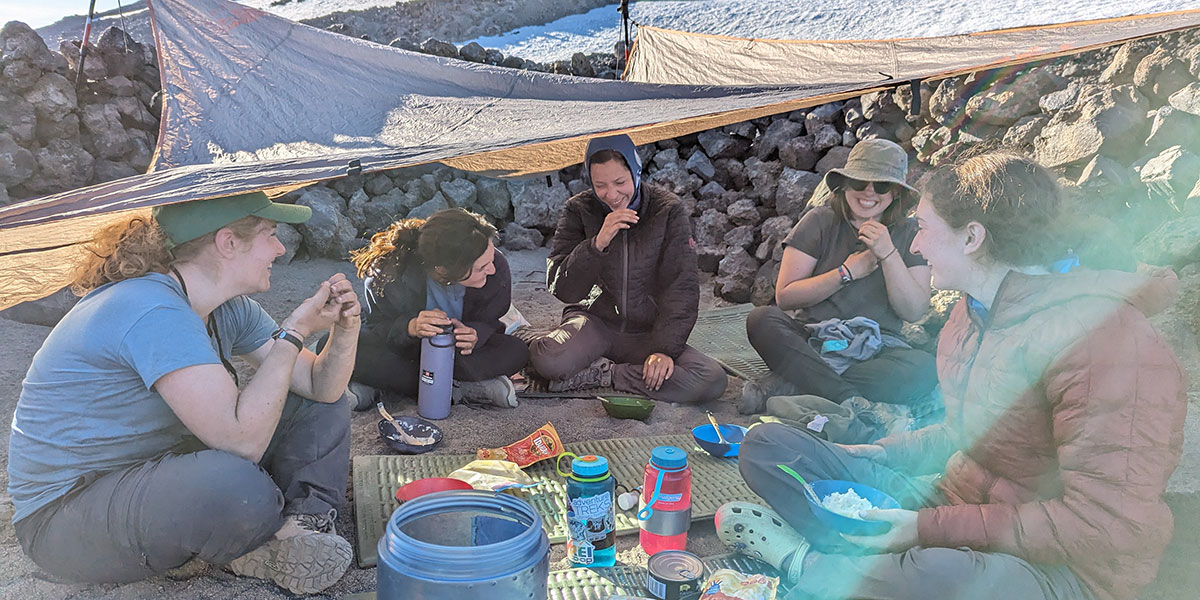
Simple ways to get outside year-round
Not ready for a multi-day adventure? There are plenty of ways to incorporate outdoor time into your family’s routine:
- Take evening walks around your neighborhood or local park.
- Plan weekend camping trips to explore nearby nature reserves.
- Try a new outdoor hobby, like birdwatching or gardening.
- Create a backyard scavenger hunt or stargazing night for the whole family.
Even small steps can help your family enjoy the benefits of time spent outdoors.
A call to adventure
Outdoor spaces hold something transformative for every member of your family. These experiences not only create lasting memories, but they also instill values that stay with you for a lifetime. This year, we invite you to embark on a journey where the challenges faced together can be just as meaningful as the milestones achieved. It’s more than just a trip; it’s an opportunity to discover new strengths and experience the world through fresh eyes. Whether you join us for Adventure Treks’ adult or family trips, you’ll find the perfect setting for a life-changing adventure.
“I consider my AT experiences fundamental to my growth as a human. For the first time, I felt truly comfortable and vulnerable with others and like I could be myself. I was proud of my accomplishments, in awe of the world, and so so so happy. In my adult life, I strive to be the kind of person I was at AT. It rekindled a love for the outdoors and a genuine faith in the good of other people.” – Hunter James, student from 2013
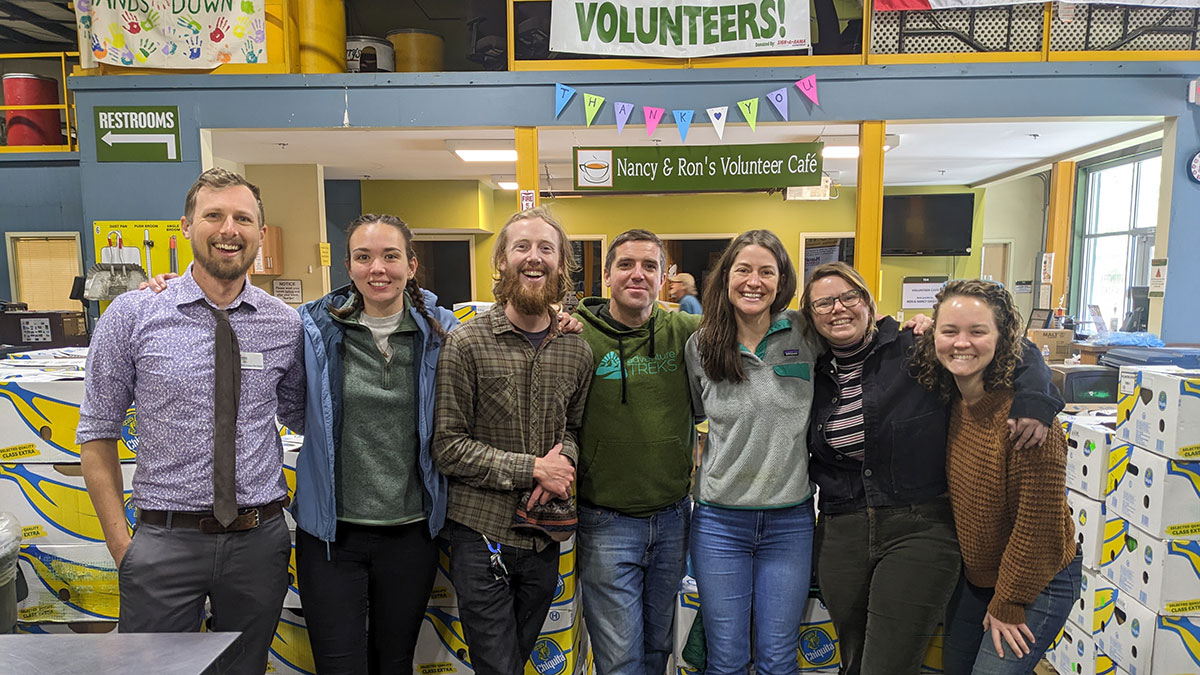
From left: Nic, Jordan, Kent, Dmac, Amanda, Kilee, & Jess
Every year, the Adventure Treks team takes time out of the office to volunteer for local organizations. Most recently, we spent time with MANNA FoodBank in Asheville, NC! We have volunteered with MANNA before, but this time was even more special: Their new volunteer coordinator is none other than alumni instructor Nic Ames! Nic worked our Leadership Adventure Semester in spring 2022 and Colorado Explorer trips in summer 2022. Now, he’s in charge of coordinating nearly 3,000 volunteers who last year provided more than 50,000 hours of support for MANNA.
We got a full tour of MANNA’s warehouses in Asheville, getting to see how this organization distributed more than 18 million tons of food last year; in other words, 42,669 meals each day served nearly 110,000 people every month. MANNA partners with local grocery stores, farmers, retail businesses, individual donors, and public programs to source fresh and non-perishable food for distribution. Sourced food passes through these warehouses for sorting, quality control, and packaging to prepare it for distribution. MANNA then distributes food to their network of partnering agencies and MANNA Community Market partners to any member of the community who needs food and can attend these free distributions.
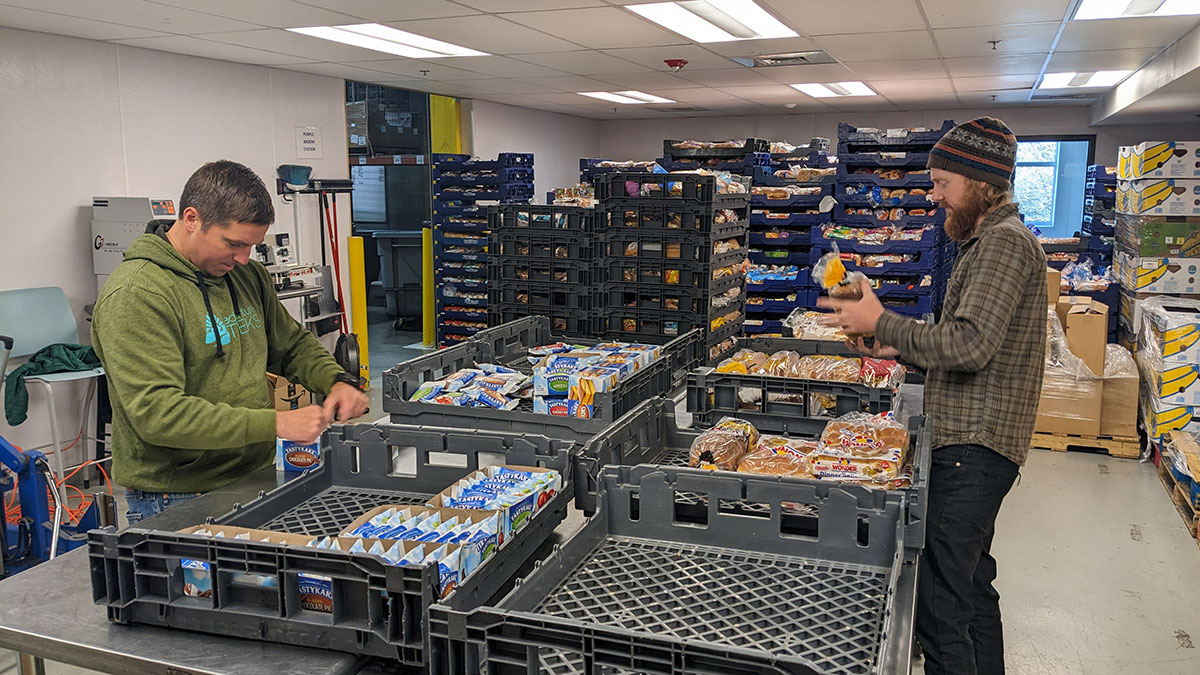
We spent the day in the sorting and quality control center with crates upon crates of bread and baked goods. Rose, one of MANNA’s employees, walked us through the process of ensuring that the expiration date allowed enough time for distribution and checking for damages in the packaging. We put our AT experience to good use as we sorted, re-packaged, and stacked food into pallets for distribution that week. The bread that was expired or otherwise unfit to distribute went to local pig farms—rather than into a landfill!
All of this food sorting got us excited for the summer, as we are now about two months away for the start of our instructor orientation! Adventure Treks prioritizes high-quality food—with fruits and vegetables, proteins, and grains at every meal—for our students and instructors throughout the summer. Last year, we built connections with local pig farmers near our west coast base in Washington to help convert our food waste into food for happy pigs! At the end of every season, the unopened and unexpired food from our programming gets donated to foodbanks like MANNA.
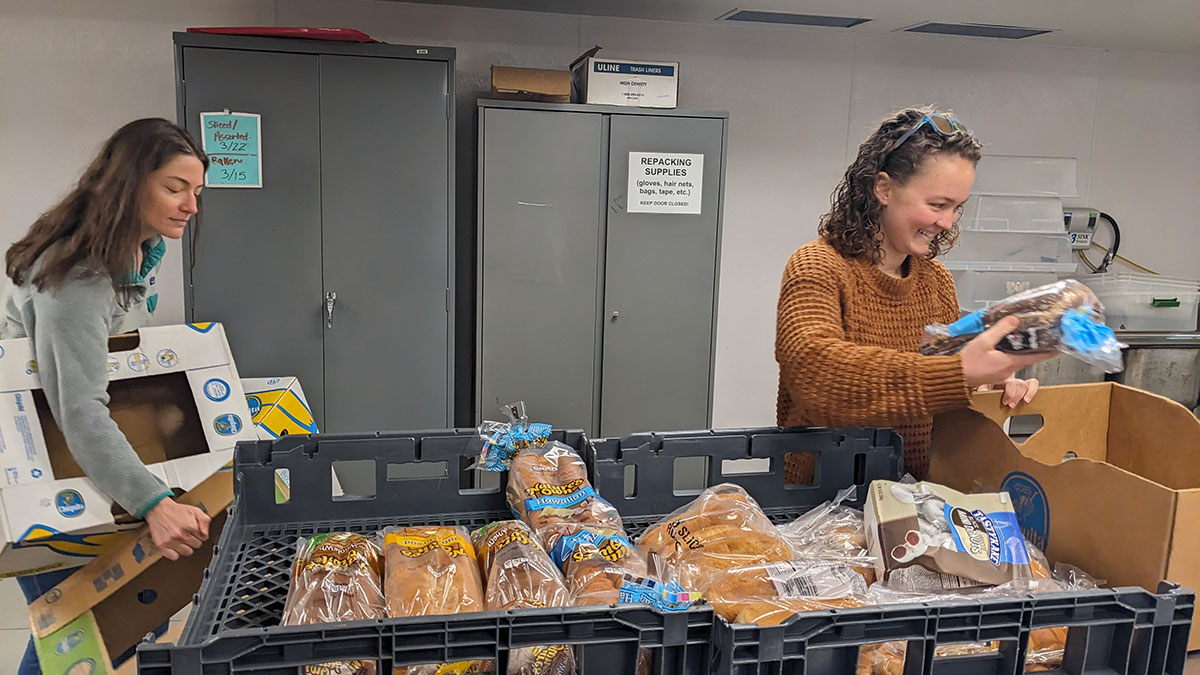
Programs like MANNA depend heavily on volunteers, and it was wonderful to play a small part in their operation! We are firm believers in service on a local level so that we can see how government, non-profit, and even for-profit organizations can build effective, supportive, and functional communities to care for its citizens. We hope our students can also learn to be engaged citizens in their hometowns to build empathy, discover new passions, and make new connections with people they otherwise may not have met!
Our students will agree that Adventure Treks instructors are pretty incredible people. From planning 30-person meals for 30 days to fixing broken tent zippers to tending wounds to making sure we’re in the right place at the right time, AT instructors are constantly working to make sure our students are having the best and most fun summer program possible. This passion for empowering teenagers’ personal growth, fostering a fun and cohesive community, and exploring beautiful places with new friends is what makes our instructor team so strong and impactful.
Because our instructors are at the heart and soul of the Adventure Treks experience, we’d love for you to get to know them a little better. How did they end up at AT? What do they do in their free time? What are some fun facts people don’t know about them? We interviewed two of our summer 2022 instructors and are happy to share more about their lives below!
Max Minichiello
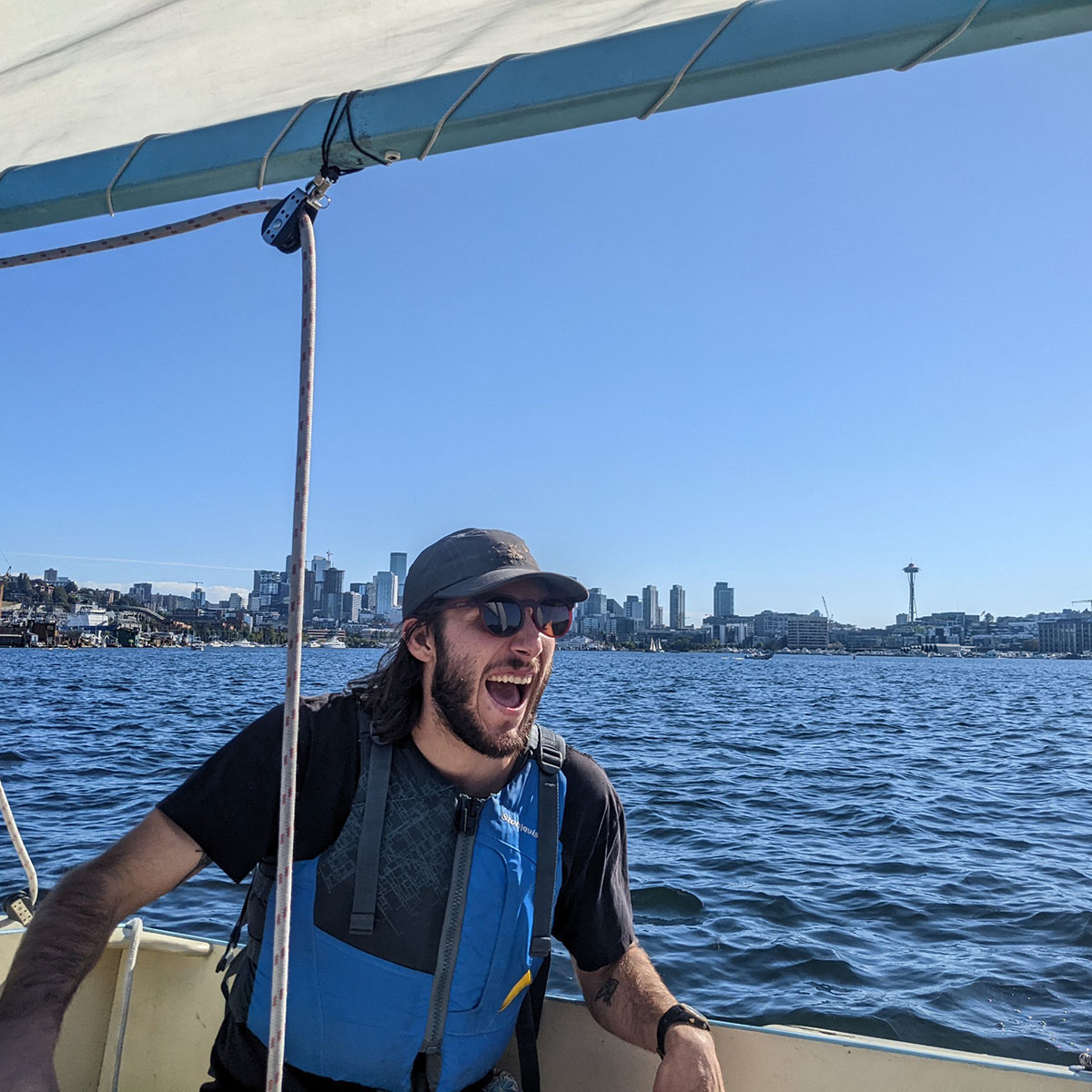 Why did you initially pursue work as an outdoor educator? What keeps you coming back? Initially, I knew I wanted to be outside all the time, as it’s where I found myself to be the happiest. Over time, what brings me back is watching that love grow in the students I teach, as well as the communities I form every year.
What’s one of your favorite memories from last year’s Adventure Treks trips? Doing an alternate, lower elevation backpack in the Goat Rocks. We couldn’t do the normal backpacking route because the snowpack was too high. Having hiked in the Goat Rocks, at first I was pretty bummed that we would miss out on the beauty of it all. However, we still had an incredible time, and I don’t know if I’ve ever laughed so much on a backpack.
What do you do when not working for AT? For the past year, I’ve been working as a barista and as a climbing instructor for the YMCA. Beyond that, I like to do a lot of things we do at Adventure Treks! I’ve been really into big, large-mileage day hikes. Some highlights over the past year were the High Divide loop in Olympic National Park, and crossing the Carbon River in Rainier National Park. Skiing has also been a lot of fun this winter, and when I’m not outdoors, I like to read, play board games and video games, and make block prints!
What are you hoping to learn and grow into this next year? I’m hoping to strengthen my connections with my community in Seattle. It’ll be the first time I’ve lived in one place for longer than a year since college, and that’s really exciting for me!
Do you have any big exciting life plans for the near future? I’ll be enrolling in a local college to get an associate’s degree in GIS! I’m really stoked on that, and also have some goals of hiking the Wonderland Trail, as well as the Timberline Trail.
Fun facts about Max: My pinkies are insanely crooked, and I’m an avid competitive Pokémon battler (like the video game, not the card game).
Kate Wojeck
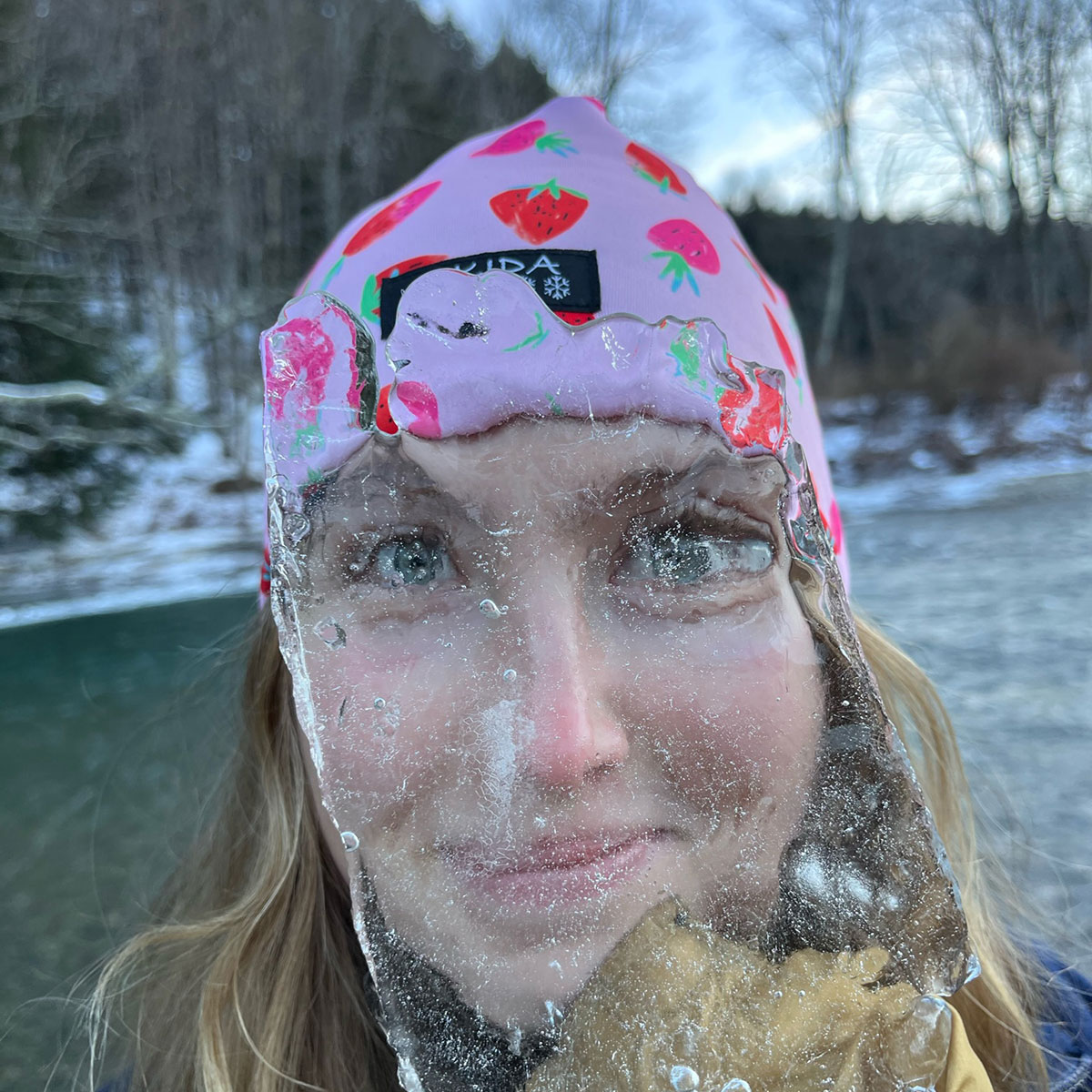 What initially made you pursue work as an outdoor educator? The energy and connection and community I feel in every Adventure Treks space I step into and am a part of—and now help cultivate—is something else. It’s kind of like this big, bone-crushing hug. And I keep coming back to feel it.
What’s your favorite memory from last year’s Adventure Treks trips? I’ve recently been revisiting the moment I heard one of my students’ real laughs—a full-bodied, lose-your-breath belly laughter—for the first time after spending a week together on our Olympic Peninsula backpack. We were de-rigging and while telling the story of our adventure, she burst out laughing… this colorful laughter I hadn’t heard yet. Something shook loose in me, and I was consumed by my own fit of giggles. Seeing a piece of someone come alive in front of you and bring so much color into their person was so special. I can feel how much our cheeks hurt, how much joy was pulsing through all of us—it makes me smile real big! I’ve since been fixated on what a laugh holds and how meaningful it is when shared like that.
What do you do when not working at Adventure Treks? I am living in the library, reading, writing, musing, projecting, dancing, playing outside in all forms, savoring sunshine as a student at the University of Vermont in Burlington—and still exploring! I’m studying environmental studies and storytelling (via writing, art, film, etc.). We’re thawing out after winter and you can feel the shift in seasons—it’s lovely. Swims in the lake, stomping around in the mud, and warmer evening walks are upon us so soon. I’m getting my American Canoe Association certification for kayaking in a couple weeks, too.
What are you hoping to learn over the next year? I’m learning how to see myself—all of my messy, wonderful self—and will continue to notice and carry this awareness over the next year. The kind of witnessing where you create the space to hold all parts of you and breathe into them. The things and feelings and people who ooze an energy about them always make me grin, and I’m trying to embody myself just a little more each day.
What’s a hobby or passion that you pursue in your daily life that not everyone knows about you? Writing! The kind that’s creative and messy and oozing sensory details. I keep a notebook where I gather words I love that are circling around in me, and I spend lots of time playing in there. It’s becoming a practice or ritual of sorts, and I’m starting to feel my imagination crack open. I love it.
What is a book or article you read recently that really stuck with you? This isn’t a book or an article, but a podcast that’s been scratching an itch in my brain lately is “On Being” with Krista Tippet. So much sensitivity and wisdom and joy inhabits these conversations. It’s incredibly grounding to hear Tippet and who she’s in dialogue with reflect and articulate all they’re noticing and imagining in their lives, as they stretch into the unknown madness of the world.
Adventure Treks’ top goals for students include the building a supportive and inclusive community, experiencing personal growth, and—of course—having a TON of FUN!
For a moment, close your eyes and pretend you’re on an Adventure Treks trip in California. It’s a typical summer day… meaning it’s hot. After an adventurous day of rock climbing with your friends, you feel tired yet empowered and proud. It’s time to head back to camp, which means loading into the vans. To your pleasant surprise, the van is already cool, with the A/C running on full blast. Everyone’s energy surges with cold air drying sweaty heads. A Spotify playlist begins, and everyone starts singing along.
This is “wow” #1.
You pull into the grocery store, and an instructor runs inside. The group hops out to play hacky sack while you wait. A few minutes later, the instructor returns with fresh food, and gloriously frozen treats—a perfect afternoon treat after a hot day of climbing.
This is “wow” #2.
We all get back to camp, where the climbers will begin making student dinners for the entire group (the bikers are still out pedaling around Mt. Shasta). Your group brainstormed the menu, bought the ingredients, divvied out responsibilities, and are responsible for executing the entire meal from start to finish. Everyone gets dressed up and dances and sings while dinner is cooking.
This is “wow” #3.

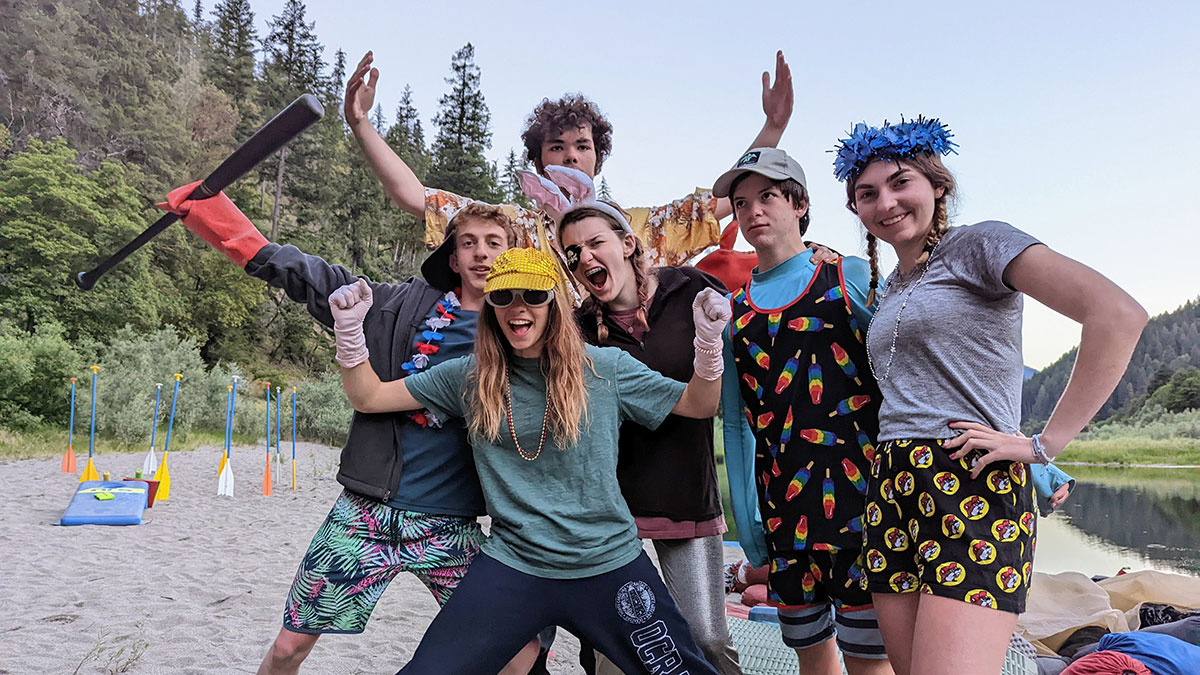
Most AT students know about the “WOW” factor that accompanies each trip. What we call “wow” are moments of fun and excitement and humor (planned or spontaneous) that accompany everything we do. The “wow” sometimes defines each trip, its community, and the memories students take home. This is largely a reflection of the unique individuals on each trip, and our instructors put a lot of thought into planning special events in between our outdoor pursuits.
Sometimes, “wow” moments are small gestures, like surprise popsicles on a hot day, a van that’s already been cooled off, an unplanned game in moments of downtime, a splash in a creek, a trail treat left for another group. At other times, they’re painstakingly extravagant events, like AT Olympics on the beach of a beautiful lake with Mt. Shasta in the background during sunset.
“Wow” is also what makes group chores and difficult challenges more fun. Because Adventure Treks is an expedition, we have quite a few logistics to manage, like packing and unpacking the U-Haul, setting up and taking down camp, and cooking three meals a day on backcountry stoves. Although these may seem like simple tasks on a checklist, they’re always accompanied by something to get people more excited and bought in, like our favorite Spotify playlist blasting on a Bluetooth speaker, dance parties as we “duffel shuffle,” riddles and trail games as we hike uphill, and fashioning “prom outfits” out of trash bags in the rain during a backcountry sea kayaking trip.
We have countless examples of how to make being outdoors and in an intentional community FUN, every single day. And instructors aren’t the only ones incorporating the “wow” into their trips—students often get involved as well! One of my all-time favorite events involves a student who led a Zumba class at camp. Not only did we have an absolute blast as a group, but leading a silly dance class outside helped that more reserved student come out of their shell. From then on, they displayed much more confidence in the group and fully embraced being their true self.
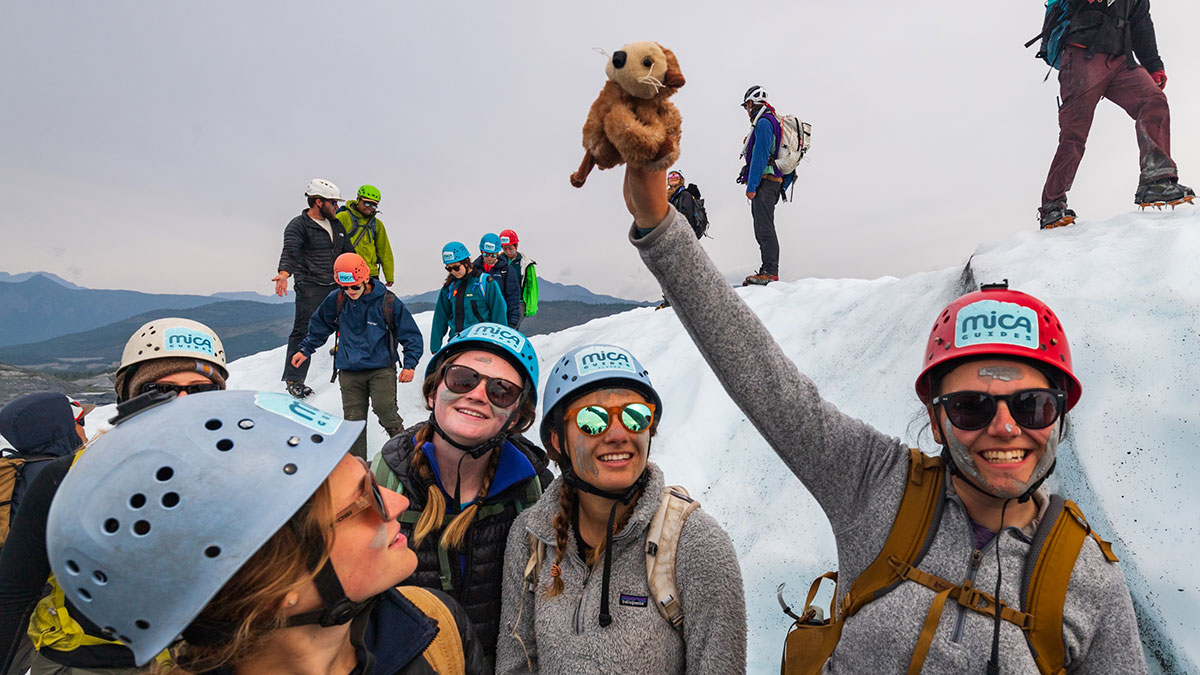
Many more “WOW!” moments come from our group journal. Every night during evening meeting, a student offers an account of the day from their perspective. There are infinite bounds to the creativity displayed here—students have written songs with original lyrics, performed skits with friends, played charades to act out the day, told the story from the perspective of a fictional (or non-human) being… It’s often a big source of hilarity and endless, uncontrollable giggles .
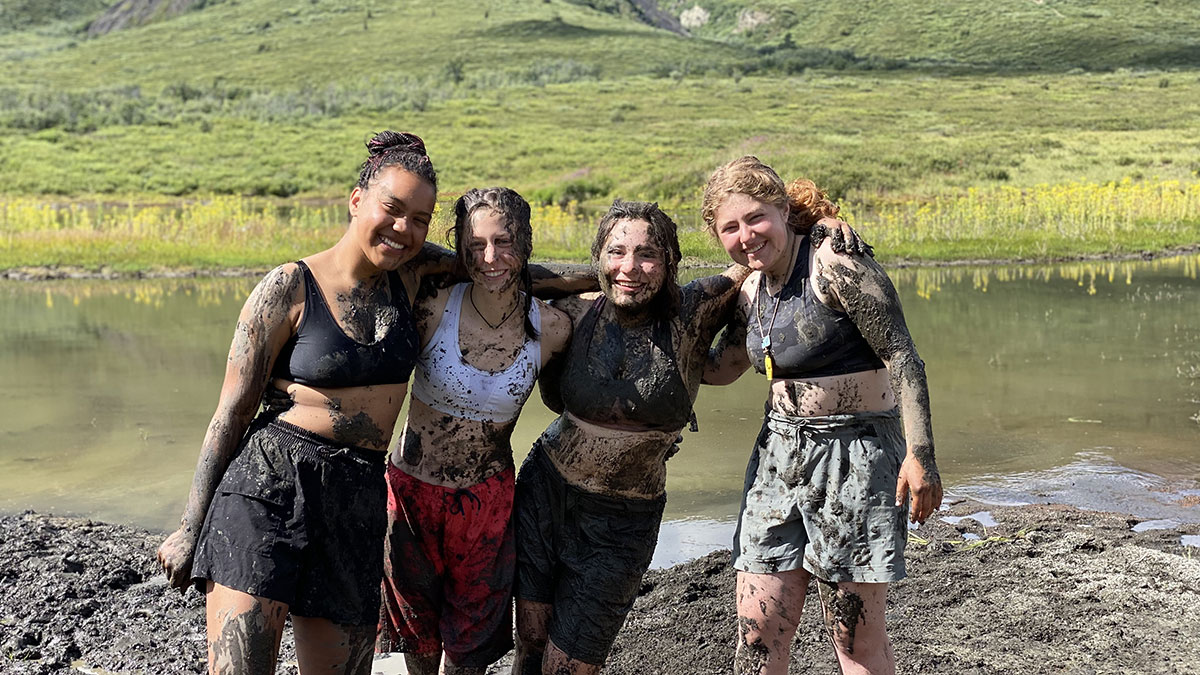
It’s safe to say that an unspoken goal of Adventure Treks is to have every student arrive home with fond memories of “WOW!” whether that’s nailing an Owen Wilson impersonation, winning the shaving cream Cheeto toss, experiencing a luxurious mud mask in Alaska, celebrating Canada Day or the 4th of July with sparklers, or making a Taylor Swift music video on a mountaintop!