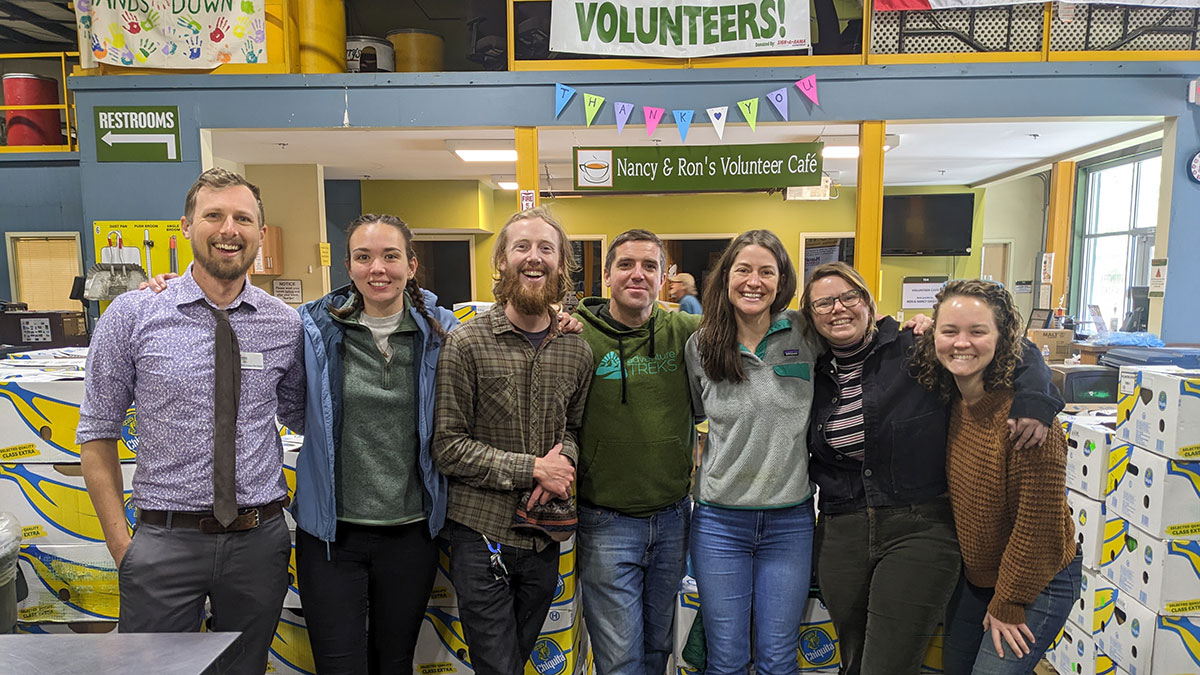
From left: Nic, Jordan, Kent, Dmac, Amanda, Kilee, & Jess
Every year, the Adventure Treks team takes time out of the office to volunteer for local organizations. Most recently, we spent time with MANNA FoodBank in Asheville, NC! We have volunteered with MANNA before, but this time was even more special: Their new volunteer coordinator is none other than alumni instructor Nic Ames! Nic worked our Leadership Adventure Semester in spring 2022 and Colorado Explorer trips in summer 2022. Now, he’s in charge of coordinating nearly 3,000 volunteers who last year provided more than 50,000 hours of support for MANNA.
We got a full tour of MANNA’s warehouses in Asheville, getting to see how this organization distributed more than 18 million tons of food last year; in other words, 42,669 meals each day served nearly 110,000 people every month. MANNA partners with local grocery stores, farmers, retail businesses, individual donors, and public programs to source fresh and non-perishable food for distribution. Sourced food passes through these warehouses for sorting, quality control, and packaging to prepare it for distribution. MANNA then distributes food to their network of partnering agencies and MANNA Community Market partners to any member of the community who needs food and can attend these free distributions.
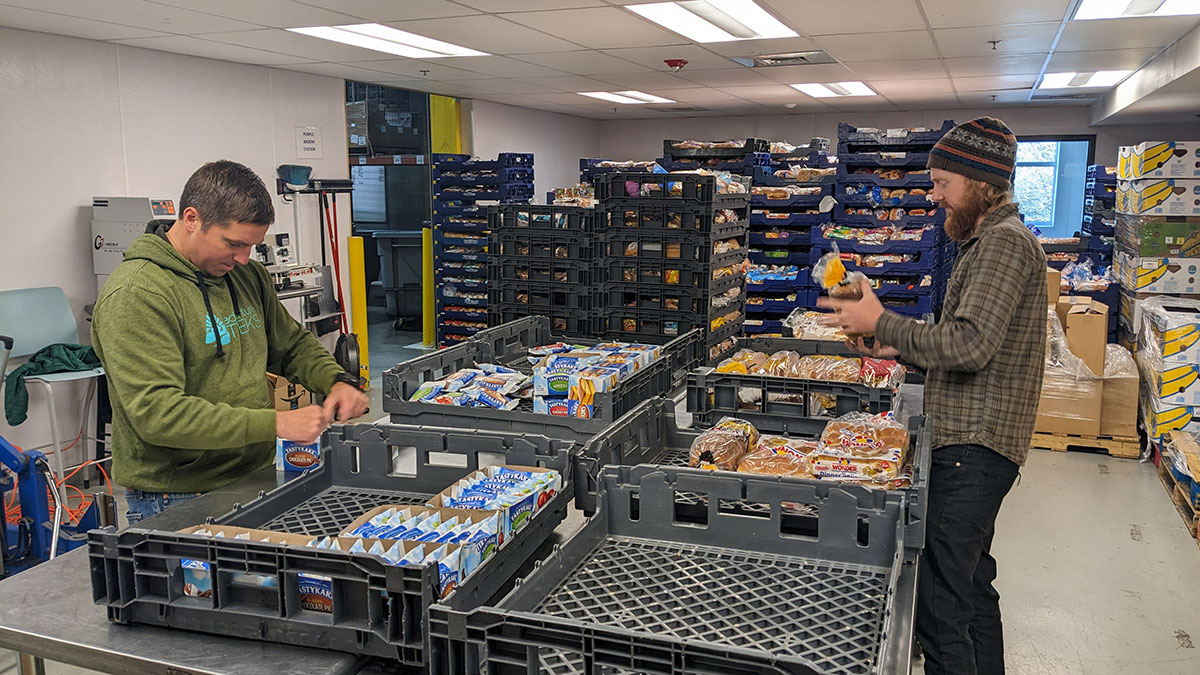
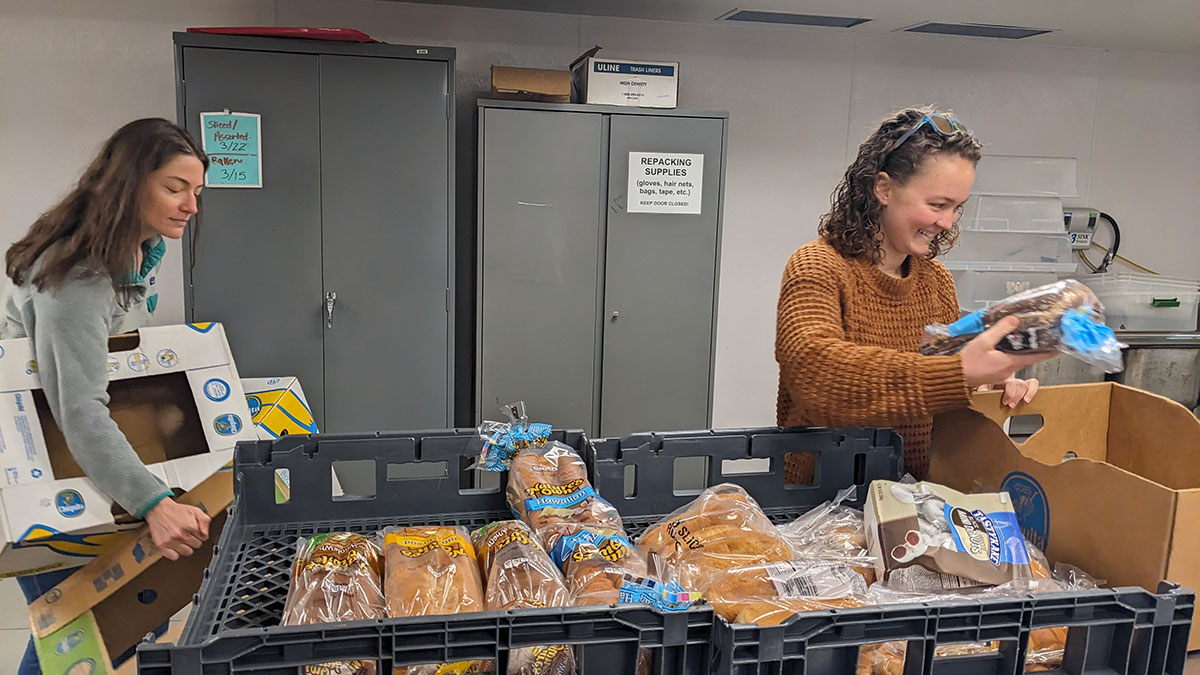
We spent the day in the sorting and quality control center with crates upon crates of bread and baked goods. Rose, one of MANNA’s employees, walked us through the process of ensuring that the expiration date allowed enough time for distribution and checking for damages in the packaging. We put our AT experience to good use as we sorted, re-packaged, and stacked food into pallets for distribution that week. The bread that was expired or otherwise unfit to distribute went to local pig farms—rather than into a landfill!
All of this food sorting got us excited for the summer, as we are now about two months away for the start of our instructor orientation! Adventure Treks prioritizes high-quality food—with fruits and vegetables, proteins, and grains at every meal—for our students and instructors throughout the summer. Last year, we built connections with local pig farmers near our west coast base in Washington to help convert our food waste into food for happy pigs! At the end of every season, the unopened and unexpired food from our programming gets donated to foodbanks like MANNA.
Programs like MANNA depend heavily on volunteers, and it was wonderful to play a small part in their operation! We are firm believers in service on a local level so that we can see how government, non-profit, and even for-profit organizations can build effective, supportive, and functional communities to care for its citizens. We hope our students can also learn to be engaged citizens in their hometowns to build empathy, discover new passions, and make new connections with people they otherwise may not have met!
https://d52gwxhjtzjcm.cloudfront.net/2025/01/Manna-1.jpg6751200AT Staffhttps://www.adventuretreks.com/wp-content/uploads/2025/02/AT-logo-white-NEW.pngAT Staff2023-04-06 16:05:272025-12-09 11:49:51Service Close to Home: Adventure Treks’ Volunteer Day
Our students will agree that Adventure Treks instructors are pretty incredible people. From planning 30-person meals for 30 days to fixing broken tent zippers to tending wounds to making sure we’re in the right place at the right time, AT instructors are constantly working to make sure our students are having the best and most fun summer program possible. This passion for empowering teenagers’ personal growth, fostering a fun and cohesive community, and exploring beautiful places with new friends is what makes our instructor team so strong and impactful.
Because our instructors are at the heart and soul of the Adventure Treks experience, we’d love for you to get to know them a little better. How did they end up at AT? What do they do in their free time? What are some fun facts people don’t know about them? We interviewed two of our summer 2022 instructors and are happy to share more about their lives below!
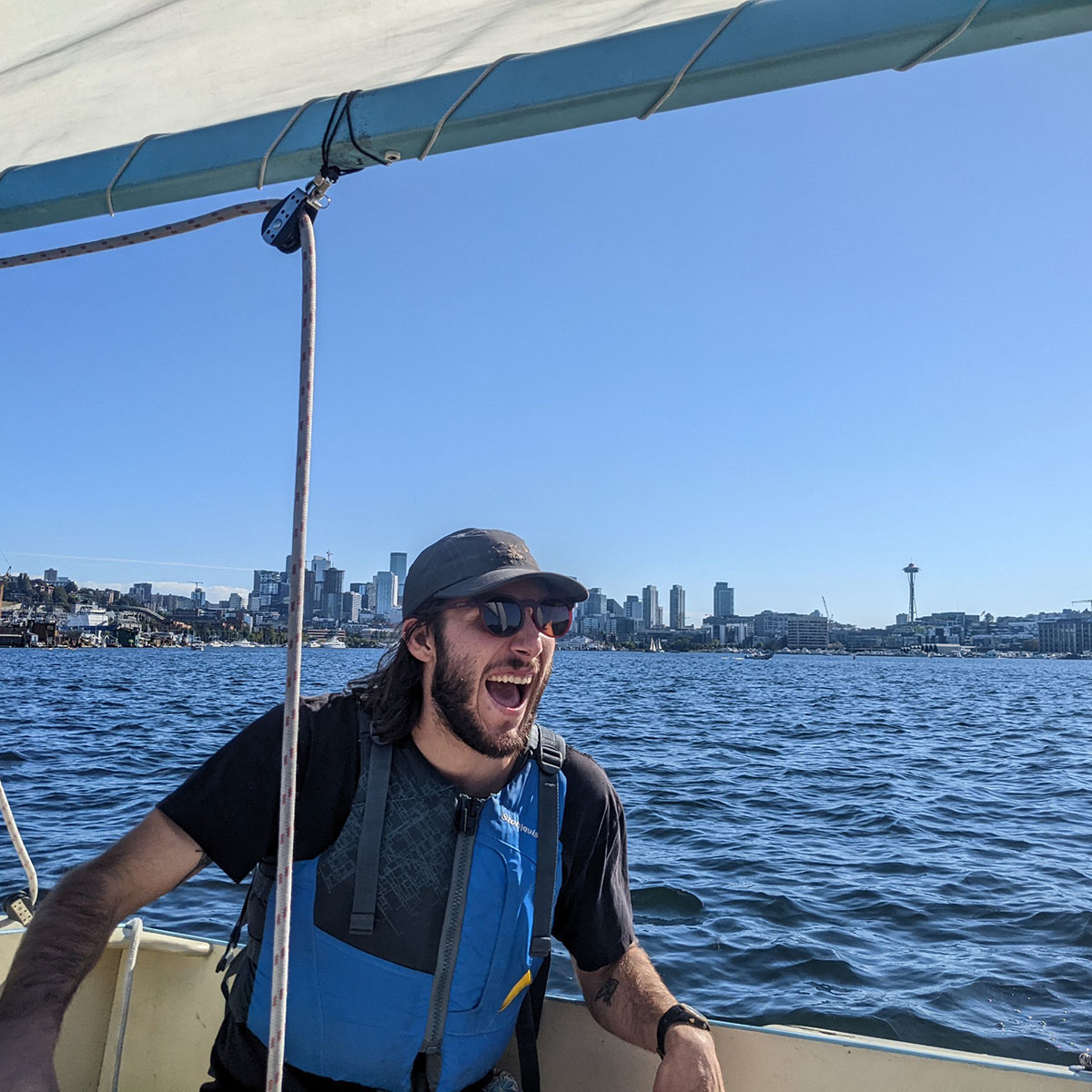
Max Minichiello
Why did you initially pursue work as an outdoor educator? What keeps you coming back? Initially, I knew I wanted to be outside all the time, as it’s where I found myself to be the happiest. Over time, what brings me back is watching that love grow in the students I teach, as well as the communities I form every year.
What’s one of your favorite memories from last year’s Adventure Treks trips? Doing an alternate, lower elevation backpack in the Goat Rocks. We couldn’t do the normal backpacking route because the snowpack was too high. Having hiked in the Goat Rocks, at first I was pretty bummed that we would miss out on the beauty of it all. However, we still had an incredible time, and I don’t know if I’ve ever laughed so much on a backpack.
What do you do when not working for AT? For the past year, I’ve been working as a barista and as a climbing instructor for the YMCA. Beyond that, I like to do a lot of things we do at Adventure Treks! I’ve been really into big, large-mileage day hikes. Some highlights over the past year were the High Divide loop in Olympic National Park, and crossing the Carbon River in Rainier National Park. Skiing has also been a lot of fun this winter, and when I’m not outdoors, I like to read, play board games and video games, and make block prints!
What are you hoping to learn and grow into this next year? I’m hoping to strengthen my connections with my community in Seattle. It’ll be the first time I’ve lived in one place for longer than a year since college, and that’s really exciting for me!
Do you have any big exciting life plans for the near future? I’ll be enrolling in a local college to get an associate’s degree in GIS! I’m really stoked on that, and also have some goals of hiking the Wonderland Trail, as well as the Timberline Trail.
Fun facts about Max: My pinkies are insanely crooked, and I’m an avid competitive Pokémon battler (like the video game, not the card game).
Kate Wojeck
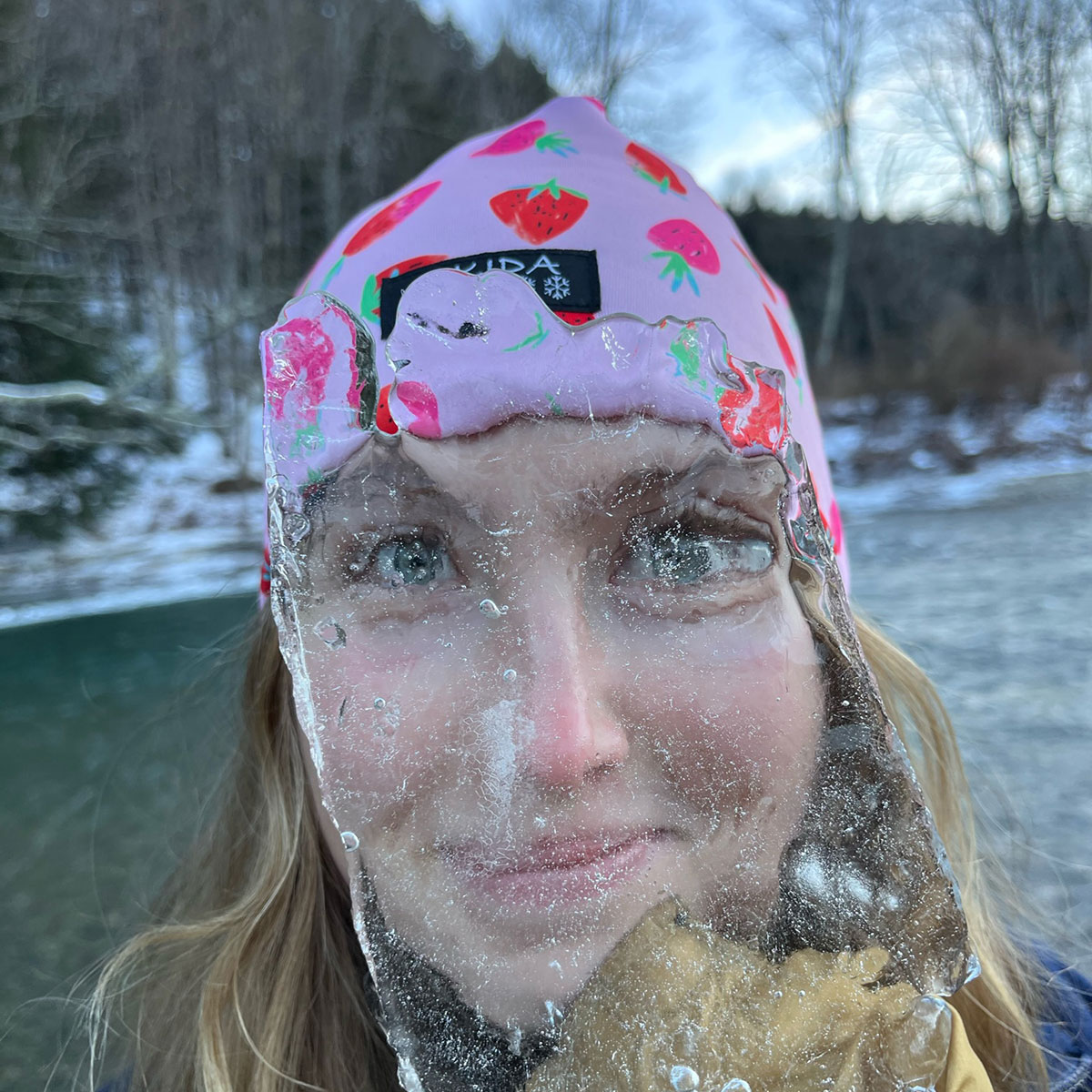
What initially made you pursue work as an outdoor educator? The energy and connection and community I feel in every Adventure Treks space I step into and am a part of—and now help cultivate—is something else. It’s kind of like this big, bone-crushing hug. And I keep coming back to feel it.
What’s your favorite memory from last year’s Adventure Treks trips? I’ve recently been revisiting the moment I heard one of my students’ real laughs—a full-bodied, lose-your-breath belly laughter—for the first time after spending a week together on our Olympic Peninsula backpack. We were de-rigging and while telling the story of our adventure, she burst out laughing… this colorful laughter I hadn’t heard yet. Something shook loose in me, and I was consumed by my own fit of giggles. Seeing a piece of someone come alive in front of you and bring so much color into their person was so special. I can feel how much our cheeks hurt, how much joy was pulsing through all of us—it makes me smile real big! I’ve since been fixated on what a laugh holds and how meaningful it is when shared like that.
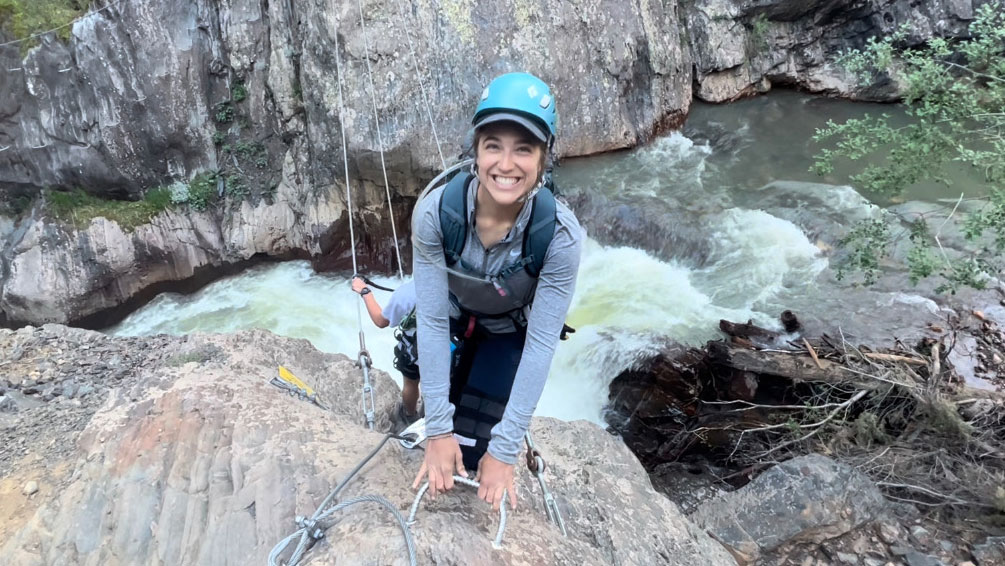
What do you do when not working at Adventure Treks? I am living in the library, reading, writing, musing, projecting, dancing, playing outside in all forms, savoring sunshine as a student at the University of Vermont in Burlington—and still exploring! I’m studying environmental studies and storytelling (via writing, art, film, etc.). We’re thawing out after winter and you can feel the shift in seasons—it’s lovely. Swims in the lake, stomping around in the mud, and warmer evening walks are upon us so soon. I’m getting my American Canoe Association certification for kayaking in a couple weeks, too.
What are you hoping to learn over the next year? I’m learning how to see myself—all of my messy, wonderful self—and will continue to notice and carry this awareness over the next year. The kind of witnessing where you create the space to hold all parts of you and breathe into them. The things and feelings and people who ooze an energy about them always make me grin, and I’m trying to embody myself just a little more each day.
What’s a hobby or passion that you pursue in your daily life that not everyone knows about you? Writing! The kind that’s creative and messy and oozing sensory details. I keep a notebook where I gather words I love that are circling around in me, and I spend lots of time playing in there. It’s becoming a practice or ritual of sorts, and I’m starting to feel my imagination crack open. I love it.
What is a book or article you read recently that really stuck with you? This isn’t a book or an article, but a podcast that’s been scratching an itch in my brain lately is “On Being” with Krista Tippet. So much sensitivity and wisdom and joy inhabits these conversations. It’s incredibly grounding to hear Tippet and who she’s in dialogue with reflect and articulate all they’re noticing and imagining in their lives, as they stretch into the unknown madness of the world.
https://d52gwxhjtzjcm.cloudfront.net/2025/01/E7976998-EB09-4317-B2C7-ABE3116F2BFB-Max-Minichiello.jpg12001200AT Staffhttps://www.adventuretreks.com/wp-content/uploads/2025/02/AT-logo-white-NEW.pngAT Staff2023-03-29 18:11:512025-12-09 11:49:51Instructor Spotlight: Max Minichiello and Kate Wojeck
One of the first questions asked of prospective Adventure Treks instructors is “What qualities do you have that make you a good role model? How do you feel about mentorship for young people in the outdoors?” It is critical to our philosophy that our instructors are well prepared to show students the ropes, both literally and metaphorically. AT trips are all about having fun, forming community, and developing social-emotional skills that will last students a lifetime (we call these the Great 8 Outcomes). We consistently reach all of those goals by hiring instructors who are dedicated to being fabulous mentors.
The impact of mentorship on young people has been widely studied with overwhelmingly positive results. A variety of organizations depend on one-to-one or group-based mentoring to promote constructive behaviors and outlets for teens and young people. Mentorship can benefit everyone at every stage of life, and it should be a reciprocal process—both the mentor and mentee gain something from the relationship.
My experience as a mentor
For more than a year, I have been a volunteer mentor through Big Brothers Big Sisters in my hometown. I spend time with my mentee doing activities we’re both interested in, like arts and crafts, exploring the outdoors, playing games, and more. Sometimes she calls me to talk through a bullying situation at school, other times she wants to discuss her options for college and careers, and often we chat about our next matching costume idea for a silly event. She adds sparkle to my life in a wide variety of ways… most notably with the absurd amount of craft glitter I find on every single thing I own!
As my mentee becomes a teenager, it is most important to me that she continues to see our relationship as a space where she can express herself without any fear. The social environment of middle and high school is complicated and in constant flux—I want to be at least one friend in her life who she does not have to filter herself around or act cool for, and from whom she expects kindness and clear communication no matter the situation. A good mentor is an invaluable resource for a young person, and can come in the form of a teacher, coach, religious leader, camp counselor, or even Adventure Treks instructor!
Connections made between students and instructors during an AT summer don’t have to be constantly maintained all year long to be beneficial to students. I have written college recommendation letters and references for jobs for students who I have known for only one or two summers because the quality of time spent together is so high. It is also incredible to see AT students return to their homes and schools feeling empowered from the summer to step up as role models for their peers.
Research on mentorship
Positive relationships are powerful at every stage in life. Research shows that they are especially significant for the developing brains of young people as they navigate their identities, social spheres, and goals for the future. One study performed on a wide age range of participants shows that children and adolescents are especially prone to influence from outside sources. That makes sense! We learn many social and emotional skills from the modeling of family members and peers. Young people are extra attuned to their relationships because they are studying up on how to navigate the world.
There is some debate as to whether parents or peers have more influence on teenagers’ decision making and risk tolerance. The great thing about an adult mentor for a teen is that they don’t fit into either category—an ideal mentor or role model is a caring “third party” involved in neither family life nor social cohorts. They can provide guidance and advice or simply be a friend. The Big Brothers Big Sisters programs were specifically examined in 1995 in a study that became foundational to mentorship organizations—compared to youth without designated mentors through the program, kids who were matched with a mentor had positive social and academic outcomes as well as less likelihood to participate in risky activities.
Mentorship in general
Mentorship isn’t just for youth! Mentors can be found in academic settings, workplaces, trade or craft apprenticeships, hobby or sports groups, and more. Learning from those with more experience is a lifelong pursuit, and those with great mentors may become great mentors to others. Intergenerational exchange of knowledge is important for everyone involved, as younger folks learn from the experience of elders, and elders keep informed in a constantly evolving society. I am proud to define myself as both a younger mentee and an elder mentor!
https://d52gwxhjtzjcm.cloudfront.net/2025/01/IMG_6967-1200.jpg6751200AT Staffhttps://www.adventuretreks.com/wp-content/uploads/2025/02/AT-logo-white-NEW.pngAT Staff2023-03-14 19:16:422025-12-09 11:49:51Mentorship for Young People in the Outdoors
Our students will agree that Adventure Treks instructors are pretty incredible people. From planning 30-person meals for 30 days to fixing broken tent zippers to tending wounds to making sure we’re in the right place at the right time, AT instructors are constantly working to make sure our students are having the best and most fun summer program possible. This passion for empowering teenagers’ personal growth, fostering a fun and cohesive community, and exploring beautiful places with new friends is what makes our instructor team so strong and impactful.
Because our instructors are at the heart and soul of the Adventure Treks experience, we’d love for you to get to know them a little better. How did they end up at AT? What do they do in their free time? What are some fun facts people don’t know about them? We interviewed two of our summer 2022 instructors and are happy to share more about their lives below!
Elena Mederas
What’s your favorite memory from last year’s Adventure Treks trips? There were so many spectacular sights and memories from the last season, but there was nothing quite like stargazing on the steep slopes of a volcano. Our group started our hike up Mt. St. Helens through forests at the base of the mountain at around 2 a.m. and only caught glimpses of the stars through the leaves—but once we moved past the tree line, there was a huge expanse of cloudless sky above us. We gazed up in awe at the blazing stars, spent time identifying constellations, and spotted four planets as well: Venus, Jupiter, Saturn, and Mars! I loved the feeling of being so small in the immensity of the universe—and felt so lucky that we could all be experiencing that moment together.
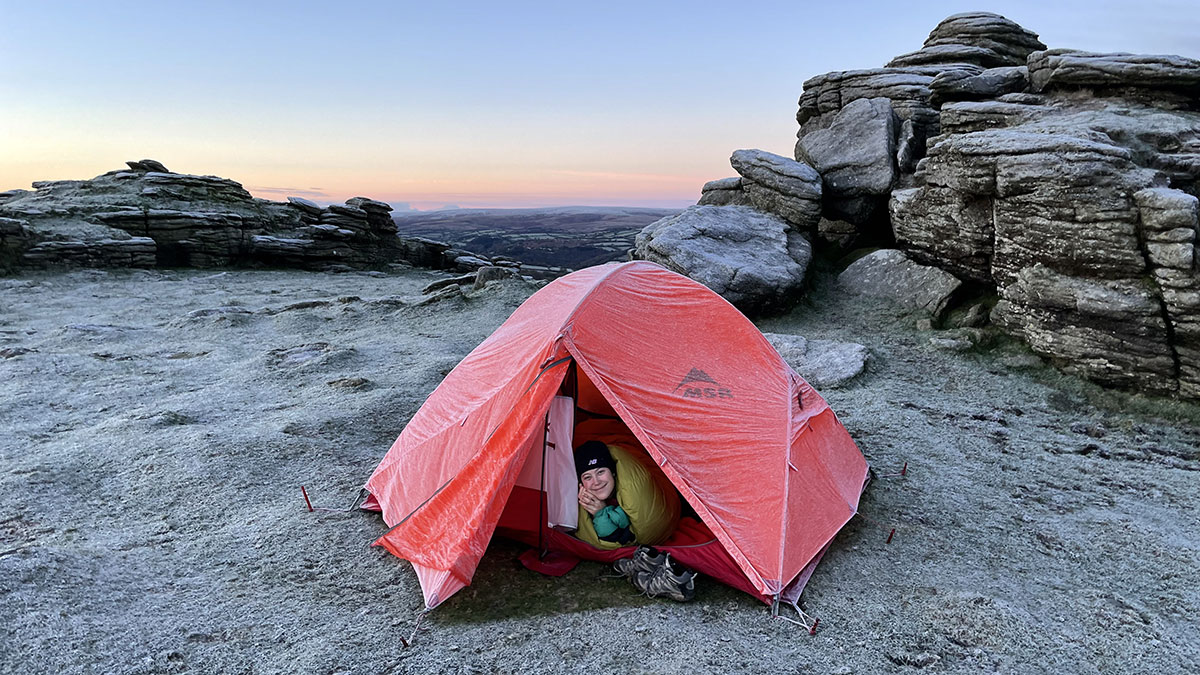
Do you have any exciting life plans for the near future? I moved to England for the winter and have been getting accustomed to living in a new place! So far, I’ve been spending my time planning backpacking and climbing trips with my partner (we recently braved a weekend backpacking trip on the frosty moorlands of Dartmoor National Park), frequenting music shows in cozy pubs, becoming a regular at the local climbing gym, and haunting downtown cafes to work on graduate school applications. I’m looking forward to the spring adventures to come!
What is a book or article you’ve read recently that really stuck with you? A friend and local author from my hometown recently gifted me a copy of a book he wrote called Quiet Teachers. The short story was about a person who felt lost and lonely until they went outside and contemplated the trees, pinecones, birds, and clouds—all of whom shared their own tidbits of wisdom on how to live a meaningful life. On the final page of the book was a handwritten note: “Find your inside, outside in Nature.” I felt so moved by the message and story; it made me feel like life isn’t so complex after all. Like the little chickadee sang from the branches, all you need to do are a few simple things: “Know what you need and where you want to be. Then just work at it, work at it, work at it.”
Fun fact about Elena: I’m both a U.S. and Costa Rican citizen and have family living in both countries!
Dana Kirk
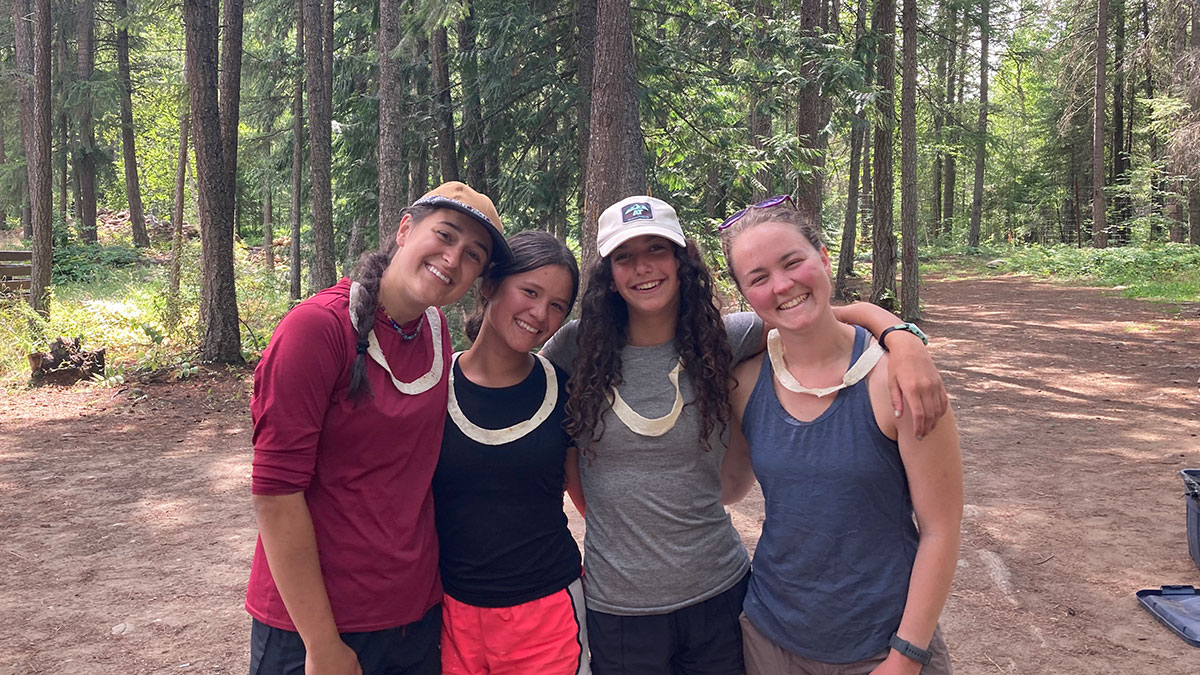
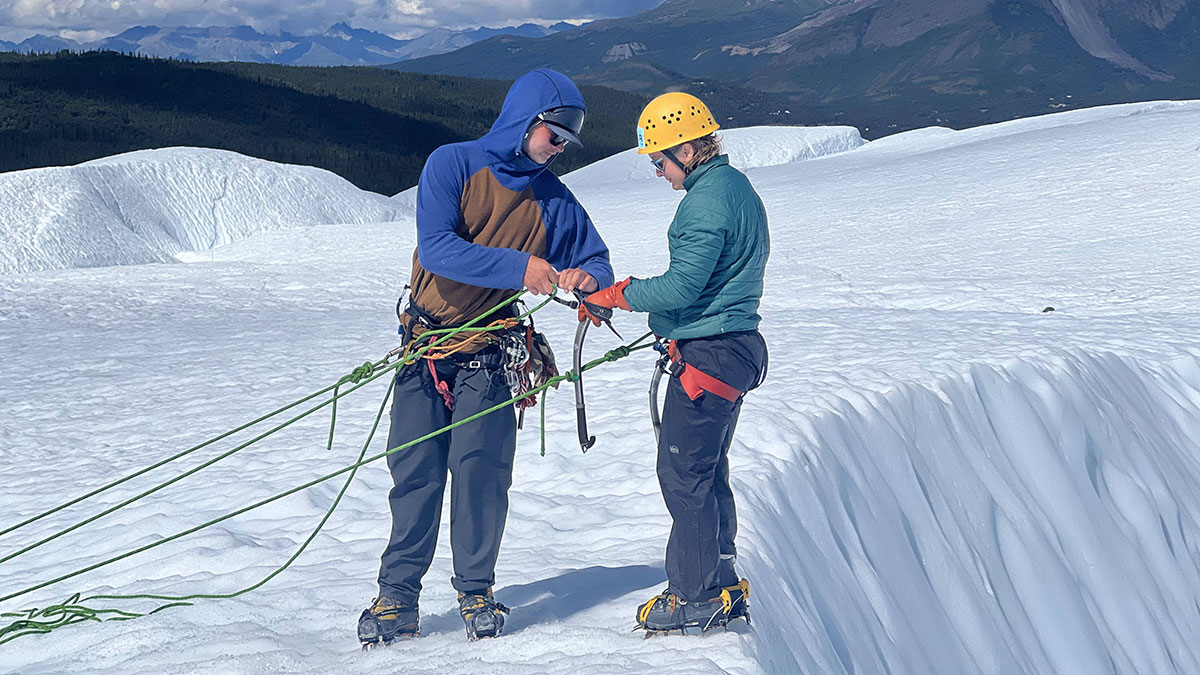
What initially made you pursue work as an outdoor educator? I wanted to be able to impact students and work outside, exploring new adventures while pouring into other people’s lives. What I didn’t realize was how backcountry time is different from everyday life. My co-instructors and I would say backcountry time is five days normal time and front country is three days normal, meaning time in the woods is different. The connections you build are deeper, your the mind feels free and full of vision, your body feels awake and excited. I love watching students experience this and getting to be a part of it.
What’s your favorite memory from last year’s Adventure Treks trips? On the Lost Coast backpacking trip in California, we made too much rice, even after everyone took an extra bite to help “pack out” less weight. We decided we could give it to one of the other groups in passing. The students took the bag of rice and wrote funny inside jokes, encouraging comments, and notes on the bag and came up with a plan to sneak it into the other group’s gear in passing.
What do you do when not working at Adventure Treks? I teach art to kindergarteners all the way through eighth grade. I coach middle school girls’ soccer, I am a co-athletic director for the elementary and middle school, and I am involved in my church. For fun I like to mountain bike, climb, snowboard, hike, paint, throw pottery, swing and line dance, and bake.
What are you hoping to learn over the next year? I want to grow in engaging my story; learning how to use my story and life to be able to encourage others in theirs. That includes being OK with the mundane of life and experiencing each moment life has to offer for what it is—to grow in not worrying about my future but taking one experience at a time.
https://d52gwxhjtzjcm.cloudfront.net/2025/01/IMG_6629-Elena-Mederas.jpg6751200AT Staffhttps://www.adventuretreks.com/wp-content/uploads/2025/02/AT-logo-white-NEW.pngAT Staff2023-02-27 15:18:352025-12-09 11:50:40Instructor Spotlight: Elena Mederas and Dana Kirk
Our students will agree that Adventure Treks instructors are pretty incredible people. From planning 30-person meals for 30 days to fixing broken tent zippers to tending wounds to making sure we’re in the right place at the right time, AT instructors are constantly working to make sure our students are having the best and most fun summer program possible. This passion for empowering teenagers’ personal growth, fostering a fun and cohesive community, and exploring beautiful places with new friends is what makes our instructor team so strong and impactful.
Because our instructors are at the heart and soul of the Adventure Treks experience, we’d love for you to get to know them a little better. How did they end up at AT? What do they do in their free time? What are some fun facts people don’t know about them? We interviewed two of our summer 2022 instructors and are happy to share more about their lives below!
Spencer DrakeUnderkoffler
What initially made you pursue outdoor education, and what keeps you coming back to this type of work? I started out leading overnight trips for my college’s outing club. I also went to school to be a therapist. I decided to combine the two and work in wilderness therapy. However, I underestimated the amount the job would drain me. To recoup, I decided to hike the Pacific Crest Trail. While on trail, I came to the conclusion that time is a precious thing that should never be wasted, so I decided to go headfirst into guiding and outdoor ed.
What do you do when not working at Adventure Treks? I’m either ski patrolling or instructing, and this winter I’m working at a backcountry-specific ski mountain doing both. There are no ski lifts, and everyone has to walk up the mountain themselves. I fell in love with this sport because it is a way to travel in the mountains that feels so seamless. I also enjoy hiking and rock climbing whenever I get the chance. I recently started trail running and have been loving that! I look for any excuse to be outside!
Do you have any big and exciting life plans for the near future? I really want to get more experience mountaineering. The little bit of alpine climbing and mountaineering I’ve done has been some of my most exciting adventures to date. Also, moving to Colorado for my new job is gonna be rad!
What is a hobby or passion that you pursue in your daily life that not everyone knows? Cooking. I went to culinary school in Italy for a semester and loved the knowledge I gained from integrating one’s garden knowledge with their kitchen knowledge.
What is a book or article you read recently that really stuck with you? I’m currently reading Braiding Sweetgrass. It gives me hope for the future and grounds me in whatever version of nature I find myself.
Fun fact about Spencer: The most exciting experience for him is getting to see a bison out in the wild!
Lauren Richert
What is your favorite memory from Adventure Treks last summer? Performing a choreographed parody version of “I want it that way” by the Backstreet Boys for a hat ceremony with my backpack group. Watch out America’s Got Talent, we’re coming for ya!
What do you do when not working at Adventure Treks? I teach rescue classes to fire departments in southern Colorado and New Mexico and to college students in the International Rescue and Relief Program at Union College. I recently led a disaster response with our program’s team to Florida after Hurricane Ian. It was really impactful work not only for those affected, but possibly more so for me. I always learn so much from the resilience of the deeply affected residents.
I’m also taking a few classes in international development and am thinking about starting a graduate program in that area next year… we’ll see. I’m helping plan an international expedition with my coworker (and fellow AT instructor) Ian Johnson. It’s a blast doing all parts of my job—teaching, planning, and figuring everything out—with the incredible workplace community I have.
When I’m not working, I’m usually doing acro-gymnastics, climbing at the bouldering gym, or reading. And when I should be doing other things, I can usually be found at a local coffee shop conversing with an old friend or new acquaintance. I’m currently stationed in Lincoln, NE, which means it’s tougher to get outside and climb mountains, but it’s definitely challenged my creative capacity for outdoor recreation activities and makes those trips that much more special when I get the chance to take them. Plus, friendly Midwest people and sunsets are top-notch, bar none.
Do you have any big and exciting life plans for the near future? I’m thinking about moving to Durango, CO, to teach rescue full-time and to do some raft guiding! I miss living in the mountains after moving out of my home state WA in 2019, and I want to get back to a place that has more outdoor options for mountain biking, climbing, water sports… the whole shebang.
What is a book or article you read recently that really stuck with you? I never read Harry Potter or watched the movies growing up. I’m on the last book in the series right now, and I love it. I legitimately don’t know what happens at the end, so its quite exciting, and reading it makes me step into a fun, creative, and imaginative world.
Fun fact about Lauren: I think the French horn is the coolest instrument ever. It’s like audio butter. Smooth, gorgeous sound, and super hard to play, so I have mad respect, and you can do so much with it musically. Also, fun fact about my fun fact: the French horn is one of the longest band instruments; all stretched out, it’s over 30 feet long. It’s also not originally French!
Our students will agree that Adventure Treks instructors are pretty incredible people. From planning 30-person meals for 30 days to fixing broken tent zippers to tending wounds to making sure we’re in the right place at the right time, AT instructors are constantly working to make sure our students are having the best and most fun summer program possible. This passion for empowering teenagers’ personal growth, fostering a fun and cohesive community, and exploring beautiful places with new friends is what makes our instructor team so strong and impactful.
Because our instructors are at the heart and soul of the Adventure Treks experience, we’d love for you to get to know them a little better. How did they end up at AT? What do they do in their free time? What are some fun facts people don’t know about them? We interviewed two of our summer 2022 instructors and are happy to share more about their lives below!
Courtney Johnson
What keeps you coming back to outdoor education and working with teenagers outside? The connections you make with the students and nature. Getting dirty, being drained of sleep, creating connections with students and staff, and life-long memories are some of the many reasons I am drawn to continue this work.
What is a favorite memory from last summer at Adventure Treks? One of my favorite memories was in Alaska. We were taking a break on our last backpack at this beautiful bridge. I had bought a stuffed animal otter that we named Prince William, after the place we sea kayaked. He had become part of our family. One of the students was taking care of Prince William and had set him on another student’s head for a cute photo. She, however, did not know this and as she looked up, Prince William escaped and went down the streams below. Everyone gasped, got up, and started running along the bank, except me. I started taking photos of him to honor his memory. Prince William was caught in a strainer for a couple seconds, before breaking free and moving further downstream. We almost lost him, but Connor had somehow spotted him, ran into the water, and retrieved him. We were all extremely happy that he was saved.
What do you do when not working at Adventure Treks? I just started working full-time as a medical receptionist and will continue to work my part-time job at a rock climbing gym! I love to rock climb, but I am scared of falling. I am going to try to go skiing this winter and not fall as much, and I am learning to sew and roller skate.
What you are hoping to learn over the next year? Communication is something I believe we are always developing and changing. We watch each other and pick up on their habits and behaviors. I am hoping over the next year to develop better ways to communicate and listen to others. My first step is to continue to work on tuning out the voices in my head that like to talk over people who are talking to me.
Fun fact? I recently watched Star Wars and Pirates of the Caribbean for the first time! Harry Potter and Lord of the Rings are still on my “must watch” list!
Daniel Clifford
What keeps you coming back to outdoor education and working with teenagers outside? Overcoming challenges together, some of which my students (and myself) weren’t sure we could take on!
What is your favorite memory from last summer at Adventure Treks? Summiting Mt. St. Helens! The magical trek through the dark forest from basecamp before dawn to the rocky, lifeless slopes as the sun began to rise, illuminating our path and the surrounding mountains, to the slog up the infamous vertical beach! Sharing the range of emotions as we climbed from sleepiness to determination to despair to euphoria and then the reverse order on the way back down was very special. I was so proud of my group for making it, and I could see very quickly how much they had grown having overcome that.
Do you have any exciting life plans for the near future? I am heading to Costa Rica for three months to get my PADI divemaster certification, the first level of becoming a professional diver. This is something I have wanted to do for a long time, having always been fascinated with coral reefs and having worked in marine conservation around the world. This will hopefully open up lots of avenues for me, including greater opportunities to work in marine conservation and in the diving industry.
What is a book or article you read recently that really stuck with you? I was captivated by Touching the Void, the well-known story about the first attempted summit of Siula Grande and the unlikely survival of Joe Simpson in getting down the mountain. Reading the book really made me feel like I was there with him… I couldn’t imagine overcoming what he did.
https://d52gwxhjtzjcm.cloudfront.net/2025/01/PXL_20220708_225140820-Courtney-Johnson-1200.jpg6751200AT Staffhttps://www.adventuretreks.com/wp-content/uploads/2025/02/AT-logo-white-NEW.pngAT Staff2022-12-01 15:47:282025-12-09 11:53:33Instructor Spotlight: Daniel Clifford and Courtney Johnson
An interesting theme sprouted up this month when I asked our team to recommend some of their favorite books! The stories of all three of the titles listed below circulate around environmental action, though the message is incorporated in diverse ways. Braiding Sweetgrass is non-fiction with a focus on indigenous knowledge, The Overstory is solemn and conspicuous in its argument for the preservation of forests, and Project Hail Mary is a surprisingly intricate take on climate change through the lens of digestible science fiction. Stay tuned for “What We’re Reading: Part 2” for more recommendations!
Amanda’s pick: Project Hail Mary by Andy Weir
“I waited six months to download Project Hail Mary, by Andy Weir, in my library app. Having read his other two novels, The Martian and Artemis, I was curious to discover what his newest sci-fi adventure would entail. I don’t like spoilers, so I didn’t read reviews beforehand and dove in with no preconceived notions. (Sort of like how we ask students not to look each other up on social media before they meet for the first time at AT…) I won’t give away the plot here, but suffice it to say that even with a lack of character development, somewhat tired trope, and too much exposition in the first few chapters, I couldn’t put the book down.
So without sharing plot twists, I’ll instead share how I thought the book relates to the Adventure Treks experience. (Yes, I found a parallel between alien life and AT… sort of.) It’s quite simple: A challenge is presented that requires nothing less than teamwork, compromise, humility, and a unified stance to solve. The challenge in the book has the ability to destroy humankind—it’s quite dramatic, though the book’s urgent dilemma will probably evoke your own emotions regarding our climate crisis or politically divisive world anyway.
But to pull it back to AT, the book’s characters (including a few you really don’t see coming) must use extraordinary critical thinking and math and science skills (shout out to our STEM students) and put the good of humankind over their personal needs in order to save not only Earth, but other worlds as well. The characters must also find common ground (which in the plot seems literally impossible at first) and build relationships upon trust—which truly becomes the driver of the plot near the end of the story. It’s really about facing adversity (one that threatens more than our small perspectives) with resilience and a team of friends standing next to you.”
Kent’s Pick: Braiding Sweetgrass by Robin Wall Kimmerer
“Robin Wall Kimmerer is a botanist, educator, and member of the Citizen Potawatomi Nation. Like the actual braiding of sweetgrass, Robin weaves together the perspectives of analytical science, native traditions and ways of thinking, and stories from her personal life. She discusses the wider ecological context that includes humans as a part of nature and pushes the reader to reimagine what our relationship to the other species and processes of this Earth could be. She emphasizes the idea that nature can be our teacher just as much as books or lessons.
One of the things I found so powerful about this book is how she frames the issues of climate change, pollution, and ecological disaster through the lens of better options, things that have worked, and ways of relating to the natural world that are not exploitative. As someone who cares about the natural world, I often find myself only focusing on the negative impacts of humans on the planet and not examples of responsible land stewardship. She beautifully balances humanity’s destructive industrial past with the “social imagination” for healing and reconstruction, and this manages to be a book about climate change that leaves you feeling hopeful, which I have found rare.
Though it is science-focused, the writing style is almost more poetry than prose. It uses the author’s life experience and tribal heritage to add context and color to the science she lays out. She uses the facts about the behavior of strawberries, pecans, cattails, salamanders, maples, and sweetgrass to draw larger lessons for society as a whole. I find myself enjoying the fun facts as much as the epiphanies about human nature. Braiding Sweetgrass manages to be simultaneously highly informative and breathtakingly beautiful. I listened to this book as an audiobook, read by the author, and hearing the tone and cadence of her reading (as well as correct pronunciation of the scientific and Potowatomi words) made this a book I kept coming back to.”
Jess’s pick: The Overstory by Richard Powers
“The Overstory is an epic tome of mystical, winding stories and captivating writing. Small spoiler alert: most of these stories are sort of sad! This is a book about trees, humans, and the connections between the two—in some moments I was in awe of the magical properties of the most mundane natural cycles, and other times I found myself tearing up alongside the characters who fight for the preservation of forests.
Told through the interwoven perspectives of almost too many characters, this book navigates from sentimental to activistic with little space in between. One of the most fascinating stories is of a couple of activists who choose to live in the canopy of a redwood tree in order to protect it from being cut down. Powers shares incredible facts about these extra-tall trees. There are a variety of animals and plants (mostly mosses and fungi) that only exist high up in the redwoods and never touch the ground! (Side note, if you read this book, you should definitely hop on California Adventure or California Challenge and see one of these massive trees in person!)
Four distinct sections titled Roots, Trunk, Crown, and Seeds allow the reader to grow along with a tree’s cycle of life as the plot treads along below. When I start a book, I generally finish it within a couple of days, but with this one, I was reading for weeks! It’s dense and also beautiful, slow, and gripping. I absolutely recommend it, and recommend that readers take their time.”
https://d52gwxhjtzjcm.cloudfront.net/2025/01/51437183416_fff2904e20_b-1.jpg1024707AT Staffhttps://www.adventuretreks.com/wp-content/uploads/2025/02/AT-logo-white-NEW.pngAT Staff2022-04-15 20:52:552025-12-09 11:54:24What We’re Reading Right Now

 Why did you initially pursue work as an outdoor educator? What keeps you coming back? Initially, I knew I wanted to be outside all the time, as it’s where I found myself to be the happiest. Over time, what brings me back is watching that love grow in the students I teach, as well as the communities I form every year.
 What initially made you pursue work as an outdoor educator? The energy and connection and community I feel in every Adventure Treks space I step into and am a part of—and now help cultivate—is something else. It’s kind of like this big, bone-crushing hug. And I keep coming back to feel it.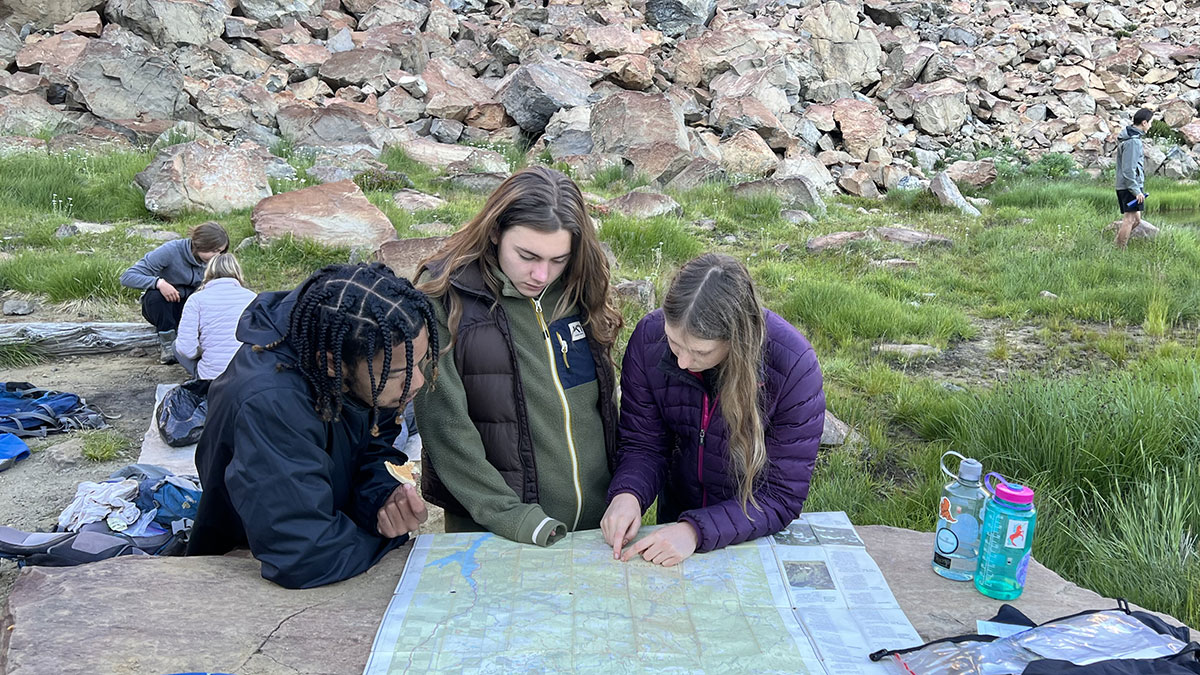
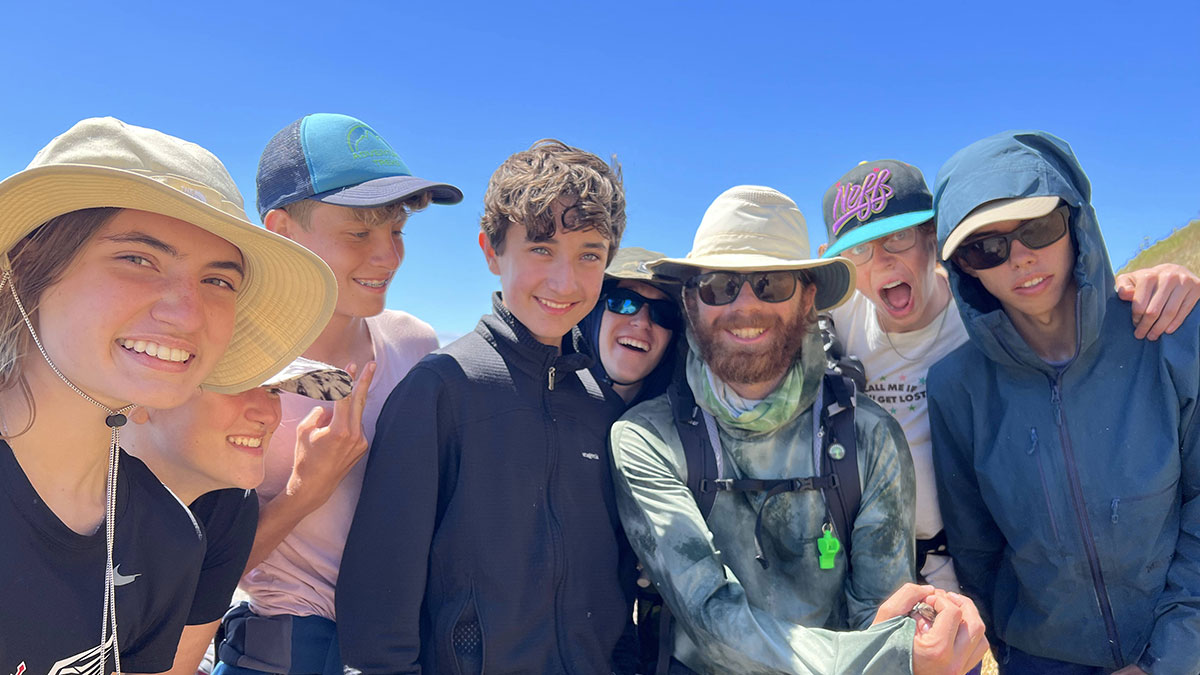
 What initially made you pursue work as an outdoor educator? I wanted to be able to impact students and work outside, exploring new adventures while pouring into other people’s lives. What I didn’t realize was how backcountry time is different from everyday life. My co-instructors and I would say backcountry time is five days normal time and front country is three days normal, meaning time in the woods is different. The connections you build are deeper, your the mind feels free and full of vision, your body feels awake and excited. I love watching students experience this and getting to be a part of it.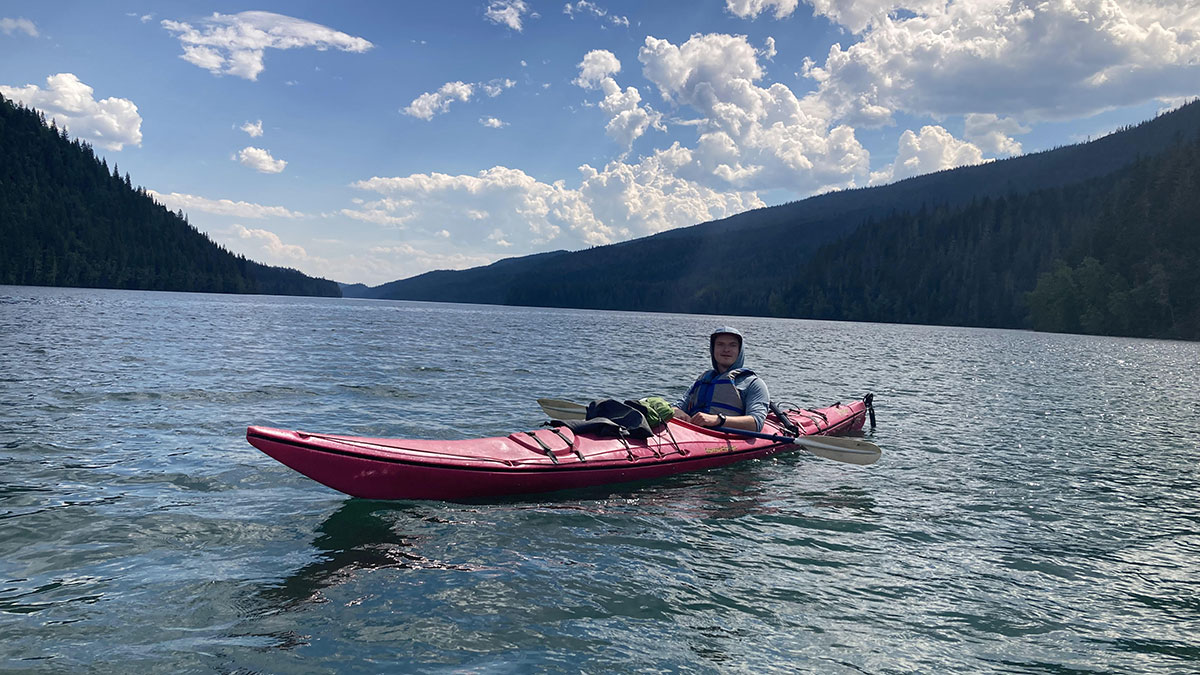
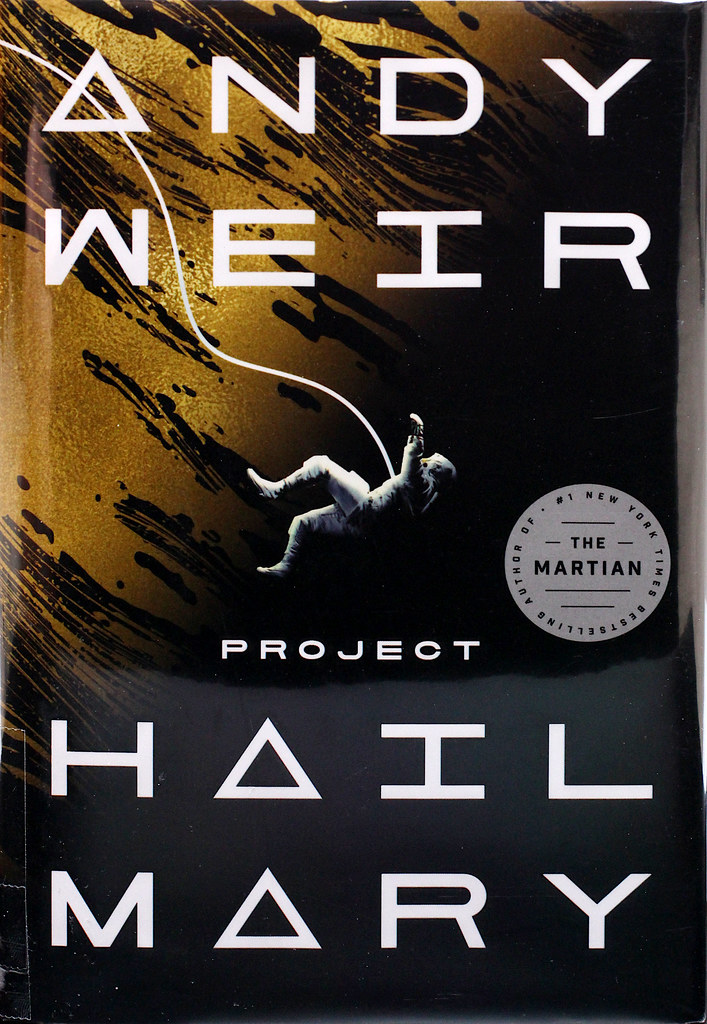 “I waited six months to download Project Hail Mary, by Andy Weir, in my library app. Having read his other two novels, The Martian and Artemis, I was curious to discover what his newest sci-fi adventure would entail. I don’t like spoilers, so I didn’t read reviews beforehand and dove in with no preconceived notions. (Sort of like how we ask students not to look each other up on social media before they meet for the first time at AT…) I won’t give away the plot here, but suffice it to say that even with a lack of character development, somewhat tired trope, and too much exposition in the first few chapters, I couldn’t put the book down.
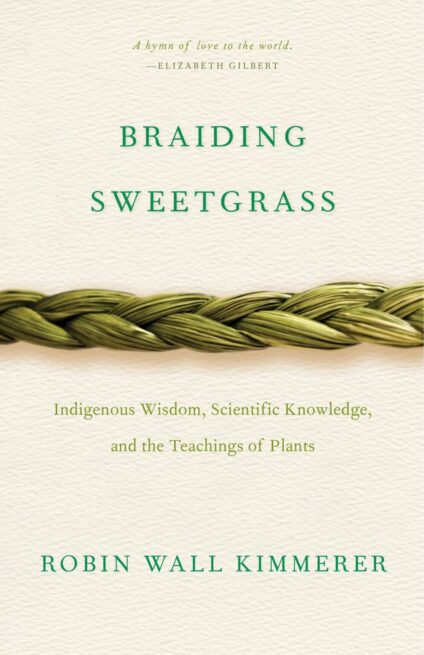 “Robin Wall Kimmerer is a botanist, educator, and member of the Citizen Potawatomi Nation. Like the actual braiding of sweetgrass, Robin weaves together the perspectives of analytical science, native traditions and ways of thinking, and stories from her personal life. She discusses the wider ecological context that includes humans as a part of nature and pushes the reader to reimagine what our relationship to the other species and processes of this Earth could be. She emphasizes the idea that nature can be our teacher just as much as books or lessons.
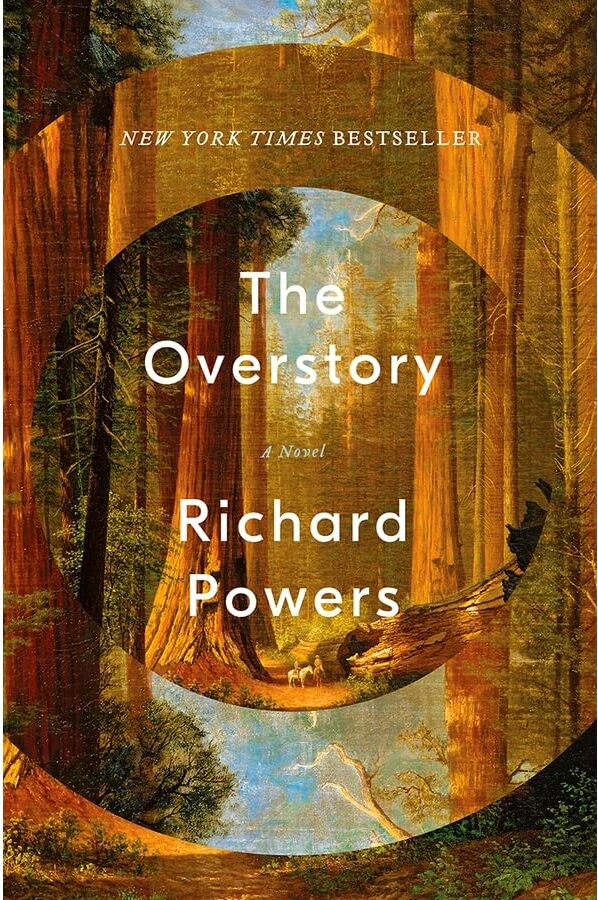 “The Overstory is an epic tome of mystical, winding stories and captivating writing. Small spoiler alert: most of these stories are sort of sad! This is a book about trees, humans, and the connections between the two—in some moments I was in awe of the magical properties of the most mundane natural cycles, and other times I found myself tearing up alongside the characters who fight for the preservation of forests.