
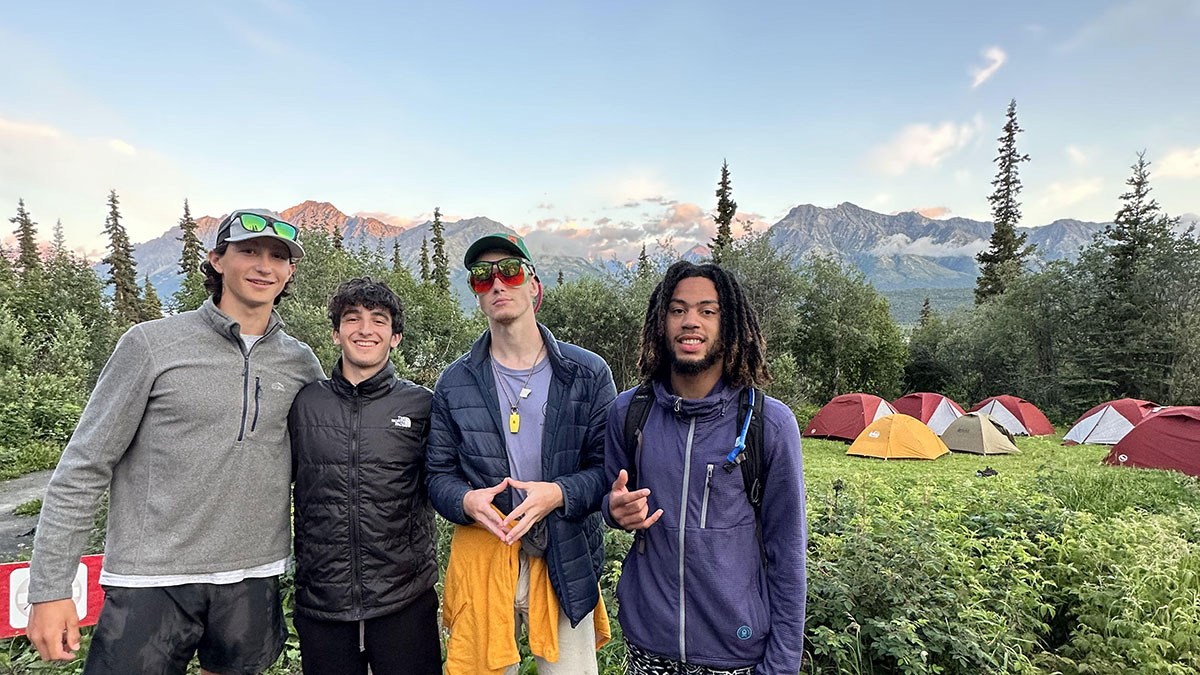
 Fall is the season for pumpkin spice, colorful leaves, and apple picking, but it’s also the season for college applications! For Adventure Treks students with college in their future, a unique and well-written personal essay is an important part of the process.
Adventure Treks students are talented, active, and community-oriented people with busy lives and many interests. Being involved in a variety of activities (being “well-rounded,” as college admissions folks might call it) is a great way to prepare for college, but in the age of most high school students balancing a jam-packed schedule, it might not be the thing that makes a student stand out to their favorite schools. Of all of the students applying to college this fall, many play high school sports, many take AP and honors classes, and many are involved in community service projects. How many backpack in Alaska or summit Mt. Adams on their summer break? (Hint: due to our low student-to-staff ratio and community focus, it’s a select few!)
Application essays may seem like one more step in an already lengthy process, but they provide a unique opportunity for aspiring students. Quick stats like grades, number of AP classes taken, and extracurricular activities are great, but they don’t provide any information on who you are as a person. Some schools no longer judge a prospective student on grades, rather turning to essays and interviews. The essay is a chance to explain why you’ve done well in school, how you learned to trust yourself as an athlete, or what exactly makes you a good fit for the particular university you are applying to.
Though parents generally pore over every page of the Adventure Treks website to learn as much as possible about the program they are sending their child to, students often miss learning more about Adventure Treks’ core values until they experience them on a trip. For a quick refresher, and a great basis of topics to highlight in your essay, check out this blog on the Great 8 Outcomes we strive to inspire.

Essay prompts are generally vague, so it is helpful to brainstorm a couple of topics you feel comfortable writing about before diving in. Think about an experience that was difficult on your last AT trip—maybe it was climbing Mt. Shasta in the wee hours of morning—and narrow down why that particular experience made an impact on you. Did you learn what mental resilience looks like? Did you find a way to help out a friend even when you were struggling, too? Did you advocate for yourself or your group? Did you achieve something you didn’t think was possible? How did this experience change your view of the world?
Another thing to keep in mind when writing about your experiences is what college admissions officers are really looking for when reading through your application. Demonstrating independence, creativity, passion, and commitment are all bonuses that will highlight your application. As the author of the above blog notes, after interviewing a college admissions officer, “fewer kids are prepared with the independence or life skills needed to thrive away from home. Experience on an extended wilderness trip demonstrates an ability to thrive in difficult and often uncertain situations and a level of independence few kids possess.” Show independence and resilience through writing about the challenges you overcame and new skills you learned while on your AT trip.
If this still seems a bit vague, that’s okay! The process of writing a personal essay should be yours alone, and there is no one way to guarantee success. Here are a few examples of how former AT students have used their experiences to craft essays that gained them admission into their chosen schools.
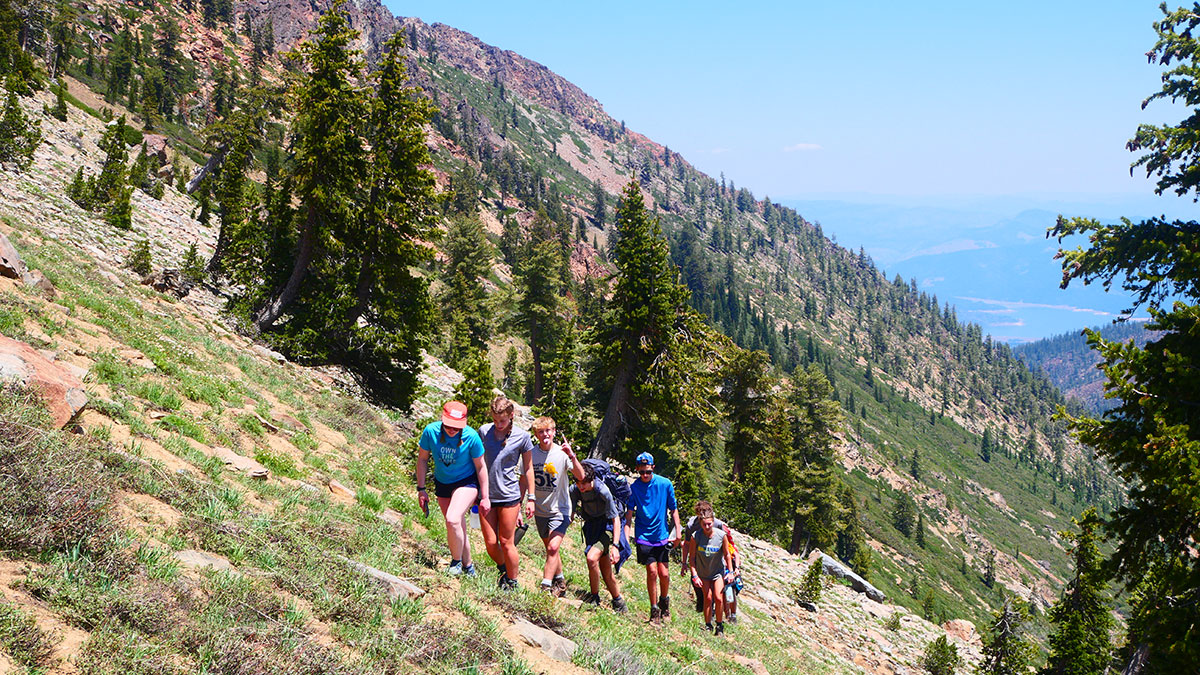
AT alum Michaela from Durham, NC, was asked to reflect on a time when she exhibited resilience:
Even as an experienced backpacker, the uphill switchbacks of the Klamath Mountains felt grueling, and I began to doubt my ability to complete the five-day backpack. But I pushed through, growing stronger each day and seeking encouragement from those I’d just met in my trip group. My new friends and I embraced the physical and mental struggles of the hike by cracking jokes and singing songs, knowing that we’d eventually reach our campsite each night. Through this experience, I found new confidence in myself and learned to prioritize positivity when faced with challenging situations. I’ve been more willing to lean on friends and family for support when needed and view adversity as only temporary.
Michaela’s longer personal essay was about her experience with carrying the largest cooking pot as part of her group gear. She detailed her own thought process, from disbelief at the size of the pot, to discomfort and resentment while hiking, to the realization that her attitude could influence the group, and acceptance of and pride in her role as part of the community. She tells a story that shows her ability to overcome a challenge, even a small one, and reflect upon it meaningfully.
AT alum Audi from Ely, IA, wrote about her experience with getting her first outdoor education job away from home: raft guiding for the summer. Rather than using her Adventure Treks experience directly, she referred to it a couple of times throughout the essay:
I was not scared. I was absolutely ecstatic to be in a foreign place with strangers I was now forced to meet to survive. It brought me back to my days at the camp I had been going to for years prior to this and that had actually led me to this job in the first place.
In the summer of 2020, I attended a WFA (wilderness first aid) class through this camp. I was fascinated by how to help people when supplies were scarce. I filled a notebook with questions and studied my notes like I had never done in high school every night. This certification helped me get [the job I was hoping for] and I was very proud of myself that I had acquired such a certification. Not only did this camp help with getting me the job, but it taught me social skills in ways I could never have imagined. I knew people from around the world. Two boys from France, one girl from Panama, one girl from Canada, and one boy from the UK were among the many others. It was mind-boggling to me that I actually had friends in far away places.
If you feel stuck, try reading more about how to write a college essay or what makes essays stand out. Highlight some moments at Adventure Treks that felt big for you—moments when you learned something about yourself or grew in a way that wouldn’t have happened otherwise. Think about the skills and values you possess, and how you came to have them. What are you passionate about, and how do you follow that passion? Why are you excited to head to college, and what do you hope to continue learning while there?
The Adventure Treks admissions process is designed to create groups of kind, inclusive, diverse students who will support and inspire each other throughout their trips. Our students are tough, active, and creative, and choose to spend their summers sweating as they backpack long distances, or singing together to pass the time on chilly sea kayaking trips. In comparison to the other ways you could spend your summers, simply choosing to participate in an AT trip gives you a wealth of opportunities for successes and failures to write about in an application essay that shines with a unique sparkle.
Our students will agree that Adventure Treks instructors are pretty incredible people. From planning 30-person meals for 30 days to fixing broken tent zippers to tending wounds to making sure we’re in the right place at the right time, AT instructors are constantly working to make sure our students are having the best and most fun summer program possible. This passion for empowering teenagers’ personal growth, fostering a fun and cohesive community, and exploring beautiful places with new friends is what makes our instructor team so strong and impactful.
Because our instructors are at the heart and soul of the Adventure Treks experience, we’d love for you to get to know them a little better. How did they end up at AT? What do they do in their free time? What are some fun facts people don’t know about them? We interviewed two of our summer 2022 instructors and are happy to share more about their lives below!
Max Minichiello
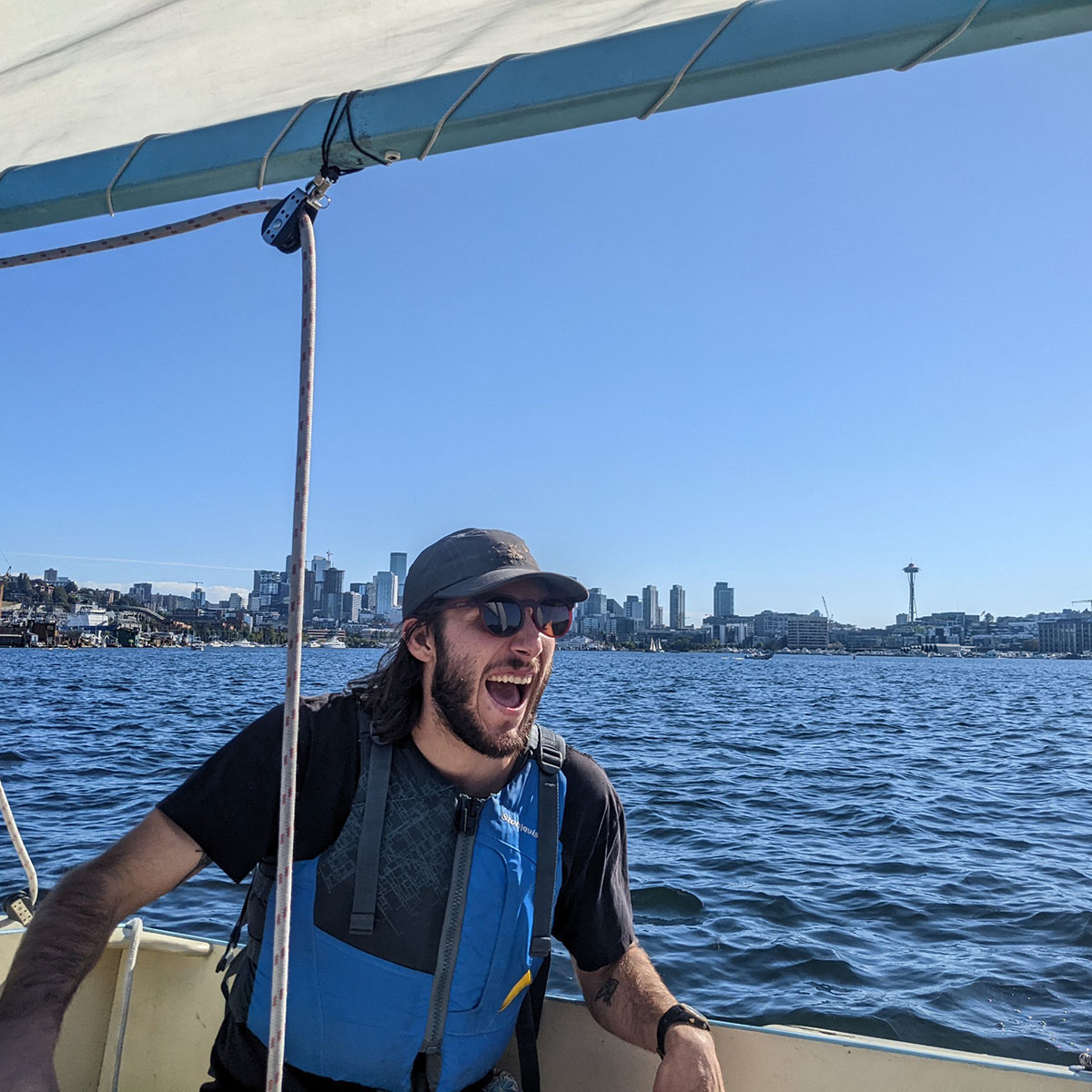 Why did you initially pursue work as an outdoor educator? What keeps you coming back? Initially, I knew I wanted to be outside all the time, as it’s where I found myself to be the happiest. Over time, what brings me back is watching that love grow in the students I teach, as well as the communities I form every year.
What’s one of your favorite memories from last year’s Adventure Treks trips? Doing an alternate, lower elevation backpack in the Goat Rocks. We couldn’t do the normal backpacking route because the snowpack was too high. Having hiked in the Goat Rocks, at first I was pretty bummed that we would miss out on the beauty of it all. However, we still had an incredible time, and I don’t know if I’ve ever laughed so much on a backpack.
What do you do when not working for AT? For the past year, I’ve been working as a barista and as a climbing instructor for the YMCA. Beyond that, I like to do a lot of things we do at Adventure Treks! I’ve been really into big, large-mileage day hikes. Some highlights over the past year were the High Divide loop in Olympic National Park, and crossing the Carbon River in Rainier National Park. Skiing has also been a lot of fun this winter, and when I’m not outdoors, I like to read, play board games and video games, and make block prints!
What are you hoping to learn and grow into this next year? I’m hoping to strengthen my connections with my community in Seattle. It’ll be the first time I’ve lived in one place for longer than a year since college, and that’s really exciting for me!
Do you have any big exciting life plans for the near future? I’ll be enrolling in a local college to get an associate’s degree in GIS! I’m really stoked on that, and also have some goals of hiking the Wonderland Trail, as well as the Timberline Trail.
Fun facts about Max: My pinkies are insanely crooked, and I’m an avid competitive Pokémon battler (like the video game, not the card game).
Kate Wojeck
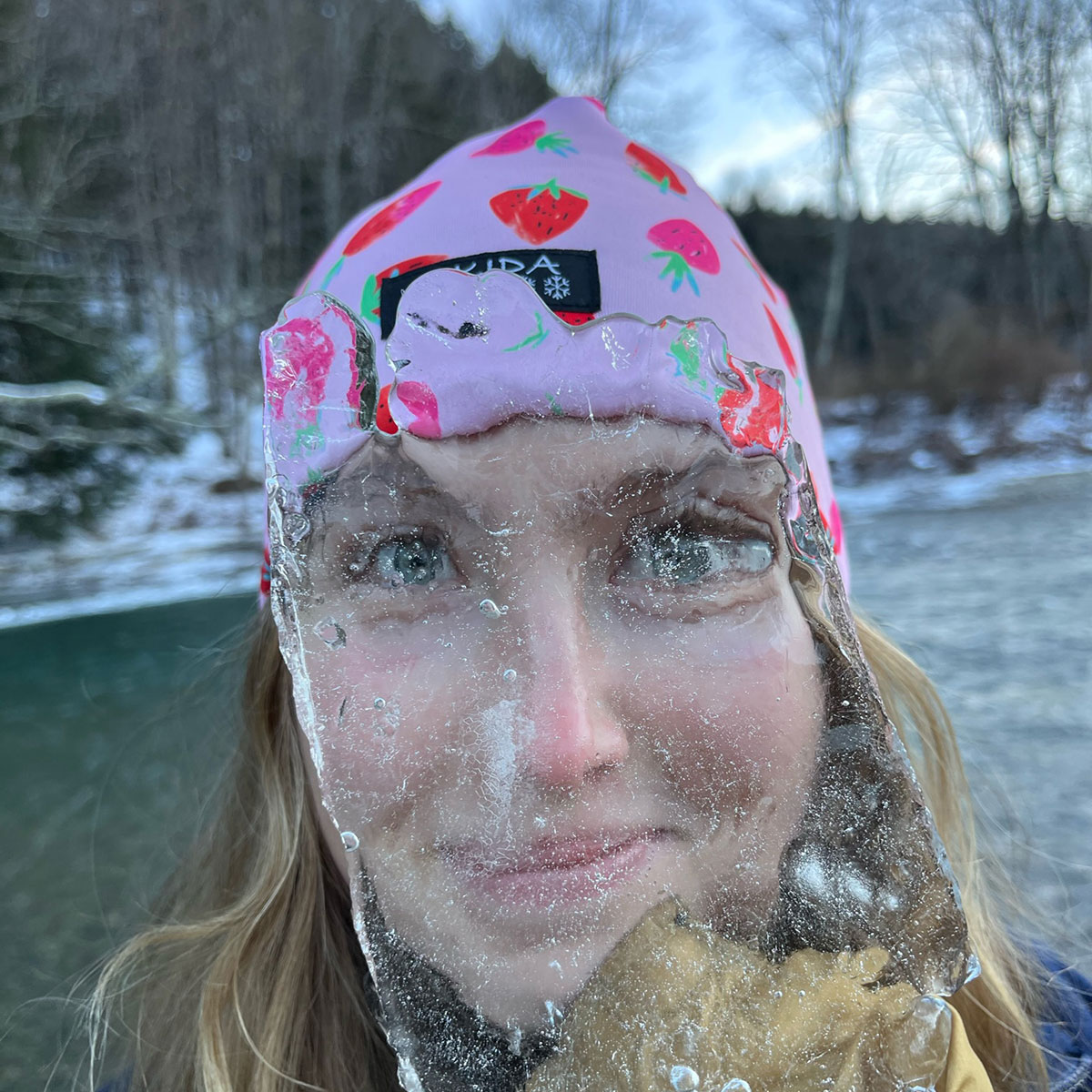 What initially made you pursue work as an outdoor educator? The energy and connection and community I feel in every Adventure Treks space I step into and am a part of—and now help cultivate—is something else. It’s kind of like this big, bone-crushing hug. And I keep coming back to feel it.
What’s your favorite memory from last year’s Adventure Treks trips? I’ve recently been revisiting the moment I heard one of my students’ real laughs—a full-bodied, lose-your-breath belly laughter—for the first time after spending a week together on our Olympic Peninsula backpack. We were de-rigging and while telling the story of our adventure, she burst out laughing… this colorful laughter I hadn’t heard yet. Something shook loose in me, and I was consumed by my own fit of giggles. Seeing a piece of someone come alive in front of you and bring so much color into their person was so special. I can feel how much our cheeks hurt, how much joy was pulsing through all of us—it makes me smile real big! I’ve since been fixated on what a laugh holds and how meaningful it is when shared like that.
What do you do when not working at Adventure Treks? I am living in the library, reading, writing, musing, projecting, dancing, playing outside in all forms, savoring sunshine as a student at the University of Vermont in Burlington—and still exploring! I’m studying environmental studies and storytelling (via writing, art, film, etc.). We’re thawing out after winter and you can feel the shift in seasons—it’s lovely. Swims in the lake, stomping around in the mud, and warmer evening walks are upon us so soon. I’m getting my American Canoe Association certification for kayaking in a couple weeks, too.
What are you hoping to learn over the next year? I’m learning how to see myself—all of my messy, wonderful self—and will continue to notice and carry this awareness over the next year. The kind of witnessing where you create the space to hold all parts of you and breathe into them. The things and feelings and people who ooze an energy about them always make me grin, and I’m trying to embody myself just a little more each day.
What’s a hobby or passion that you pursue in your daily life that not everyone knows about you? Writing! The kind that’s creative and messy and oozing sensory details. I keep a notebook where I gather words I love that are circling around in me, and I spend lots of time playing in there. It’s becoming a practice or ritual of sorts, and I’m starting to feel my imagination crack open. I love it.
What is a book or article you read recently that really stuck with you? This isn’t a book or an article, but a podcast that’s been scratching an itch in my brain lately is “On Being” with Krista Tippet. So much sensitivity and wisdom and joy inhabits these conversations. It’s incredibly grounding to hear Tippet and who she’s in dialogue with reflect and articulate all they’re noticing and imagining in their lives, as they stretch into the unknown madness of the world.
Our students will agree that Adventure Treks instructors are pretty incredible people. From planning 30-person meals for 30 days to fixing broken tent zippers to tending wounds to making sure we’re in the right place at the right time, AT instructors are constantly working to make sure our students are having the best and most fun summer program possible. This passion for empowering teenagers’ personal growth, fostering a fun and cohesive community, and exploring beautiful places with new friends is what makes our instructor team so strong and impactful.
Because our instructors are at the heart and soul of the Adventure Treks experience, we’d love for you to get to know them a little better. How did they end up at AT? What do they do in their free time? What are some fun facts people don’t know about them? We interviewed two of our summer 2022 instructors and are happy to share more about their lives below!
Elena Mederas
What’s your favorite memory from last year’s Adventure Treks trips? There were so many spectacular sights and memories from the last season, but there was nothing quite like stargazing on the steep slopes of a volcano. Our group started our hike up Mt. St. Helens through forests at the base of the mountain at around 2 a.m. and only caught glimpses of the stars through the leaves—but once we moved past the tree line, there was a huge expanse of cloudless sky above us. We gazed up in awe at the blazing stars, spent time identifying constellations, and spotted four planets as well: Venus, Jupiter, Saturn, and Mars! I loved the feeling of being so small in the immensity of the universe—and felt so lucky that we could all be experiencing that moment together.
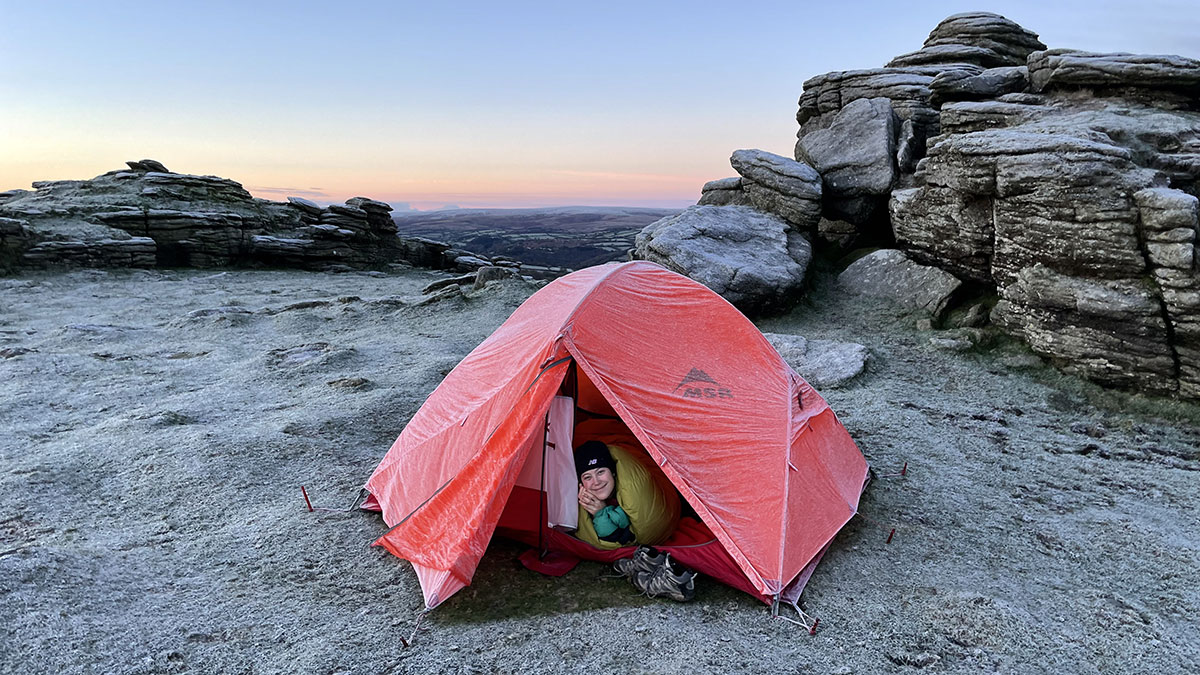
Do you have any exciting life plans for the near future? I moved to England for the winter and have been getting accustomed to living in a new place! So far, I’ve been spending my time planning backpacking and climbing trips with my partner (we recently braved a weekend backpacking trip on the frosty moorlands of Dartmoor National Park), frequenting music shows in cozy pubs, becoming a regular at the local climbing gym, and haunting downtown cafes to work on graduate school applications. I’m looking forward to the spring adventures to come!
What is a book or article you’ve read recently that really stuck with you? A friend and local author from my hometown recently gifted me a copy of a book he wrote called Quiet Teachers. The short story was about a person who felt lost and lonely until they went outside and contemplated the trees, pinecones, birds, and clouds—all of whom shared their own tidbits of wisdom on how to live a meaningful life. On the final page of the book was a handwritten note: “Find your inside, outside in Nature.” I felt so moved by the message and story; it made me feel like life isn’t so complex after all. Like the little chickadee sang from the branches, all you need to do are a few simple things: “Know what you need and where you want to be. Then just work at it, work at it, work at it.”
Fun fact about Elena: I’m both a U.S. and Costa Rican citizen and have family living in both countries!
Dana Kirk
 What initially made you pursue work as an outdoor educator? I wanted to be able to impact students and work outside, exploring new adventures while pouring into other people’s lives. What I didn’t realize was how backcountry time is different from everyday life. My co-instructors and I would say backcountry time is five days normal time and front country is three days normal, meaning time in the woods is different. The connections you build are deeper, your the mind feels free and full of vision, your body feels awake and excited. I love watching students experience this and getting to be a part of it.
What’s your favorite memory from last year’s Adventure Treks trips? On the Lost Coast backpacking trip in California, we made too much rice, even after everyone took an extra bite to help “pack out” less weight. We decided we could give it to one of the other groups in passing. The students took the bag of rice and wrote funny inside jokes, encouraging comments, and notes on the bag and came up with a plan to sneak it into the other group’s gear in passing.
What do you do when not working at Adventure Treks? I teach art to kindergarteners all the way through eighth grade. I coach middle school girls’ soccer, I am a co-athletic director for the elementary and middle school, and I am involved in my church. For fun I like to mountain bike, climb, snowboard, hike, paint, throw pottery, swing and line dance, and bake.
What are you hoping to learn over the next year? I want to grow in engaging my story; learning how to use my story and life to be able to encourage others in theirs. That includes being OK with the mundane of life and experiencing each moment life has to offer for what it is—to grow in not worrying about my future but taking one experience at a time.
By Colin Heller, LAS fall 2022
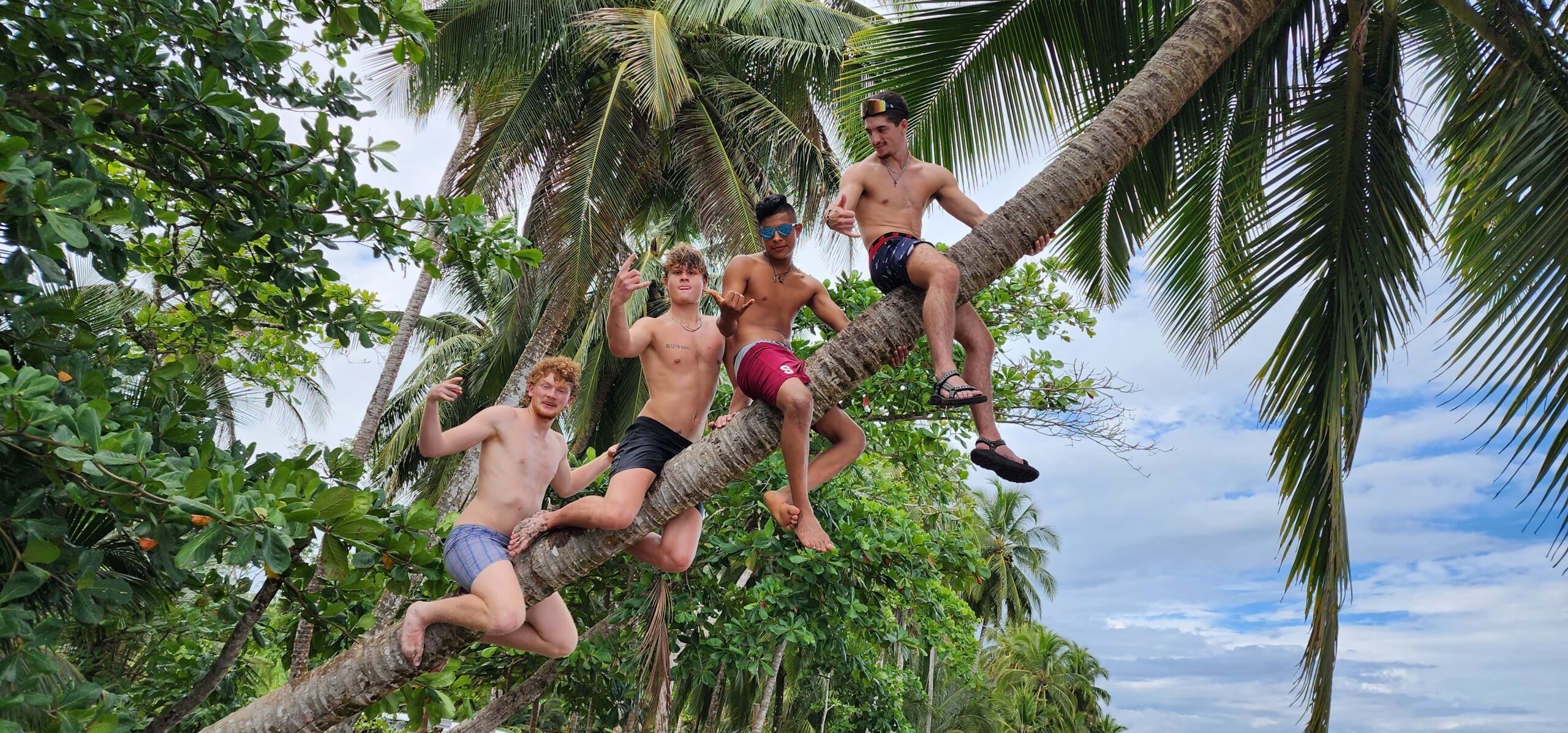
I truly believe that going on the Adventure Treks gap semester was the best thing I could have done after high school. I learned so much about myself, met lifelong friends, and explored some of the most amazing places on Earth. You don’t realize how fun it is being out in nature. While having fun, I feel that I also grew as a person from participating in all these outdoor activities. Being able to see foreign cultures had to be the highlight of the trip for me. It’s just so amazing to me that we are all human, but live so differently.
Having to live with people you just met isn’t the easiest thing to do. Learning how to work with them is even harder. At the start of the program, my group and I struggled to work as a team. No one was trying to be helpful. Everyone would do their assigned work, then walk away. Our bad teamwork was highlighted when going on excursions. When setting up camp, there are many different tasks that need to get done. It’s very hard to set up your campsite when nobody is helping each other. We realized how inefficient we were at getting things done and that we all needed to change. It took us a little while, but we slowly learned how to work together. By the time we were on our final capstone backpack, we were great at working as a team. That’s a life skill that everyone is going to use at some point in time. Whether you’re working with your family to keep your house clean, or with your coworkers to meet the boss’s deadline, it is an essential skill for any adult. I’m very glad that I have learned this.
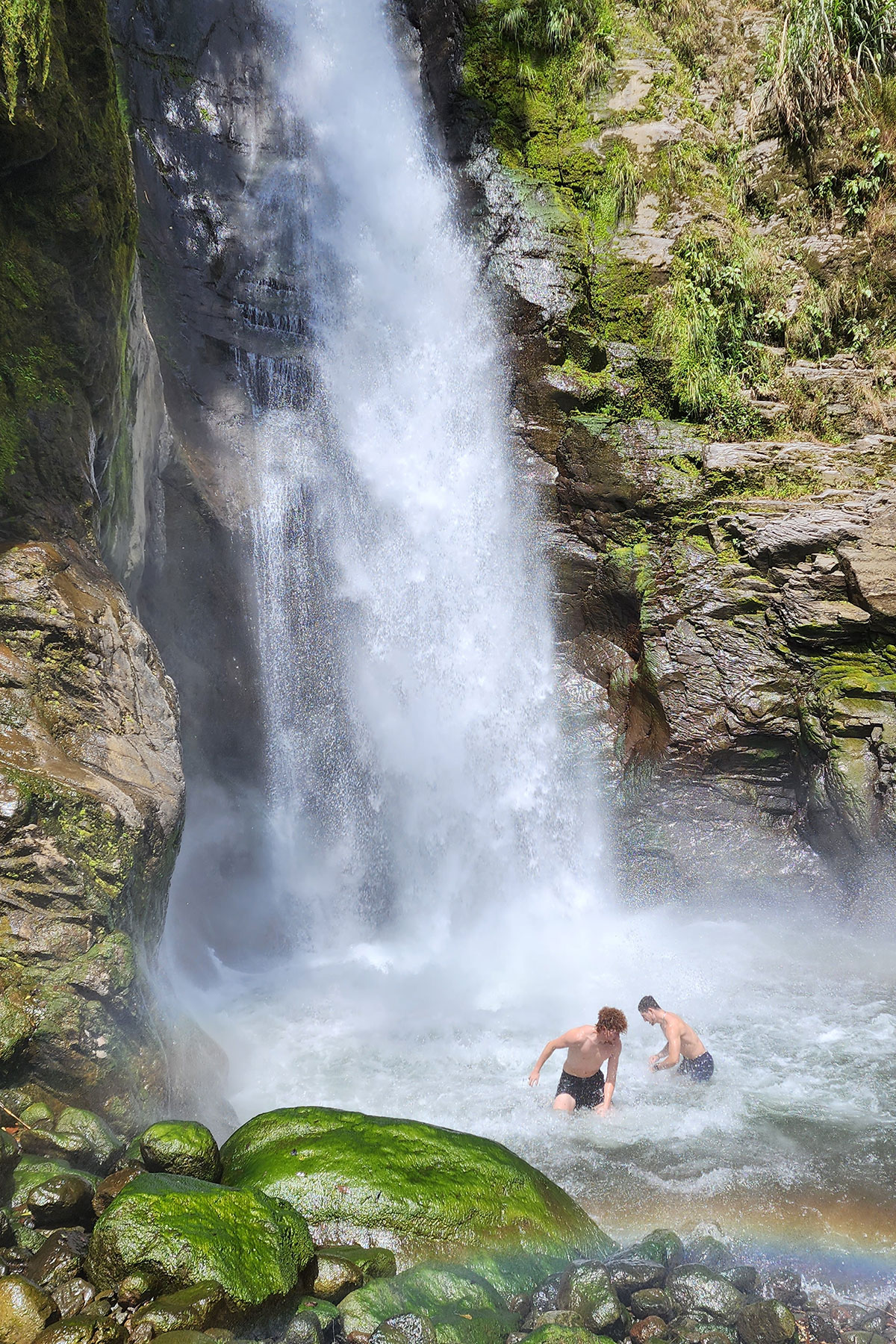
Also, I am truly grateful that I was able to spend at night with the Cabécar people [in Costa Rica] and see how they live, as it is such a different lifestyle compared to mine in the States. The Cabécar people are self-sustaining and live off the land they own, with many animals roaming over the entire property. With their own source of food, water, and shelter, they are able to not depend on the outside world. I have never gotten to see this way of life back where I live. Everyone is too worried about being more successful than one another, trying to impress their neighbor with some fancy new car. So it was very eye-opening to see the other side of the spectrum, where everyone is looking out for one another… where they use things for functionality, and not for looks. My experience with the Cabécar tribe has made me very grateful for everything I’ve got. I’ve become more mindful of all the things I’ve taken for granted. I’ve become grateful for the people around me.
When you’re hiking all day, sleeping in tents, and cooking all of your food on the ground, you realize that stepping out of your comfort zone is something that everyone should do more often. Knowing that I can thrive in different conditions gives me confidence when entering a new environment, whether it’s a new job, team, or location. The Adventure Treks gap semester allowed me to realize my full potential and learn that I know that I can thrive wherever I go.
Our students will agree that Adventure Treks instructors are pretty incredible people. From planning 30-person meals for 30 days to fixing broken tent zippers to tending wounds to making sure we’re in the right place at the right time, AT instructors are constantly working to make sure our students are having the best and most fun summer program possible. This passion for empowering teenagers’ personal growth, fostering a fun and cohesive community, and exploring beautiful places with new friends is what makes our instructor team so strong and impactful.
Because our instructors are at the heart and soul of the Adventure Treks experience, we’d love for you to get to know them a little better. How did they end up at AT? What do they do in their free time? What are some fun facts people don’t know about them? We interviewed two of our summer 2022 instructors and are happy to share more about their lives below!
Spencer DrakeUnderkoffler
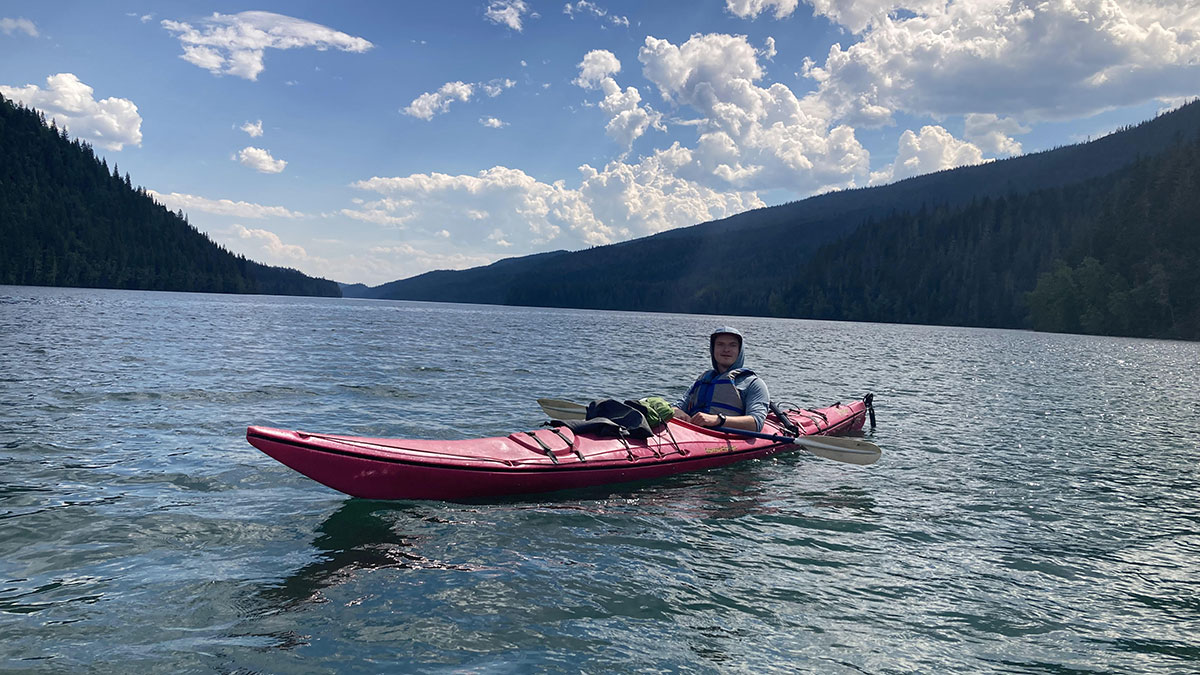
What initially made you pursue outdoor education, and what keeps you coming back to this type of work? I started out leading overnight trips for my college’s outing club. I also went to school to be a therapist. I decided to combine the two and work in wilderness therapy. However, I underestimated the amount the job would drain me. To recoup, I decided to hike the Pacific Crest Trail. While on trail, I came to the conclusion that time is a precious thing that should never be wasted, so I decided to go headfirst into guiding and outdoor ed.
What do you do when not working at Adventure Treks? I’m either ski patrolling or instructing, and this winter I’m working at a backcountry-specific ski mountain doing both. There are no ski lifts, and everyone has to walk up the mountain themselves. I fell in love with this sport because it is a way to travel in the mountains that feels so seamless. I also enjoy hiking and rock climbing whenever I get the chance. I recently started trail running and have been loving that! I look for any excuse to be outside!
Do you have any big and exciting life plans for the near future? I really want to get more experience mountaineering. The little bit of alpine climbing and mountaineering I’ve done has been some of my most exciting adventures to date. Also, moving to Colorado for my new job is gonna be rad!
What is a hobby or passion that you pursue in your daily life that not everyone knows? Cooking. I went to culinary school in Italy for a semester and loved the knowledge I gained from integrating one’s garden knowledge with their kitchen knowledge.
What is a book or article you read recently that really stuck with you? I’m currently reading Braiding Sweetgrass. It gives me hope for the future and grounds me in whatever version of nature I find myself.
Fun fact about Spencer: The most exciting experience for him is getting to see a bison out in the wild!
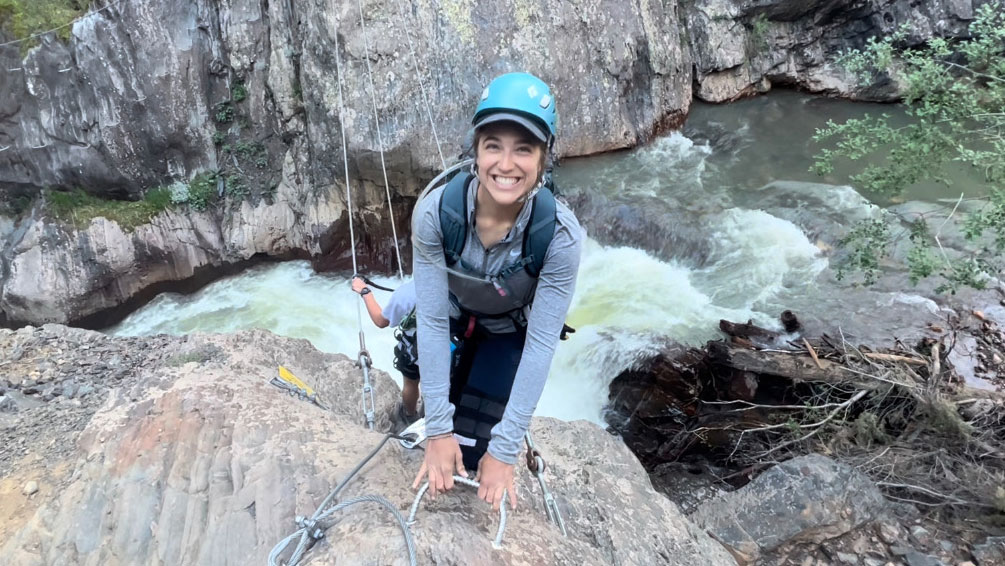
Lauren Richert
What is your favorite memory from Adventure Treks last summer? Performing a choreographed parody version of “I want it that way” by the Backstreet Boys for a hat ceremony with my backpack group. Watch out America’s Got Talent, we’re coming for ya!
What do you do when not working at Adventure Treks? I teach rescue classes to fire departments in southern Colorado and New Mexico and to college students in the International Rescue and Relief Program at Union College. I recently led a disaster response with our program’s team to Florida after Hurricane Ian. It was really impactful work not only for those affected, but possibly more so for me. I always learn so much from the resilience of the deeply affected residents.
I’m also taking a few classes in international development and am thinking about starting a graduate program in that area next year… we’ll see. I’m helping plan an international expedition with my coworker (and fellow AT instructor) Ian Johnson. It’s a blast doing all parts of my job—teaching, planning, and figuring everything out—with the incredible workplace community I have.
When I’m not working, I’m usually doing acro-gymnastics, climbing at the bouldering gym, or reading. And when I should be doing other things, I can usually be found at a local coffee shop conversing with an old friend or new acquaintance. I’m currently stationed in Lincoln, NE, which means it’s tougher to get outside and climb mountains, but it’s definitely challenged my creative capacity for outdoor recreation activities and makes those trips that much more special when I get the chance to take them. Plus, friendly Midwest people and sunsets are top-notch, bar none.
Do you have any big and exciting life plans for the near future? I’m thinking about moving to Durango, CO, to teach rescue full-time and to do some raft guiding! I miss living in the mountains after moving out of my home state WA in 2019, and I want to get back to a place that has more outdoor options for mountain biking, climbing, water sports… the whole shebang.
What is a book or article you read recently that really stuck with you? I never read Harry Potter or watched the movies growing up. I’m on the last book in the series right now, and I love it. I legitimately don’t know what happens at the end, so its quite exciting, and reading it makes me step into a fun, creative, and imaginative world.
Fun fact about Lauren: I think the French horn is the coolest instrument ever. It’s like audio butter. Smooth, gorgeous sound, and super hard to play, so I have mad respect, and you can do so much with it musically. Also, fun fact about my fun fact: the French horn is one of the longest band instruments; all stretched out, it’s over 30 feet long. It’s also not originally French!