Updated March 2023

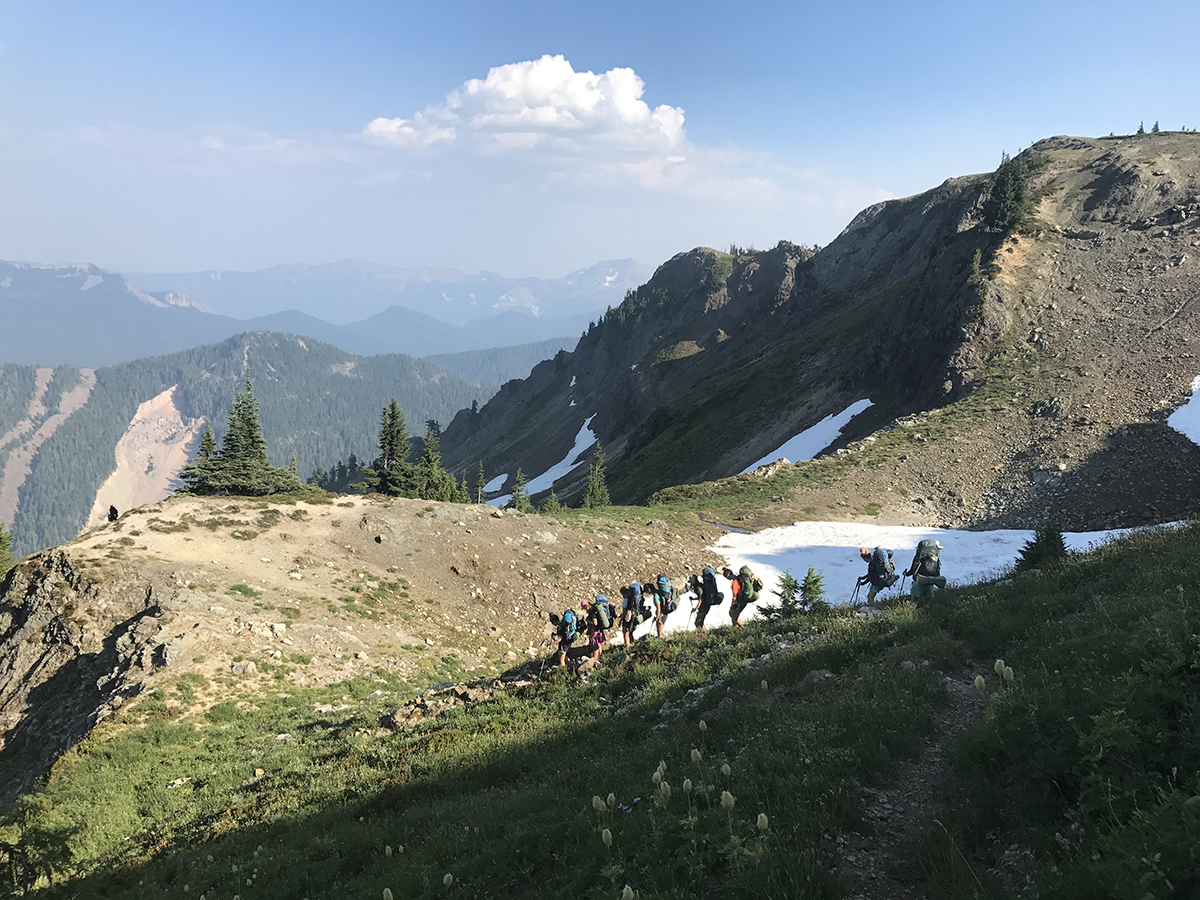
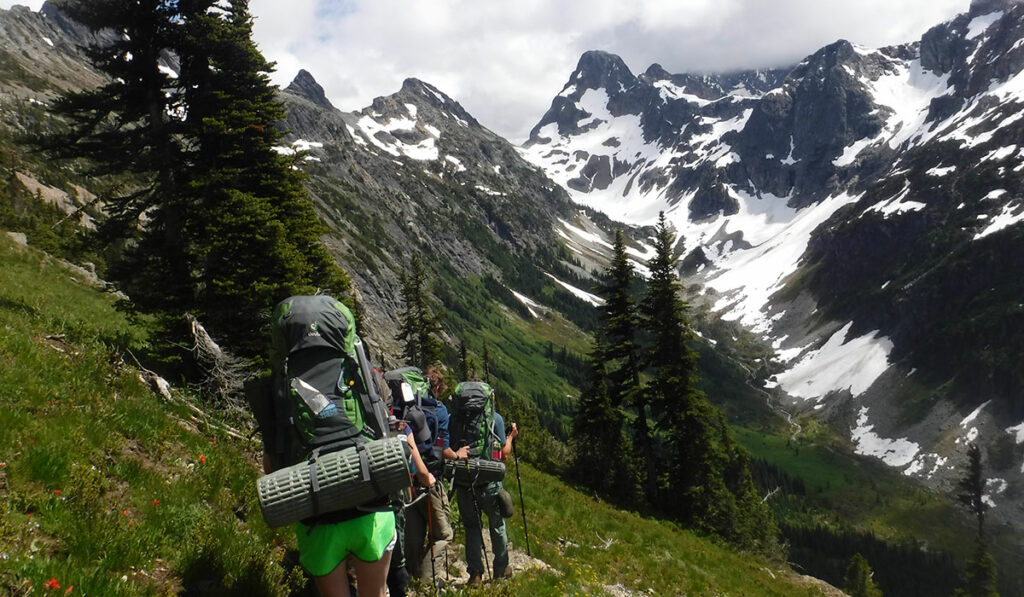
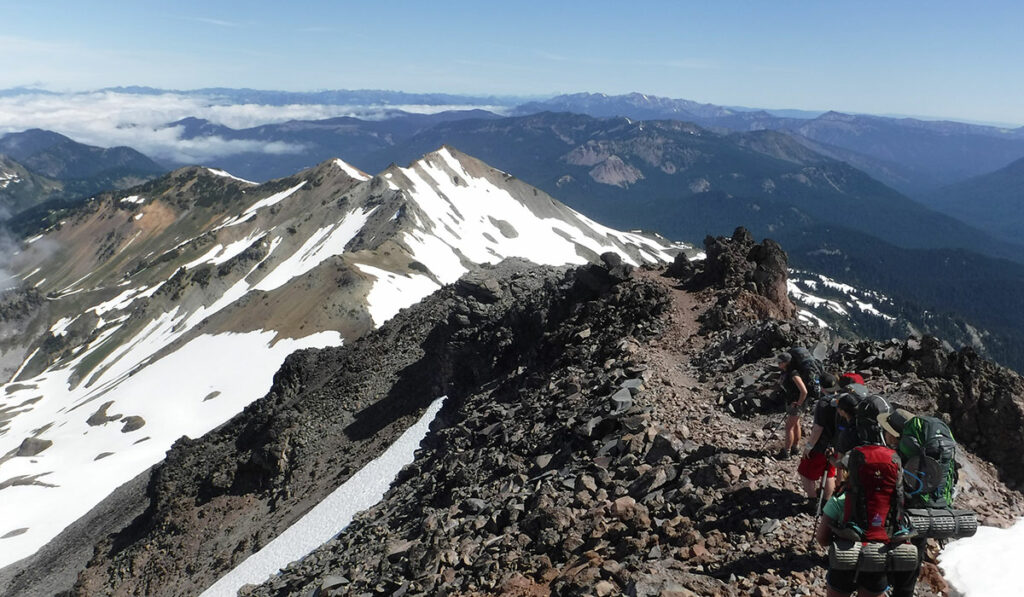
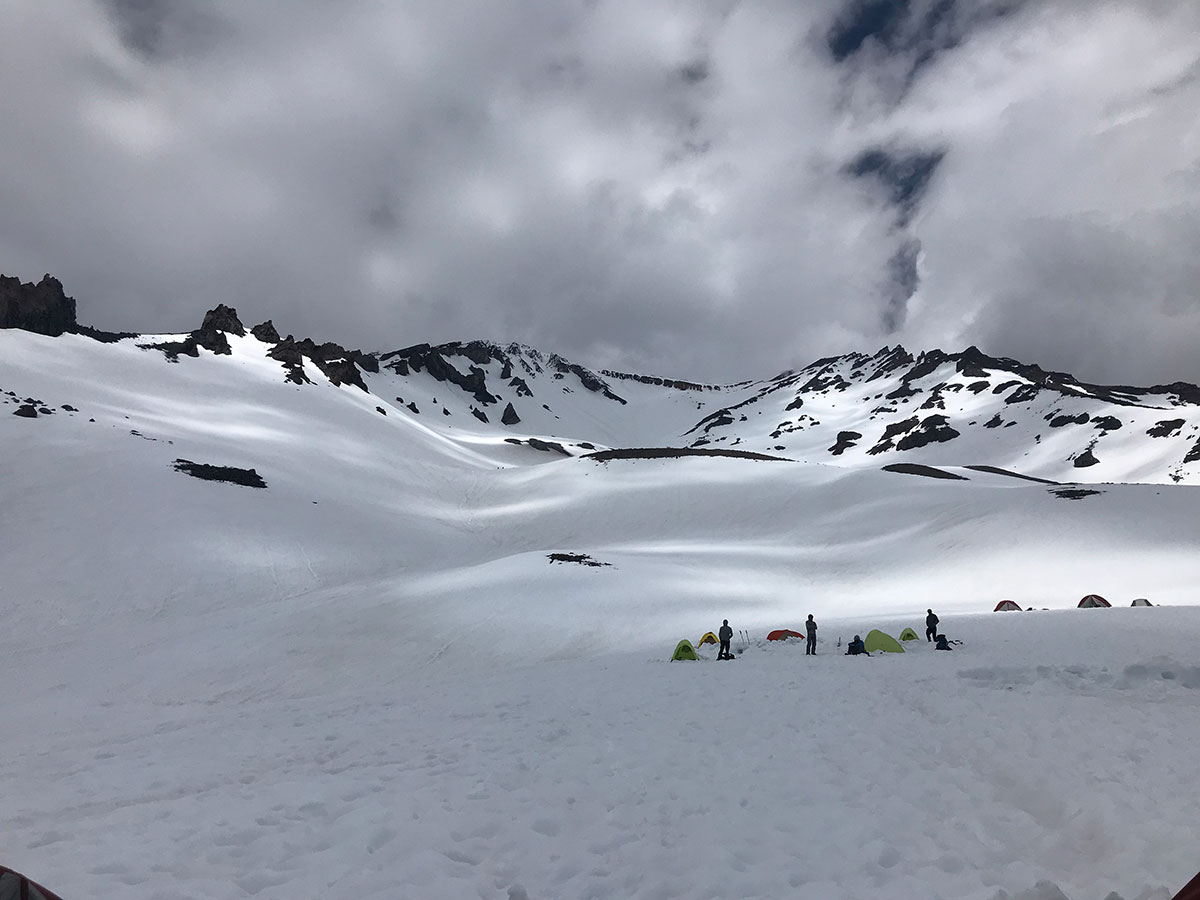
Imagine you are on top of a snow-covered mountain pass in the Goat Rocks Wilderness in Washington. (If you haven’t been to the Goat Rocks, picture soaring, jagged peaks contrasted with vibrant meadows of wildflowers, alpine lakes, and never-ending vistas of surrounding mountains like the 14,411-foot Rainier and 12,280-foot Adams.) You feel a mix of giddiness, friendship, fear, and maybe slight nausea. Looking back across the pass, you see a snaking line of footprints covering the snow leading to where you now stand. You’re tired and sweaty, but the world feels right. That crossing was stressful, but you worked together with your group to get yourself and your pack across a steep snow field, and it may have been one of the most challenging things you have ever done.

Backpacking through the wondrous Goat Rocks

Moments after gazing at your surroundings in reverence, you’re laughing uncontrollably because you and your friends are pretending to be penguins sliding around on a tiny rise in the snow. You’re enveloped in euphoria, and it hits you how much you care about the people around you—and how beautiful, powerful, and quiet the landscape around you is.

Congratulations—you just had a brief moment as a student on an Adventure Treks backpack. This activity is, hands-down, the best activity we do during the summer.

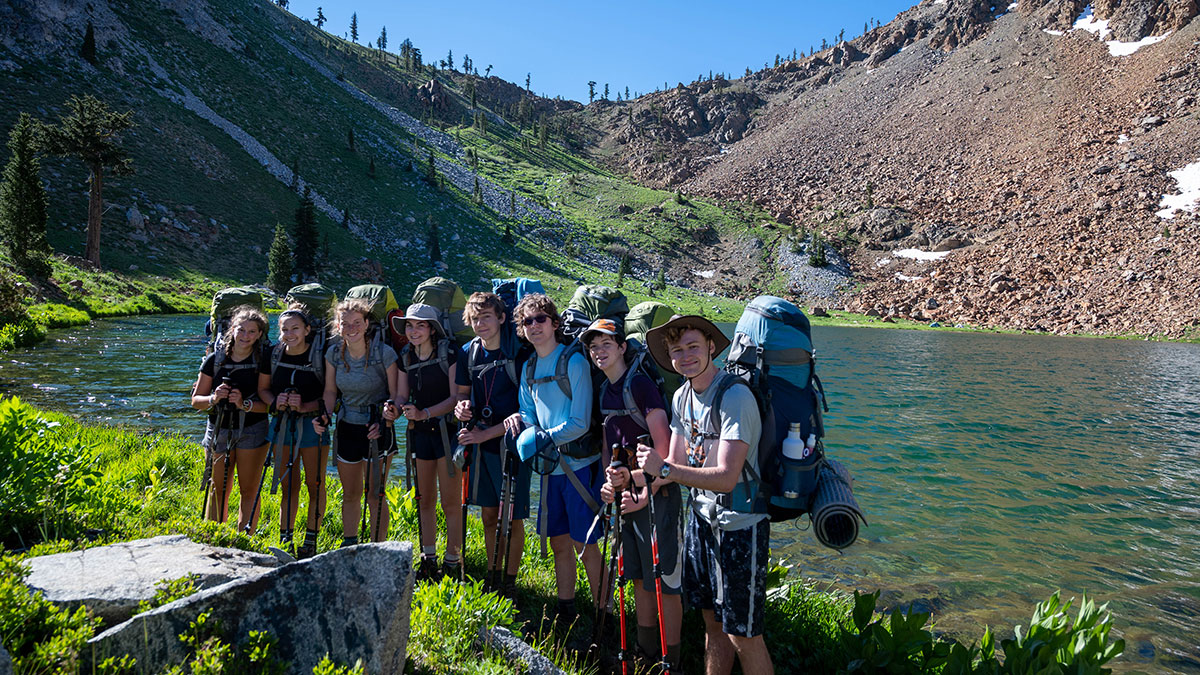
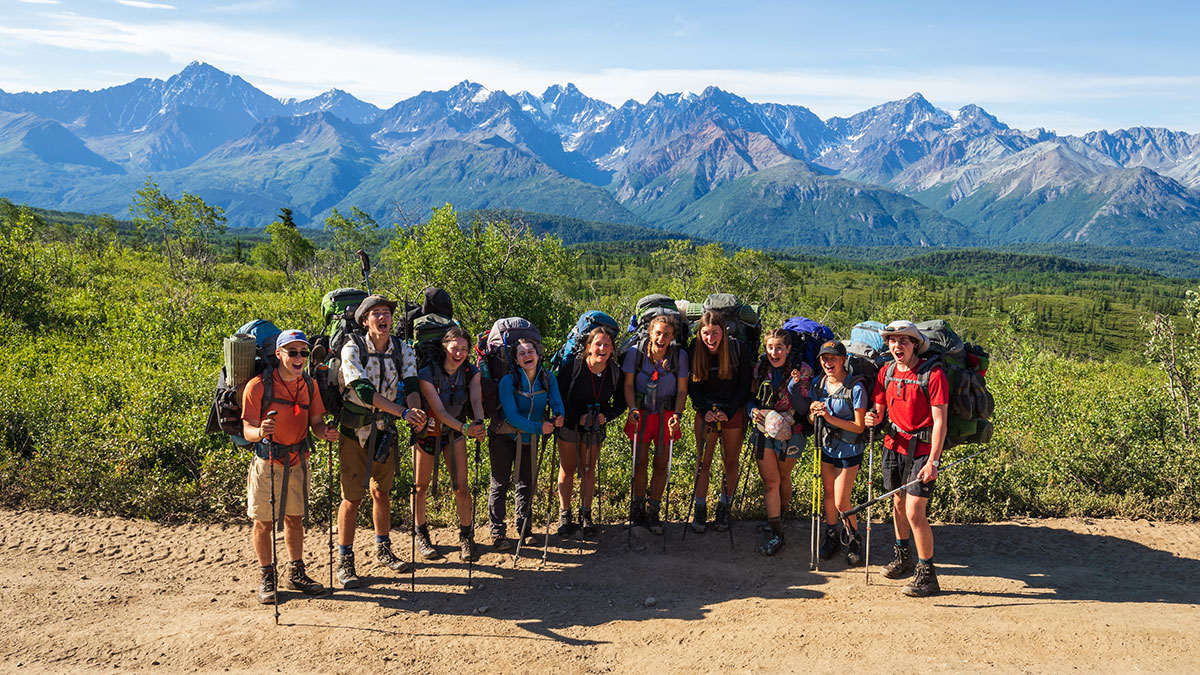
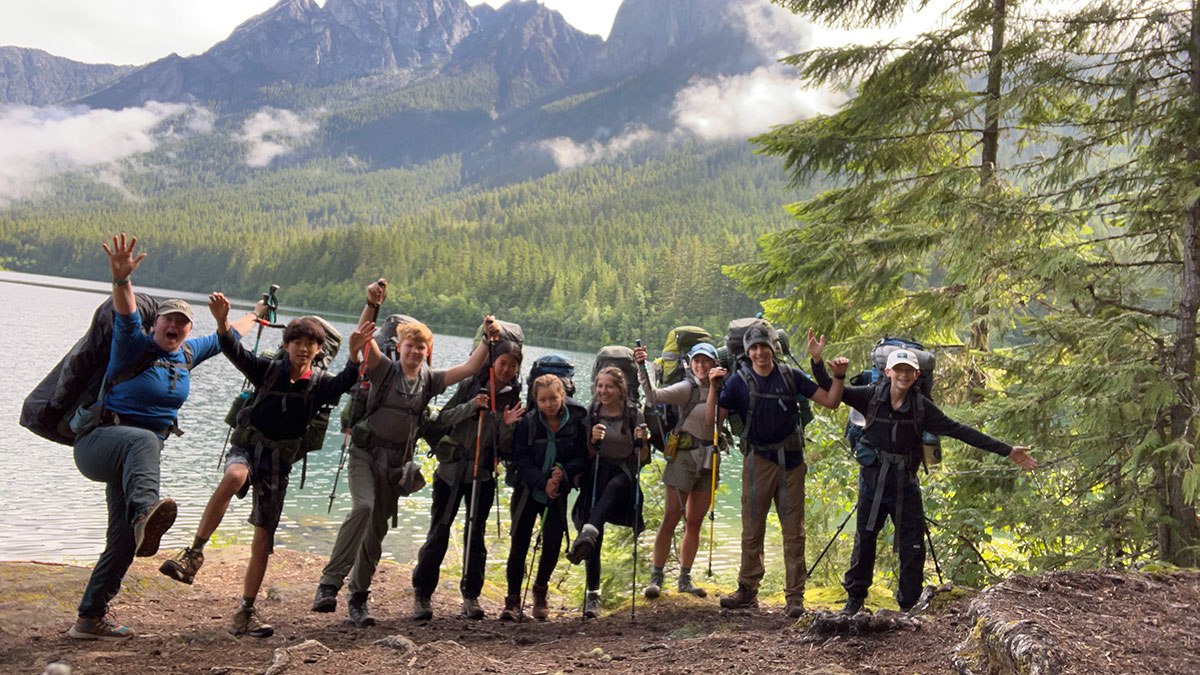
That scene is one of many wonderful moments I have experienced while backpacking as an Adventure Treks instructor. I was 28 years old at the time of that particular memory, and I was acting every bit of 7 at the top of that hill. Everything felt so fun. We had done it. We had covered challenging terrain, and we were steps away from having solid ground back under our feet. It was a real turning point for our group, and I felt an unbreakable bond with those students for the rest of the trip. There is something about backpacking that brings people together. It’s hard to put my finger on exactly why, but I think I can boil it down to three things: shared challenge, lack of electronic distractions, and what I am going to call “shared humanity.”

Shared challenge

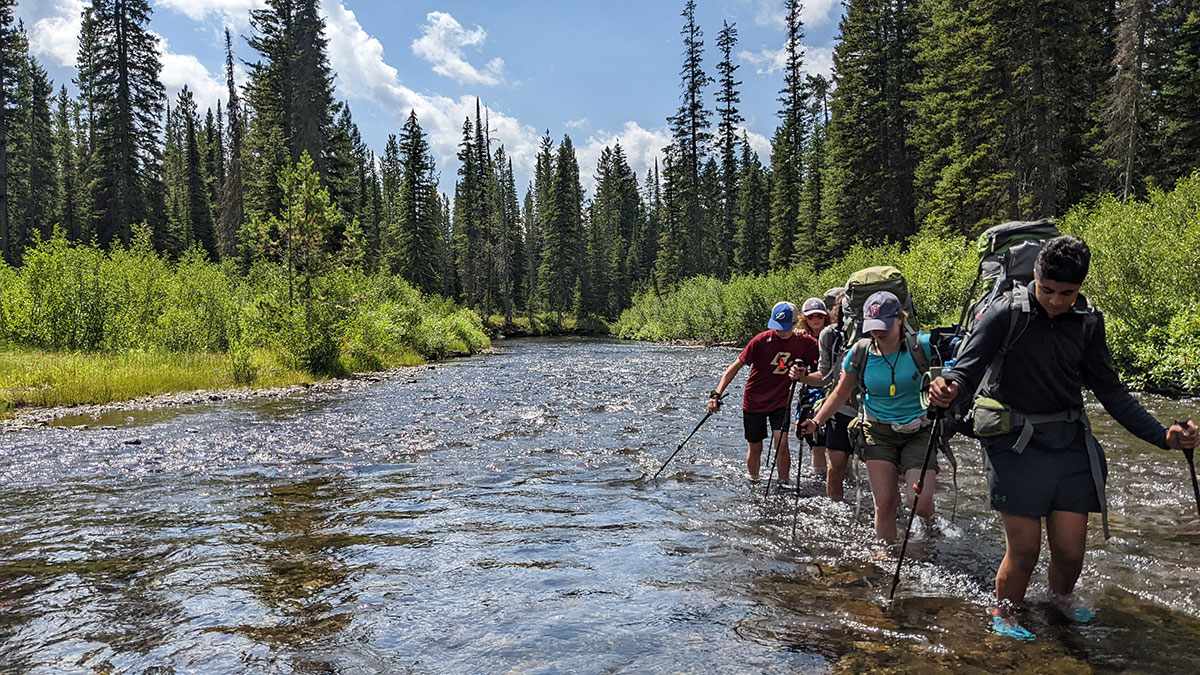
Backpacking by nature is not always easy. In fact, backpacking sometimes can be the perfect recipe for a serving of humble pie. Take a few parts weather (rain, cold, or heat), mix in a cup of insects (the dreaded mosquito), separate the river crossings from the elevation gain, and don’t forget that special dash of getting slightly lost at the end. Bake that for five days, and you have yourself some shared challenge. Taken at face value, this does not sound like tons of fun. However, there is magic in overcoming challenge, and even more so when you do it with your friends. It creates opportunities for group members to take on many roles they may not normally fall into. You may get to step up and lead, or maybe you’re the person that cracks a joke at just the right time to lighten the mood. Maybe you get to experience the feeling of being genuinely supported by your friends. At the end of it all, you did it. In a world of instant gratification, backpacking always delivers. There are few feelings like coming out of the woods after a trip. You smell bad, and you’re tired, but you feel like you’re part of something. Sharing that challenge with your team builds a bond that is hard to break.

Things are simple while backpacking. You only need to focus on a few questions: Where am I going? Do we have food? Where is the water? Other than that, you just take it all in and talk with your group. There are no bright lights, loud noises, ringers, vibrations, email alerts, television premiers, or sometimes even books to read. This lack of distractions allows you to focus on what is around you. At Adventure Treks, that equates to nine other people and nature. I’ll admit that I love the views, and the feeling of being alone in the woods, but what really makes backpacking fun at AT is the creativity. When you have that much time on your hands, all kinds of wonderful things can happen. I’ve played countless games, searched for wildlife, written group poems, taught constellations, had long, deep conversations, made nature art, and I even once spent an afternoon acting out a beloved book series (for several hours… it was Harry Potter). I’ve watched one-person plays, and I’ve created a different persona that I kept for days. You have time to talk about everything while on trail. What food do you love, tell me about your family, do you have pets, what would you do with a million dollars, if you could freeze time for four hours how would you spend it, if you could ride any creature to battle, what would it be?

Lack of electronic distractions

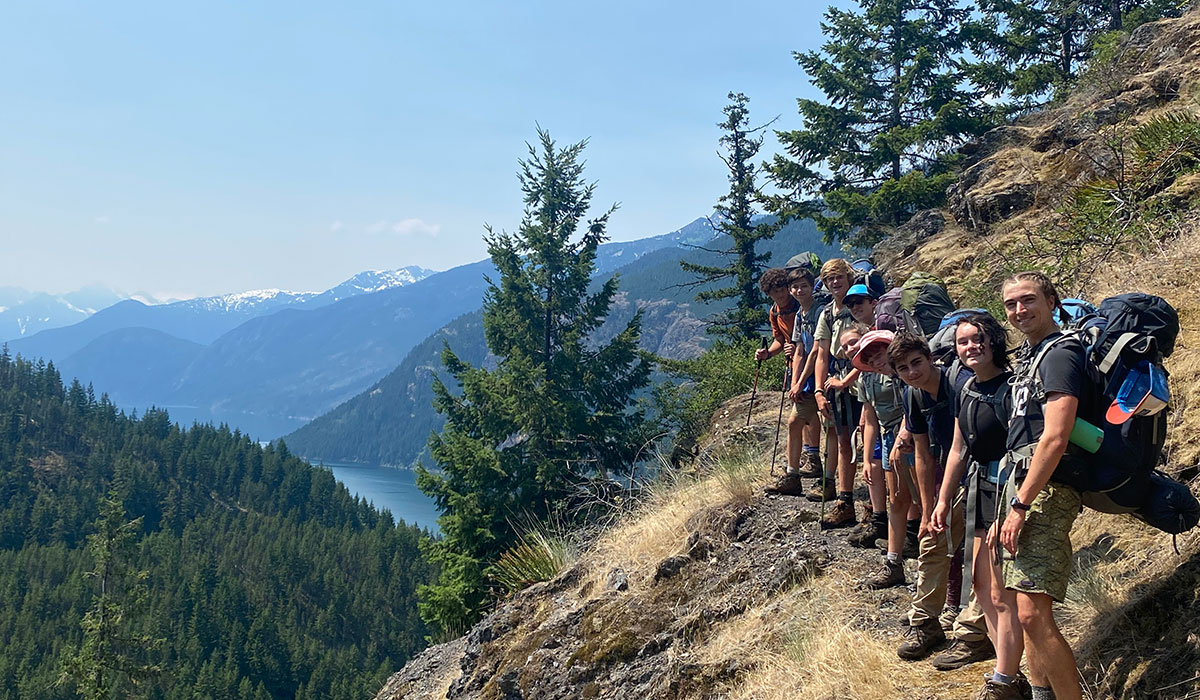
I often leave the woods knowing the people around me on a deep level, and it only took four or five days. I’ve had students tell me they are closer with their AT friends that they have known for 21 days than friends at home they’ve know for six years. With no distractions, you focus on what is important: your friends and creating memories of laughter and fun.

Shared humanity

The final piece of magic that comes with backpacking is what I’m calling “shared humanity.” What does that mean? I believe being on a backpack at Adventure Treks breaks down barriers that separate people into groups. Do you go to private or public school? Do you love sports? Are you really into video games? What state are you from, or even what country are you from? Sometimes questions like this can make us gravitate toward different people or groups. Living in the woods out of your pack has a way of making all of that go away. Those differences just don’t matter. Again, the simplicity reminds us all of the things that we share, not the things that make us different.

Backpacking reminds me that we are all the same. We all get hungry, we all get sore, we all love snuggling into a sleeping bag when it’s cold. These things subtly break down differences between us and help the group come together. At the end of the day we are all people, and once you have one thing in common, you can find more. Once you find more, you find a friend. We are all human, and that shared fact brings the group together in a powerful way.
Our trips are filled with amazing activities. I will admit that mountain biking, climbing Mt. Shasta, or rock climbing sound more appealing and exciting on paper than backpacking. But time and time again, I most look forward to going into the backcountry with students every year. I would argue that the first backpack of an Adventure Treks trip is the very best part of the summer. I get to watch a group of strangers become a group of friends who will overcome challenges, create their own fun, and realize that their differences don’t really matter. Watching that process is truly one of the most rewarding pieces of being an AT instructor, and the only thing that tops it is being a part of that process and a member of the group. Some of my closest friends in the world have been forged while backpacking, and that is why I believe backpacking is the best activity we run at Adventure Treks.

What is it about wild spaces that draw out our curiosities, connect us with the past, and prepare us for the future? The outdoors connect us to an infinitely complex and interconnected world for exploration and help us build relationships with each other and the world around us—often leading us to better adapt to a changing environment. Scientific studies have confirmed many of the positive effects of nature to improve social and emotional learning goals as well as traditional educational attainment. While these benefits are strongest for youth development, they aid adult minds as well, and building these bonds as an adolescent increases the likelihood of lifelong outdoor relationships. A deep connection to nature also builds environmental stewards who are more likely to preserve and restore natural spaces, ensuring their existence for future generations.

The limited access to technology on AT’s teen adventure camps—combined with an immersive community that connects deeply face-to-face—allows for students to be more present in the activities and environments around them, and to build more personal connections to each other.

Studies that highlight the benefits of nature on youth

Richard Louv’s book Last Child in the Woods: Saving Our Children from Nature-Deficit Disorder summarizes six studies that measured students’ higher capacities for creativity, attention, respect, and empathy when in nature and puts forward the hypothesis that it is our lack of natural access that contributes to increased rates of childhood obesity, ADD/ADHD, anxiety, and depression. This book sparked a movement called Leave No Child Inside that works with city governments, schools, and student resource centers to increase access to natural spaces, especially for kids in urban environments.

Louv’s book helped name a growing problem in our increasingly developed world, but researchers from Clemson University, North Carolina State University, and the University of Birmingham focus more on the positive aspects of youth development in nature. Their 2015 study titled Nature as an Ecological Asset for Positive Youth Development is the first to look at interactions with nature regardless of activity type, and analyzed positive youth development using the six “C’s” model: competence, confidence, caring, connection, character, and contribution. The researchers found that building a strong bond with the natural world led to significant positive outcomes in all six areas.

While these benefits are especially important for the developing mind, the rewards are not limited to youth. Business Insider put together this list of 11 scientific reasons everyone should be spending more time outdoors; they include improved short-term memory, restored mental energy, stress relief, reduced inflammation, improved vision and concentration, sharper thinking and creativity, boosted immune systems, improved mental health, and a longer life span. Getting students interested in nature at a young age increases the likelihood of a lifelong connection to the natural world—and all of the health benefits that come with it.

Each of these studies measured the outcomes of students in a natural setting against students without similar access, but Nilda Cosco’s TED talk “What Nature Teaches Children” highlights the opportunities that nature provides youth to teach themselves. Experiential learning is the idea of teaching oneself, often with guidance, lessons about the world. Studies show that the lessons a student can teach themselves will stick with them far longer than lessons taught to them. Nilda emphasizes that outdoor learning environments are health interventions that promote exercise, creativity, and social interaction.

Why does nature have this effect on kids?

The venue of the great outdoors provides an environment for youth to play, exercise, explore, take reasonable risks, experiment, question, discover, and imagine the world around them. At Adventure Treks they are guided into situations to push themselves and set new personal bests at a wide variety of activities. I can’t tell you how many times I’ve heard a student gleefully exclaim that they made it further than they thought, or that they realized they truly can do anything they set their mind to. Being faced with a big challenge, and choosing to push yourself a little further—whether that’s the top of the mountain or six feet higher on a climbing route—builds resilience that carries over into daily lives back home. The possibility to fail and try again is something that many students miss in a traditional school environment, yet it teaches persistence and builds grit. While watching students accomplish more than they thought they could is always a highlight of the summer, it is equally important to allow students to fail safely and grow from the experience.

Nature, for many of us, pushes us closer to the edge of our comfort zone than we are accustomed to. We work hard at Adventure Treks to create experiences that will challenge students, but not push them into a “panic” zone. When you are fully in your comfort zone, learning is more difficult. When you are fully in your panic zone, learning is almost impossible. Existing near the edge of your comfort zone has been shown to increase brain plasticity, or our ability to absorb new lessons and ideas. The departure from our daily lives into an outdoor expedition puts us in that learning zone, and allows us to connect more deeply with the people and topics around us.

In the modern era, these effects are not just about the access to nature, but also the limited access to technology that comes with an Adventure Treks trip. Screen time has been strongly correlated with increased anxiety, reduced self-soothing tactics, and attention deficit. Technology is not an inherently bad thing, and access to new technology has improved our society in many ways, but anything in excess can have unexpected consequences. The developing brain seeks out the kind of social approval that we continue to export to our phones and social media. Taking an intentional break from these devices can serve as a reset and allow students to develop some of these social and emotional benchmarks for themselves. Having to think through a problem rather than looking up the answer builds problem-solving and attention skills. Having to talk through a difficult social dynamic rather than post about it builds resilience and tolerance. Students often comment about how easy it is to be “present” when on an Adventure Treks trip. This is partly due to the lack of technological distractions, but also because an AT trip allows for students to explore this complex world that we are all a part of without fear of judgment, while making deep bonds of friendships with peers from all over the world!

The last benefit of kids’ immersion into natural environments is for nature itself! Students who build a strong bond with the natural environment are shown to care more about preserving and protecting natural spaces and have higher interest in environmental stewardship. With the innumerable benefits of nature, we must value this resource for future generations to thrive. At Adventure Treks, we teach principles of Leave No Trace to show students how to responsibly engage with nature in a way that can preserve it for generations to come. Beyond the ethics that we teach, having these wildly fun experiences outdoors builds the association between the natural world around us and the adventure and challenges we can use to grow while having fun with new friends from new places. I love that so many students who have done an Adventure Treks trip choose to come back, and that most who do have even more fun on their second or third or fourth or fifth trip. Part of this is the amazing and unique experience of Adventure Treks, but that experience depends on an incredibly diverse natural world for us to enjoy and explore!

So whether it’s for mental or physical health, social or emotional growth, or education, nature benefits youth development in a way that we have not managed to simulate using any of our technology or classroom teaching. This growth can be seen in the students who come back to our program year after year, and many parents comment on the positive development they witness when their students come back from our programs. Even if you can’t join us this next summer, take some extra time this week to go on a walk, watch the clouds, or get to a point with a good view, and notice how it makes you feel!

An interesting theme sprouted up this month when I asked our team to recommend some of their favorite books! The stories of all three of the titles listed below circulate around environmental action, though the message is incorporated in diverse ways. Braiding Sweetgrass is non-fiction with a focus on indigenous knowledge, The Overstory is solemn and conspicuous in its argument for the preservation of forests, and Project Hail Mary is a surprisingly intricate take on climate change through the lens of digestible science fiction. Stay tuned for “What We’re Reading: Part 2” for more recommendations!

Amanda’s pick: Project Hail Mary by Andy Weir

“I waited six months to download Project Hail Mary, by Andy Weir, in my library app. Having read his other two novels, The Martian and Artemis, I was curious to discover what his newest sci-fi adventure would entail. I don’t like spoilers, so I didn’t read reviews beforehand and dove in with no preconceived notions. (Sort of like how we ask students not to look each other up on social media before they meet for the first time at AT…) I won’t give away the plot here, but suffice it to say that even with a lack of character development, somewhat tired trope, and too much exposition in the first few chapters, I couldn’t put the book down.

So without sharing plot twists, I’ll instead share how I thought the book relates to the Adventure Treks experience. (Yes, I found a parallel between alien life and AT… sort of.) It’s quite simple: A challenge is presented that requires nothing less than teamwork, compromise, humility, and a unified stance to solve. The challenge in the book has the ability to destroy humankind—it’s quite dramatic, though the book’s urgent dilemma will probably evoke your own emotions regarding our climate crisis or politically divisive world anyway.

But to pull it back to AT, the book’s characters (including a few you really don’t see coming) must use extraordinary critical thinking and math and science skills (shout out to our STEM students) and put the good of humankind over their personal needs in order to save not only Earth, but other worlds as well. The characters must also find common ground (which in the plot seems literally impossible at first) and build relationships upon trust—which truly becomes the driver of the plot near the end of the story. It’s really about facing adversity (one that threatens more than our small perspectives) with resilience and a team of friends standing next to you.”

Kent’s Pick: Braiding Sweetgrass by Robin Wall Kimmerer

“Robin Wall Kimmerer is a botanist, educator, and member of the Citizen Potawatomi Nation. Like the actual braiding of sweetgrass, Robin weaves together the perspectives of analytical science, native traditions and ways of thinking, and stories from her personal life. She discusses the wider ecological context that includes humans as a part of nature and pushes the reader to reimagine what our relationship to the other species and processes of this Earth could be. She emphasizes the idea that nature can be our teacher just as much as books or lessons.

One of the things I found so powerful about this book is how she frames the issues of climate change, pollution, and ecological disaster through the lens of better options, things that have worked, and ways of relating to the natural world that are not exploitative. As someone who cares about the natural world, I often find myself only focusing on the negative impacts of humans on the planet and not examples of responsible land stewardship. She beautifully balances humanity’s destructive industrial past with the “social imagination” for healing and reconstruction, and this manages to be a book about climate change that leaves you feeling hopeful, which I have found rare.

Though it is science-focused, the writing style is almost more poetry than prose. It uses the author’s life experience and tribal heritage to add context and color to the science she lays out. She uses the facts about the behavior of strawberries, pecans, cattails, salamanders, maples, and sweetgrass to draw larger lessons for society as a whole. I find myself enjoying the fun facts as much as the epiphanies about human nature. Braiding Sweetgrass manages to be simultaneously highly informative and breathtakingly beautiful. I listened to this book as an audiobook, read by the author, and hearing the tone and cadence of her reading (as well as correct pronunciation of the scientific and Potowatomi words) made this a book I kept coming back to.”

Jess’s pick: The Overstory by Richard Powers

The Overstory is an epic tome of mystical, winding stories and captivating writing. Small spoiler alert: most of these stories are sort of sad! This is a book about trees, humans, and the connections between the two—in some moments I was in awe of the magical properties of the most mundane natural cycles, and other times I found myself tearing up alongside the characters who fight for the preservation of forests.

Told through the interwoven perspectives of almost too many characters, this book navigates from sentimental to activistic with little space in between. One of the most fascinating stories is of a couple of activists who choose to live in the canopy of a redwood tree in order to protect it from being cut down. Powers shares incredible facts about these extra-tall trees. There are a variety of animals and plants (mostly mosses and fungi) that only exist high up in the redwoods and never touch the ground! (Side note, if you read this book, you should definitely hop on California Adventure or California Challenge and see one of these massive trees in person!)

Four distinct sections titled Roots, Trunk, Crown, and Seeds allow the reader to grow along with a tree’s cycle of life as the plot treads along below. When I start a book, I generally finish it within a couple of days, but with this one, I was reading for weeks! It’s dense and also beautiful, slow, and gripping. I absolutely recommend it, and recommend that readers take their time.”

Let’s set the scene: It’s the opening day at Adventure Treks! Students have arrived, the group is on their way from the airport to their first campsite, and the van is filled with nervous laughter and typical “get to know you” questions: “where are you from?” “how was your flight?” “have you ever done this before?” Instructors are facilitating icebreakers and cracking corny jokes to keep the conversations flowing. An occasional silence falls to allow a Billie Eilish song to play. Students are away from home, away from the identity they’ve formed at school. Everyone gives each other a little extra distance, feeling slightly reserved, and talking with those nearest them.

On the first day of each trip, a regional director speaks to the group about how Adventure Treks operates, including our goals and expectations for our students. We set the stage for how to create the absolute best AT community ever, one that allows them to create lifelong friends. Sometimes this “speech” gets some skeptical looks, especially from new students, but the instructors and directors share a knowing smile—these teenagers are about to embark on an adventure to build the most authentic friendships and inclusive community they’ve ever experienced. We can’t wait to see this group again on closing day.

Onto act 2: It’s the closing night of the same trip. A regional director arrives to the campsite with pizza and ice cream, eager to see the trip’s community transformation and hear the stories of overcoming adversity, hilarious inside jokes that we won’t understand, alter-egos and dance parties, and every other moment students won’t forget for a long time. The energy is so different from opening day—quite frankly, you can feel a buzz emanating from the group—as everyone is gathered in a circle, huddled close as they reminisce and make sure everyone is included. They’ve each written down their phone numbers and social media handles in the group journal so they can stay in touch after the trip. They’re discussing which AT trip they’ll return to the following summer, and they’re debating which holiday they should plan a reunion for. You can feel the joy radiating from every single person as the final evening meeting reflects on powerful moments throughout the trip.


The power of an Adventure Treks trip has once again created an experience that resulted in authentic, kind, and meaningful friendships. As a regional director in summer 2021, I encountered this over and over again as I visited trips across the North American west. Witnessing friendships forged at AT is a powerful thing, whether it’s multi-year students reuniting on their capstone Alaska trip, or 13-year-olds not wanting their two-week Colorado trip to end.

At Adventure Treks, away from the pressure of academics and athletics, students don’t have to worry about “fitting in” or conforming to a particular identity. They can just be themselves—and be celebrated for that. This is what helps cements the powerful bond that students create through each shared challenge of backpacking trips and mountain summits, of Iron Chef cooking competitions and silly dance-offs. We laud each other’s achievements and successes, we praise others for the kind things they did for each other, and we have vulnerable and honest conversations regarding conflict.

Students often say that the friends they make at AT are the strongest ones in their lives; this is evidenced by stories of reunions, backpacking trips planned by the students themselves, AT-themed birthday parties, evening meetings held over FaceTime or Zoom, and the ever-active group texts.

Many former students have even become instructors; in summer 2021, we had 12 AT alumni on staff. Not only do they remember their student days fondly, but as instructors, they’ve also created incredibly meaningful relationships with their staff teams and students who now look up to them.

To further illustrate the lasting power of AT friendships, we’ve asked Laura Gaines, a former-student-turned-instructor, about the friendships she’s made on her three student trips and four seasons on staff.

Friendships without preconceived notions or distractions

On the first day of each AT trip, whether it’s a student’s first or fifth adventure, everyone is essentially in the same boat.

“With no preexisting social strata established, and without the pressures of school, sports, and social media, friendships at AT form among people who have no reason to be anything other than their most authentic selves. The friends I made at AT are people who truly understand and know the best and most genuine version of me, and they remind me of it when I might feel lost,” Laura says.

Overcome adversity and building trust creates a lasting bond

As full of wonderful and fun moments Adventure Treks, we also face challenges that must be worked through. Laura says that her friendships have lasted because they can endure life beyond an AT trip.

“A friendship formed through adversity [backpacking in the rain, taking a wrong turn, a dried-up water source] is a friendship you can lean on in adversity. I have spent a night stranded on a ridge with my AT friends; I have endured rain, lightning, wind, and sickness alongside them. The sad reality is that most hardships in the ‘real world’ are not as full of adventure and excitement as the ones you face at Adventure Treks. Since graduating as a student, I have continued to lean on my AT friends when I was sad or going through a tough time—because I learned to trust them during hard times, like when we were stuck in a rainstorm in Alaska.”

After finishing their capstone Leadership Summit course, Laura and her AT peers reunited for a personal backpacking trip.

“We modeled our trip after an Adventure Treks trip; we even made ramen extreme during our backpack in Yosemite National Park. It had been a year since I’d seen most of those people, yet as we soaked our feet in the river after a long hike, I felt that I was back in a community where I was truly seen as a person.”

Friendship created for the right reasons

Unlike in school, an AT trip is unique in that you don’t need to “find” your friends. The nature of this program allows communities to flourish naturally.

“I didn’t ‘choose’ my Adventure Treks friends—they just happened to be on the same trip as me. People I probably wouldn’t have ever talked to in school are the same people with whom I have confided my truths and hardships and would trust with my life. Adventure Treks provides this cool opportunity to become close with people from across the country, across the world, or even next door.

“My 2016 Leadership Summit trip was among the best communities I have ever been a part of. We were all friends, and everybody was in on every joke, antic, and conversation. I very distinctly remember an evening meeting we held on a dock in Sequim, WA. The water had bioluminescent algae in it, so when you dipped a finger in, tiny flecks of light would sparkle. It struck me how incredibly lucky we were to have found each other, even though we came from all over. Of all the places to be, we were sitting in a circle on a dock, experiencing a rare and uniquely beautiful natural phenomenon. I have chased this feeling for the entirety of my adult life.”

Friendships with long-lasting support

What qualities in a friend do you look for? Laura expressed the importance of friends who are with you no matter what, not just when it is convenient for them. She says “‘fair weather friendships’ simply do not exist at AT, considering weather is often fickle rather than fair. My AT friends have seen me at the top of the world (literally, if you count a mountaintop) and in the darkest depths… yet they never fail to see me.  [From AT, I have] people in my life who know and understand the person I am underneath.”

Unique and powerful shared experiences

Friendships at Adventure Treks grow quickly and strongly because you get to create your a unique experience “separate from the world where we live our daily lives. Adventure Treks trips are truly unique and valuable experiences. They changed me forever, and I cherish the people who were there alongside me when I discovered a world I truly loved. My friends at AT understand what it’s like to grow so much in such a short period of time, and to witness the stunning wilderness areas we visited. To this day, I have never been able to fully describe what the wilderness of California or Alaska or Washington is like… but my AT friends get it.”

What are learning styles?

We all process new information differently! There are many “styles” of learning that define the way that someone best receives and retains new knowledge. One or multiple styles might apply to any individual. Below are the four most common learning styles defined.

1. Visual

These are folks who learn best by looking at drawings or charts, writing lists, and watching presentations and demonstrations. A visual learner might be able to watch something demonstrated once and then replicate it.

2. Auditory

These learners absorb spoken instructions well. They might prefer to read aloud, or repeat things they hear out loud. An auditory learning trick you might have used is repeating the name of a person you just met to help cement it in your memory.

3. Kinesthetic

Think movement! Kinesthetic learners explore the world by touch and physical movement. They might need hands-on involvement in a new task to learn the steps, and often find they can’t sit still while listening to instructions.

4. Reading/writing

Reading/writing learners absorb information easily by reading it, and they like to take notes. These folks would head for Internet articles or reference books to research a topic.

How can Adventure Treks incorporate the four learning styles in the outdoors?

Adventure Treks instructors have practical experience with teaching outdoor-specific skills and topics, and they can design a lesson on any subject to cater to multiple learning styles. Our instructors demonstrate each new task, provide time for students to explore it on their own with support and feedback, and eventually trust the students to complete tasks on their own with little to no help.

Here’s an example of how one day on an Adventure Treks backpacking trip provides opportunities for all four learning styles.

7 a.m.: The “leader of the day” wakes everyone up and gets the group packed up and ready for breakfast. They presented the plan for the day last night at evening meeting and now have the difficult job of verbally setting goals for the group and answering questions. Auditory learners thrive as leaders of the day.

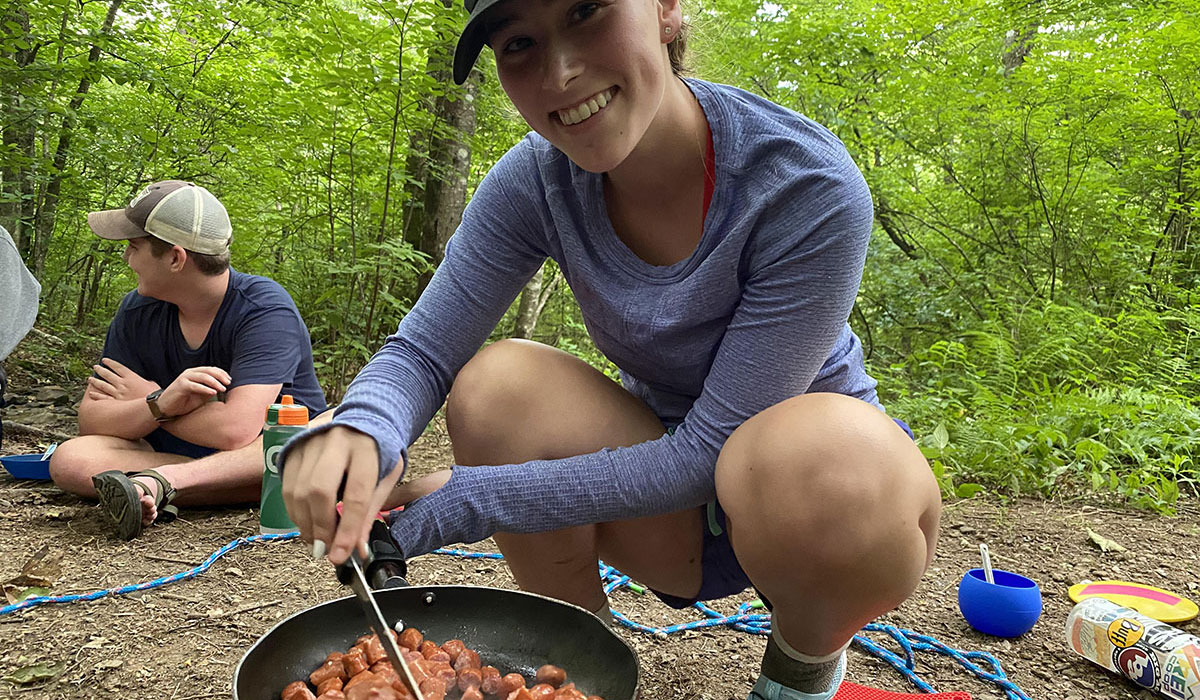
7:45 a.m.: Breakfast is backcountry hash browns: rehydrated hash browns, sauteed onions and peppers, bacon bits, cheese, and chopped green onions all rolled up in a warm tortilla. Kinesthetic learners appreciate the challenge of preparing food for the group safely and efficiently, and then presenting the meal buffet-style so everyone can choose their toppings.

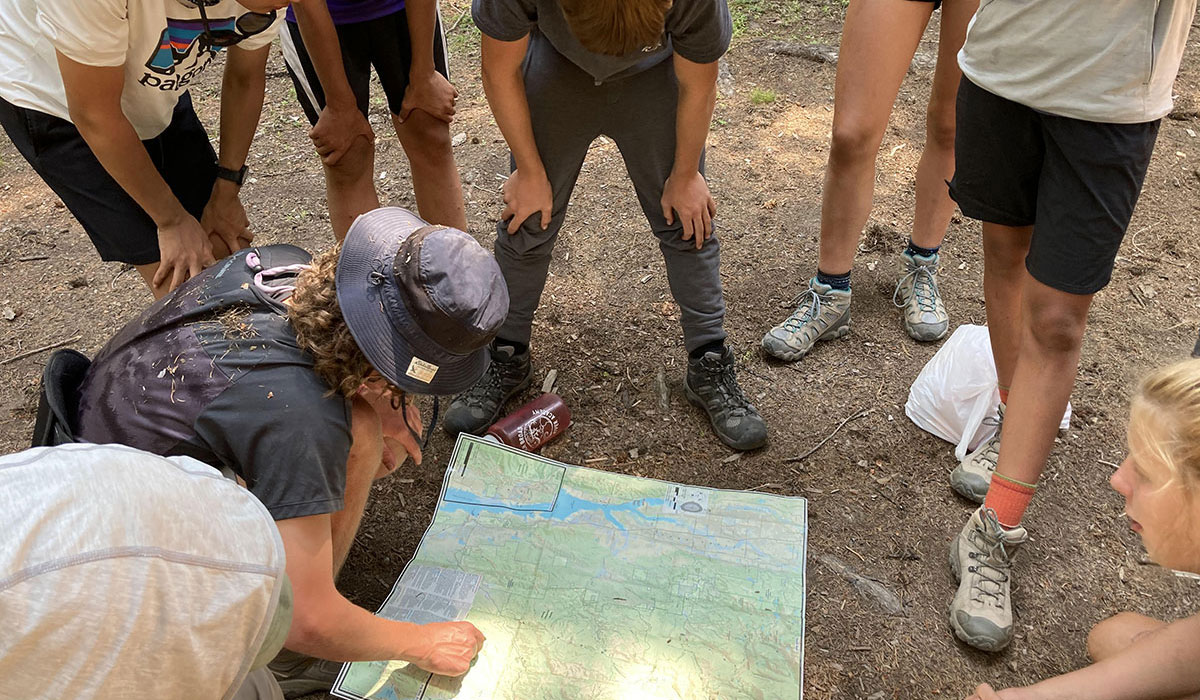
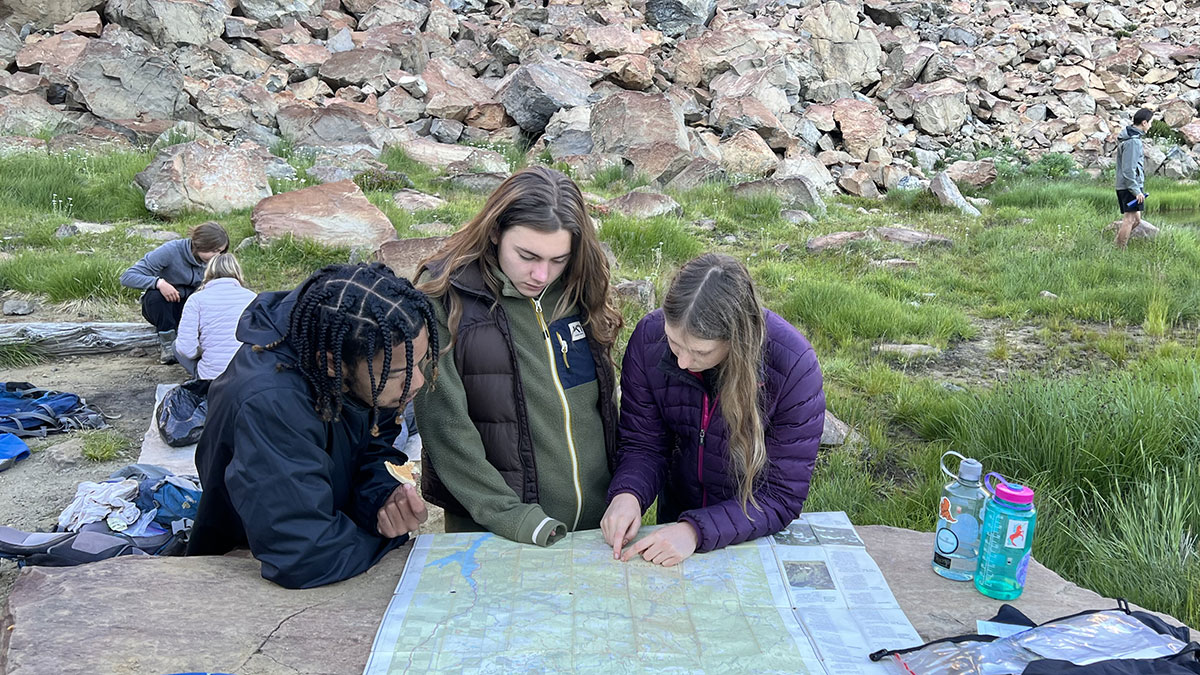
8:30 a.m.: Time to start hiking! Everyone will want to know how far the group will travel today, and instructors will dive deeply into map-reading with topics like estimating distance, deciphering topographical lines, and pinpointing a current location. Students who learn through reading and writing will find that reading a map is research into a place, and every group has guidebooks and fact sheets with them for additional reading on the areas we visit.

4 p.m.: After a long day, the group arrives at an exposed campsite. Though they all know how to pitch a tent, strong winds mean they’ll need to learn to use some additional support systems to keep their backcountry homes from blowing away. Instructors will provide a demonstration, perhaps of what’s called a “dead man” stake technique. Visual learners may only need to watch it done once to be able to set up their own wind-proof tent and then show others.

Wondering how learning styles apply to the real-world skills taught at Adventure Treks? Every trip has at least one “logistics day” dedicated to re-supplying food and gear, making time for laundry and showers, and driving to the trip’s next activity. On these days, everyone is assigned to a project. Reading and writing learners will enjoy the puzzle of planning meals and creating corresponding shopping lists, while visual learners will thrive in comparing products at the store and deciding how much is enough to feed the whole group based on what they’ve observed during the trip. Doing laundry, often a new skill for students, requires a number of steps performed in order. Auditory learners will be able to hear and follow the instructions and help others through the process. Finally, kinesthetic learners will get to answer a quintessential AT question: How much of the van can you vacuum before the timer runs out? There will always be more quarters available to finish the job, but the challenge is in finding the most efficient vacuum technique!


While all students have the opportunity to be involved in all aspects of life on an AT trip, we hope that each individual will discover something they love to learn about and want to be more involved with, whether that’s an activity, menu planning, or running community games and meetings. Our ability to cater to every learning style helps each student find their place and be empowered to explore new things.

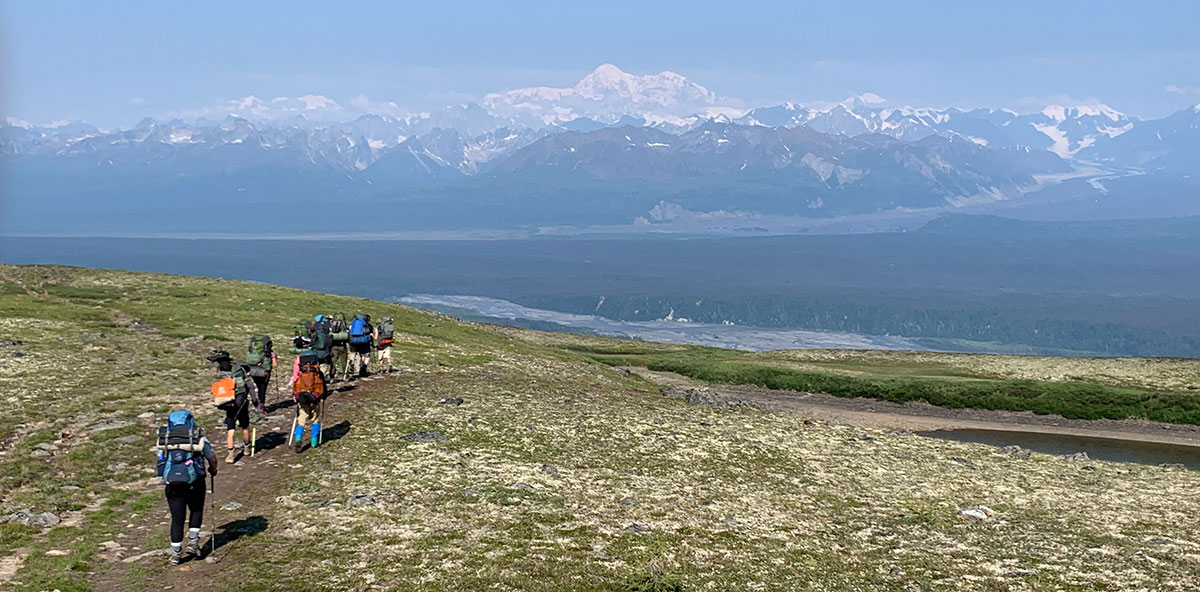
On our Alaska Expedition, students get to hike along Kesugi Ridge in Denali State Park, which on a clear day affords long-range views of the namesake mountain. In the last 500 years, Denali’s lands have been inhabited primarily by the Koyukon, Tanana, and Dena’ina peoples.

As you may know, November is Native American Heritage Month, dedicated to honoring indigenous peoples and their culture, and learning about and understanding the true history of Natives in America.

The heritage of Native Americans, Alaska Natives, and First Nations of British Columbia (National Indigenous History Month is celebrated in June in Canada) is a rich and important part of the national parks and forests, state parks and forests, and all the land we have the privilege and opportunity to experience every summer. We feel it’s important to recognize the vital role that Native Americans play in the United States, and to spread awareness about the culture and history of Native American people.

Here are a few ways we encourage our families to honor and support Native American Heritage Month.

Learn about the Native tribes in your area, and on your Adventure Treks trip

Clearwater Lake in Wells Gray Provincial Park, British Columbia, Canada. Many First Nations sites have been found within the park, most of which belong to the Shuswap (Sepwepeme) Nation. There are also historical sites credited to the Chilcotin First Nations people.

Did you know that Alaska’s state name is an Aleut Indian word? Alaxsxaq means “the mainland” or Alyeska, “the great land.” And though Alaska has the highest relative population of Native Americans, California has the highest number of Native American residents. British Columbia has the second-largest First Nations population among Canadian provinces.

Talk to your family about the people who first cared for the land where their Adventure Treks trip is going. Information on each of the tribes found in the states we run our programs can be found here: Washington, Oregon, Wyoming, Idaho, California, Colorado, British Columbia, Alaska, and North Carolina.

Explore the Native Land’s online map to see federally recognized tribes where your family lives.

In the summer, land acknowledgements are a way that we can become better allies to Indigenous Peoples. The National Museum of the Native Indian states that “many places in the Americas have been home to different Native Nations over time, and many Indigenous people no longer live on lands to which they have ancestral ties. Even so, Native Nations, communities, families, and individuals today sustain their sense of belonging to ancestral homelands and protect these connections through Indigenous languages, oral traditions, ceremonies, and other forms of cultural expression.”

The Sierra Club, one of the nation’s oldest and largest environmental organizations, recently sat down with Angela Mooney D’Arcy (Juaneno Band of Mission Indians, Acjachemen Nation) to discuss land acknowledgments and how we can go beyond acknowledgment to truly honor Indigenous environmental leadership; you can find that interview here.

Explore Native museums and cultural centers

Northern California is home to a rich Native history, including the Tolowa, Shasta (Mt. Shasta pictured), Karok, Yurok Hupa Whilikut, Chilula, Chimarike and Wiyot tribes.

A great place to learn about Native cultures is through attending local tribes’ museums cultural centers, and attending community events. You can find a list of Native American museums by state here, and a list of the most recommended (anywhere from the east coast or west) here.

No matter where you live, spend some time on the National Park Service’s Native American Heritage Month website, which makes it easy to discover history, important people, stories, events, and specific places. If you want to learn even more, visit the Museum of Indian Arts + Culture online. The Smithsonian’s National Museum of the American Indian offers an online exhibition, too, including a virtual art and history collection from tribes around the globe.

Read books and share stories written by American Indians

Although it can be hard to find time to read on an Adventure Treks trip, here are a few books you can read throughout the year. It’s always a great idea to diversify the authors you read: here is a list from the School Library Journal with their books for teenagers by and about Indigenous peoples. I just finished reading Braiding Sweetgrass by Dr. Robin Wall Kimmerer. Her essays bring together Indigenous teachings and plant and animal ecology in a wonderful exploration of our relationships with other species. It helps us appreciate the beauty of nature around us, learn from it, and work to protect it so we can continue to explore and recreate for years to come.

Support Native-owned businesses and charities

In addition to learning about the history of the lands we live and play on, it’s important to get involved with organizations that support and uplift Native Americans. One way to do this is to invest in Native communities and programs that help Native food sovereignty, language preservation, youth programs, and community-building. First Nations Development Institute’s grantee directory is a great place to find hundreds of grassroots Native-led initiatives across the U.S. that First Nations has invested in. You can also support First Nations directly and to assist their Native Youth & Culture Fund, COVID-19 Emergency Response efforts, and more. With the holidays quickly approaching, you can give thoughtful presents while also supporting indigenous businesses and preserving culture—from basketballs to coffee, gourmet chocolate, and jeans. USA Today also has a list of businesses to shop.

Watch movies, shows and documentaries produced by or starring Native Americans

Olympic National Park is home to eight tribes: Hoh, Jamestown S’Klallam, Elwha Klallam, Makah, Port Gamble S’Klallam, Quileute, Quinault, and Skokomish.

More often than not, the stories of Native and Indigenous people have been told by Hollywood through the lens of everyone but Indigenous people. This can create a misunderstanding and misrepresentation of culture, history, and experiences. It is an important time to learn from and support Indigenous storytellers, directors, and producers to break stereotypes and common misconceptions, and to gain a better understanding of the reality of the past and present of American Indians. Smoke Signals, Crooked Arrows, Edge of America, and Warrior Women are a few movies to look into. Shift is a documentary our fall 2020 Leadership Adventure Semester students watched before building mountain biking trails, as this film is about indigenous youth from Carcross, Yukon, who have spent the past 10 years converting traditional trails around their town in to a world-class mountain biking destination. PBS currently has a collection of films available to celebrate the history, culture, and traditions of American Indians and Alaska Natives.

Another great way to stay informed about Native American Communities is to follow Native American news outlets. Typically you won’t hear common issues, current events, or contributions from Native American communities, so Beyond Bylines provides a list of news sources you can follow to stay up to date.


We hope this information is helpful. We encourage you to look into these resources as a family, learn about the area you live, where your child’s Adventure Treks trip is located, and have meaningful discussions. Our focus on respect, cultures of kindness, and building a positive and curious community goes beyond an Adventure Treks trip—to learning more about the world around us and being stewards in protecting the land we have so many meaningful experiences on.

Adventure Treks’ inaugural Leadership Adventure Semester in fall 2020 exceeded even our highest expectations. This phenomenal group of students formed one of the closest, most inclusive, and most respectful communities we have ever witnessed, and their desire to learn and grow was extraordinary.

Since leaving Adventure Treks, all of our students have embarked on impressive paths, which we share in part one of this blog below!

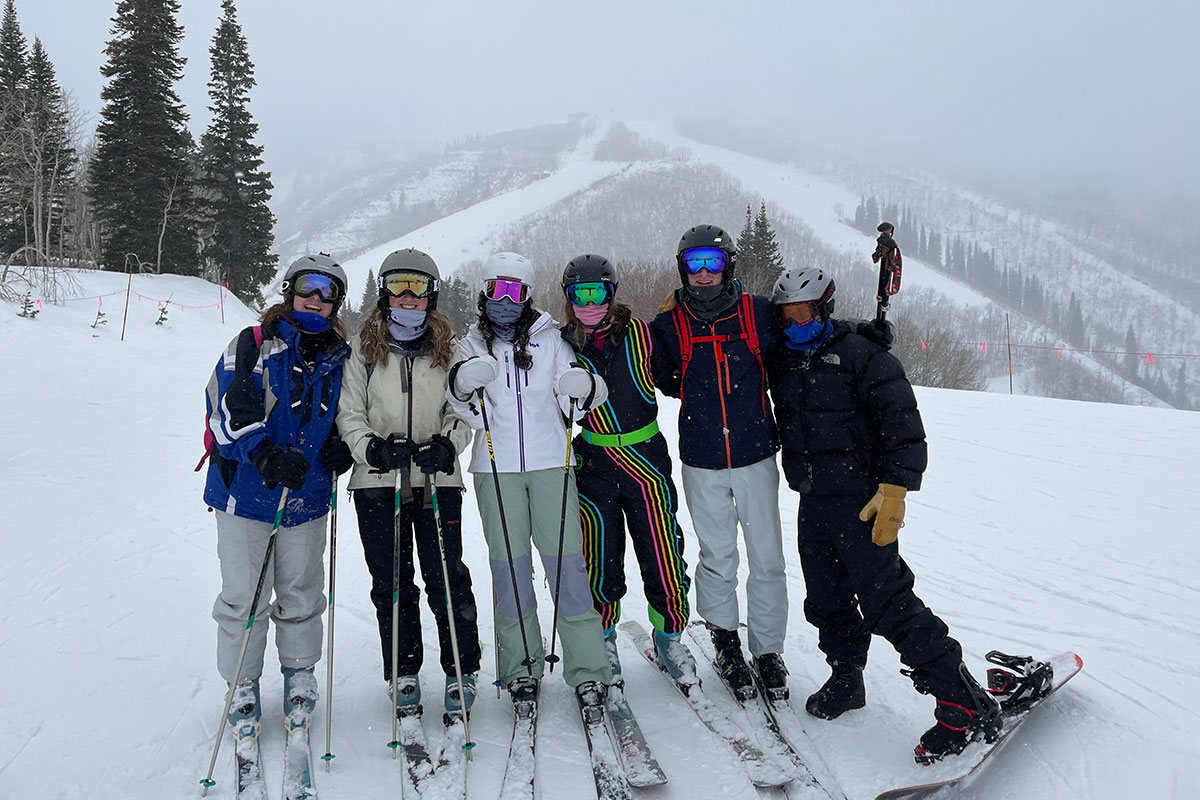
An Adventure Treks LAS reunion on the slopes.

What have you been up to since LAS ended in November 2020?

“I spent time in Pittsburg working on a native reforestation project. There, I helped the owner of the land cut cages for plants, and I helped remove invasive species. I also relocated a lot of rocks to a nearby creek. It was a little chilly, so I decided to move south to Mason, TX, where I am working on a vineyard—and it’s amazing!

Recently, I learned how to prune the grape vines before harvest season. I’ve been here for about a month and spent most of the time helping rebuild part of the vineyard because of the huge snowstorm that hit Texas this spring. We patched up the drip lines (so the vines get water), and cut down a lot of damaged vines from the freeze. We’re hoping there won’t be another freeze this season. I’m really enjoying my work at the vineyard because I’m thinking about majoring in biochemistry and possibly having a career in the plant world.

After the vineyard, I’ll go on a month-long backpacking and canoeing trip in Utah with Outward Bound. I loved the canoeing and backpacking part of LAS, so I wanted to find another opportunity where I can continue those cool activities. I promised myself that I would never go into the backcountry during November again, so hopefully, April will be a lot warmer!” – Mia Kauffman

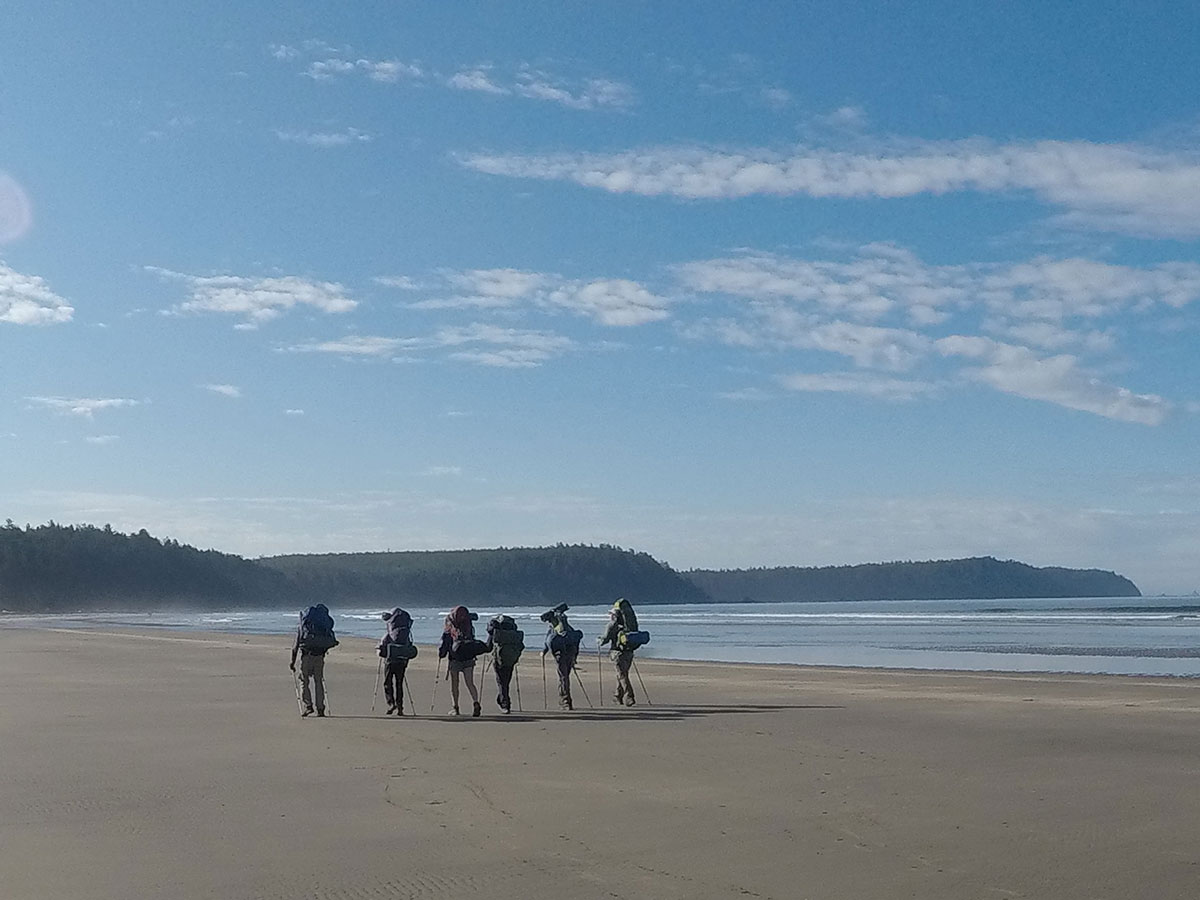
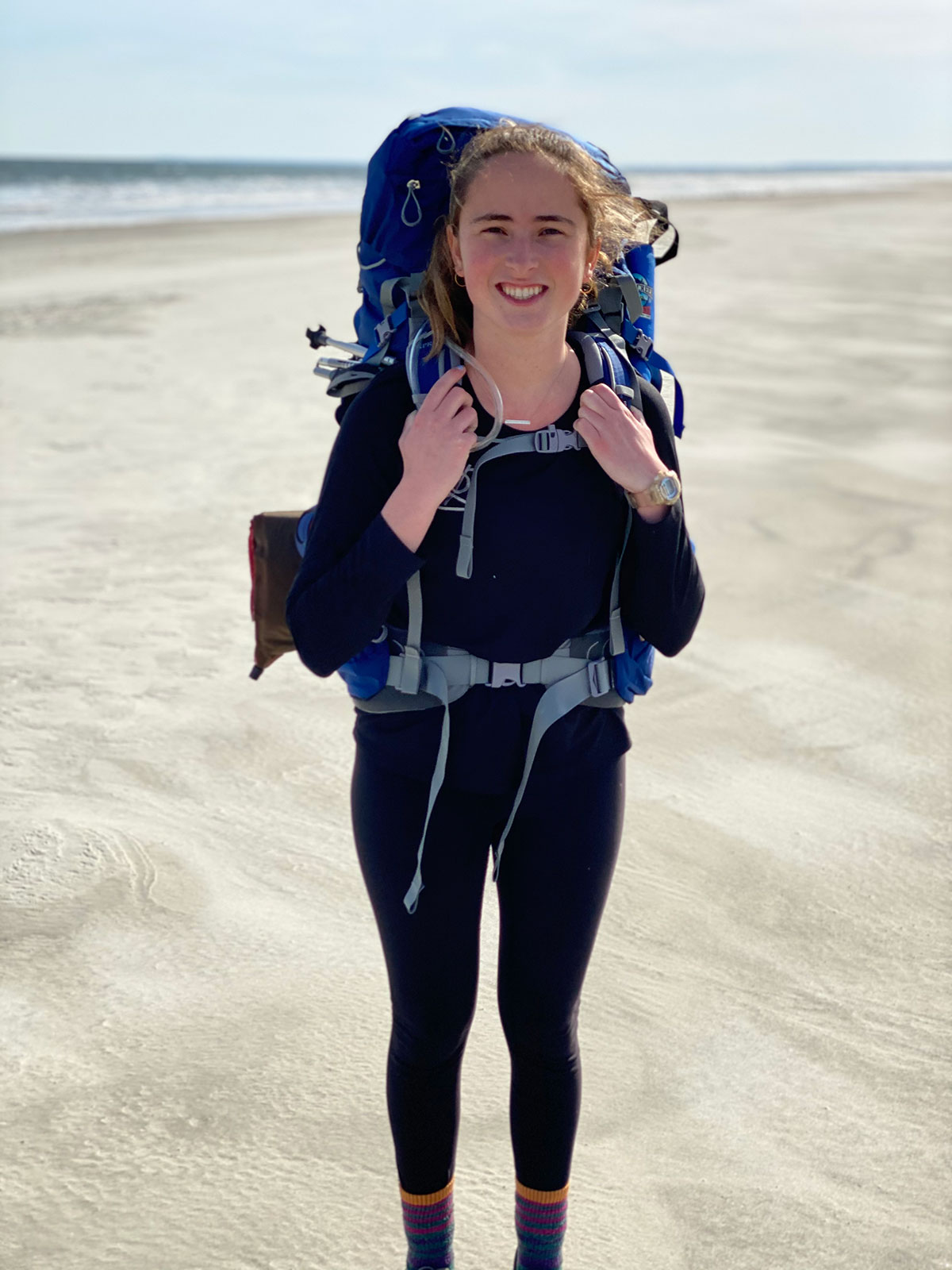
Backpacking on Cumberland Island, GA

“Since LAS ended, I’ve continued making bathing suits at a local company; in fact, I have designed and created my own bathing suit start to finish! I have also seen a few of my LAS buddies (Jordan, Max, Matt, Maggie, Gio, and Jacob) on a trip to Utah. Then I met up with Laura for a few hours up in Boulder to live out our plan of going thrifting together. Those are the most notable highlights because of course they involve my new buddies. It’s been equally relaxing and unnerving being here at home, but it’s been great spending time with my family and having the ‘freedom’ to do a small amount of traveling. I also purchased my first real backpack, an Osprey Aura AG 65!” – Adelaide Lenihan

“I’ve gone on a few adventures. Last fall at LAS, the word “adventure” meant whitewater canoeing or mountain biking in Pisgah National Forest. But this time when I say adventures, I mean something a little different. Getting my WFR this fall in North Carolina was an incredible experience filled with challenges, and we all graduated the class with a set of helpful skills. I knew that I wanted to “up” my certification and become a full-fledged EMT, so I took a wilderness EMT class in New Hampshire. It was super cool, and I used all of my skills from this fall in my WEMT class. I learned so much, and as a licensed EMT, I am going to work for an ambulance corps in New York and Maine this summer.

After my EMT class, I channeled my inner LAS and went on a backpacking adventure with my dad along Cumberland Island National Seashore in Georgia. I love backpacking and hiking, and getting to experience some peaceful days in the woods took me back to my time at LAS.

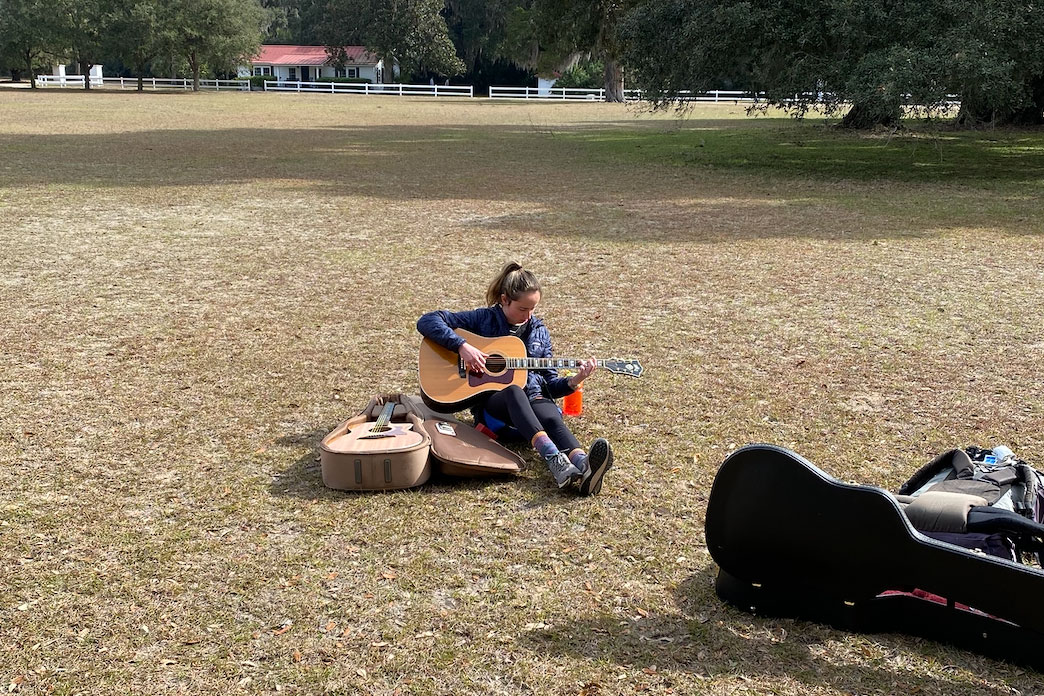
I’ve spent the last two months in Ohio, where I’ve been exploring another huge passion of mine: music! As everyone in the LAS community knows, I love playing the guitar and writing music. I’ve always loved to record music on my own, but I wanted to take it a step further, so I just finished up an internship in audio engineering and music production. It has been an incredible experience. I’ve spent a lot of time in the recording studio learning all about how to run sessions and mix and produce music. I can’t wait to take everything I’ve learned and start working on an album of my own.” – Maggie Broaddus

“After leaving LAS, I worked as a ski instructor out in Winter Park, Colorado. It was an amazing experience; it was really cool to be in the teacher role after learning from some of the best instructors at Adventure Treks. It was a lot of hard work, but I can’t complain too much when I got to be on the slopes seven days a week.”– Laura Kephart

Did LAS help inspire any goal for the near future?

“LAS definitely inspired me to ‘just do it.’ I had been set on continuing school last fall, even if it was online; however, LAS came up as an opportunity, so I thought, ‘let’s do it.’ A lot of challenges at LAS, from the rock climbing wall to mountain biking, inspired me to adopt a mentality of bravery. The 11 weeks at Adventure Treks also showed me how precious time is. I have noticed that I am living more in the present moment, rather than being so focused on my future that I miss the small beauties in the moment. This has been a huge goal in my life, especially for my gap year, and I feel that I am using these newly acquired skills in my decisions for my future and for all the activities I’m doing for the rest of the year!” – Mia Kauffman

“It’s easy to say that LAS inspired my whole lifestyle! At the surface, LAS created doubts and holes in my plan to pursue fashion. While fashion and creating clothing is still a huge part of my being, it doesn’t compare to spending hours making a fire. LAS reminded me that life isn’t about the materialistic things you put out into the world; rather, it’s the intangible ‘snip bits’ you take and release into the world that matters. Almost immediately after returning home, I revoked my acceptance to Savannah College of Art and Design and reapplied to Fort Lewis College in Durango, CO, for a future in adventure education.” – Adelaide Lenihan

Maggie, Adelaide, and Tori during their LAS gap semester

“LAS had a major impact on everything I’ve done since the semester ended and on many of my future goals. The semester gave me such an appreciation for the outdoors, helping me realize how much I love being outside and backpacking, canoeing, and so many other activities. If it weren’t for LAS, I wouldn’t have met Adelaide, and I wouldn’t be heading out west to start my farming adventure. Adelaide and I are planning a lot of backpacking trips and many other outdoor adventures during our time in Oregon and Washington, and everything we learned at LAS has enabled us to do that. I also plan on taking everything I learned last semester and bringing it to college with me. Bowdoin has a very active outing club, and I can’t wait to jump in.

Most important, however, LAS infused me with confidence, and I am incredibly grateful for that. The supportive community we formed this fall was truly everything. We tackled many challenges together, and all of those rewarding experiences left me feeling more ready to go into the world. It left me feeling capable. The rest of my gap year has been filled with some wild adventures. In my EMT and audio engineering classes, I have been surrounded by people a lot older and more experienced than me. And before LAS, that would’ve really scared me. But the community we formed in our semester was so empowering that my confidence has allowed me to tackle everything thrown at me.” – Maggie Broaddus

“LAS has influenced my priorities in life. It showed me just how fulfilling it can be to not follow the traditional path in life, and I think it will end up affecting which major I decide to pursue while in school!” – Laura Kephart

By Harper Swing, currently a freshman at University of North Carolina at Chapel Hill; Leadership Summit 2016, Alaska 1a 2015, California Challenge 3 2014, British Columbia 2 2013, California Adventure 2012


I always had a hard time leaving an Adventure Treks trip. Every summer, when I would step off the plane, back in my home state, I felt a little sad that I couldn’t just turn around, hop back on, and head back to the west coast and do it all over again. The last few days of Leadership Summit was especially sad because I’ve never had that much fun in my entire life. The thought of ending my AT career was scary, mainly because I didn’t quite know how a summer was supposed to be spent if it wasn’t in a tent. Luckily for me, my Leadership friends felt the same way, and we’d talked about having a reunion before our final few days.

At first, it was hypothetical. It was not something we actually planned to follow through with, but once summer ended and college applications rolled around, we began to realize that maybe we could actually pull it off. Three group video chats, two text group messages, and one massive Google doc later, we finally had a plan. The basics were simple: We’d wanted to go to Yosemite National Park since the beginning, and we wanted as many people as possible to join. Once that was settled, we moved on to the more complicated planning, and it was a group effort in all aspects! Little by little, we hammered out more details: official dates, who could make it, meal plans, permits, and gear. In the end, we settled on a five-day backpack in Yosemite, followed by a Half Dome summit and a four-day trip to Sequoia and Kings Canyon national parks. It didn’t seem real until it actually happened, but eventually summer came, and exactly half of our 2016 Leadership Summit crew was standing in the San Francisco airport, ready to go.

While it was strange to have an airport day that didn’t include pizza in the park, we were all up for the adventure, and we began our trip prep right away. After doing a Costco shop, gear run, and the ultimate game of “Show me what you got,” we were off. At first it was weird to grasp that it was just us, and that we were in charge of everything. This definitely led to some indecisiveness (and 20-minute conversations about what we wanted for dinner that night), but we got over it quickly enough and had a smooth rest of the trip.

Ever since my California Challenge trip, I’ve loved the California backcountry, and Yosemite was no disappointment. Because we were such a large group, the trail we were given was pretty secluded, and it took us up and out of the valley and into the greater Yosemite wilderness area. I don’t think I’d ever had that much fun in my life: the views were amazing, we came upon incredible camping spots, and we had a perfect view of the stars every night. However, the backpack was not without its challenges, one of the biggest being illness. But we were able to work through them rationally with little to no road bumps or arguments, something that probably wouldn’t have been possible without our previous experience with Adventure Treks. While it was not the smoothest backpack I’ve ever been on, it was one of the best, and I think we all became much more confidant in our backcountry abilities. After we came out of the backpack, we went straight into our next adventure: a summit attempt of Half Dome requiring an alpine start of 2:30 a.m., and a seven-hour trek to the top. It was a challenging hike, but finally reaching the top was surreal: the views were even better than what we’d seen even in the past several days, and the sense of accomplishment in knowing that we were able to pull it off completely on our own was even more so fulfilling. And to top it off, I got to share the experience with some of my best friends.

After the Yosemite leg of our trip (and a post-summit In-n-Out stop) we were able to spend a few days relaxing and exploring Sequoia National Park. We hadn’t given ourselves a structured schedule, so it was hard for nine people to reach consensus when there was just so much to do, but we were able to spend our time finding the best views and swimming holes could. Eventually, we had to go back to our “base” in Menlo Park, and we spent the last few days touring San Francisco with a final cookout on the beach.

In the end, I was just as sad to leave this adventure as I had been to leave my previous AT trips, and once again I found myself in the Charlotte airport wishing I could go back. But I was so, so, grateful for the experience. The trip put five years of Adventure Treks knowledge to use by allowing me the opportunity to plan my own experience while make the most of it, all while testing my limits and leadership skills in the backcountry. And looking back, I couldn’t have asked for a more perfect experience to kick of my college years, and I really couldn’t have asked for better people to do it with.