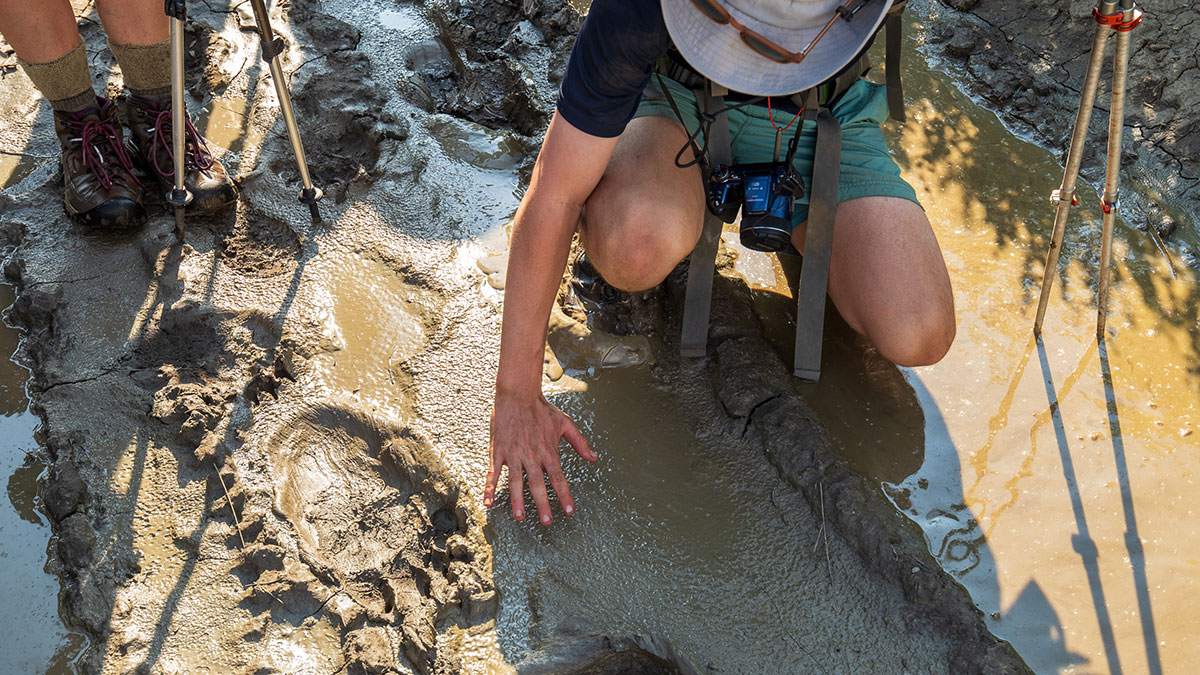
person with hand near bear print in mud

Encountering wild animals is one awesome part of exploring natural spaces. All of the beautiful parks, forests, and coastal habitats you’ll adventure in with AT are home to animals first—we are just visitors! Crossing paths with wildlife is usually exciting and a great opportunity to learn something new, but it might also be one reason you or your friends are nervous about your trip. Let’s talk about it!

What kind of wildlife might we encounter on an AT trip?

You might see a new type of animal every few days on your trip! Every region we visit has a variety of birds, squirrels, deer and other mammals, fish, and reptiles that you’re likely to spot. In Yellowstone National Park, bison roam everywhere, and you might see a bighorn sheep or moose. In California, you’ll likely see elephant seals on the Lost Coast, black bears in the Trinity Alps Wilderness, and perhaps a river otter while rafting. Moose and caribou are common in Alaska, and the Pacific Northwest is full of bald eagles and banana slugs.

Sometimes, animals are more comfortable roaming around at night, and you’ll see them during evening meeting or if you stay up late to stargaze. Rabbits, deer, owls, opossums, bats, racoons, and many types of frogs are more likely to be out and about around the edges of the day; they are nocturnal or crepuscular, which means most active at dawn and dusk. There are also many animals you are very unlikely to see because of low population density or avoidance of humans. Skunks, foxes, whales (and most large sea life), mountain goats, bears, snakes, and pika are some of the animals that share the spaces we travel in but which are very rarely seen!
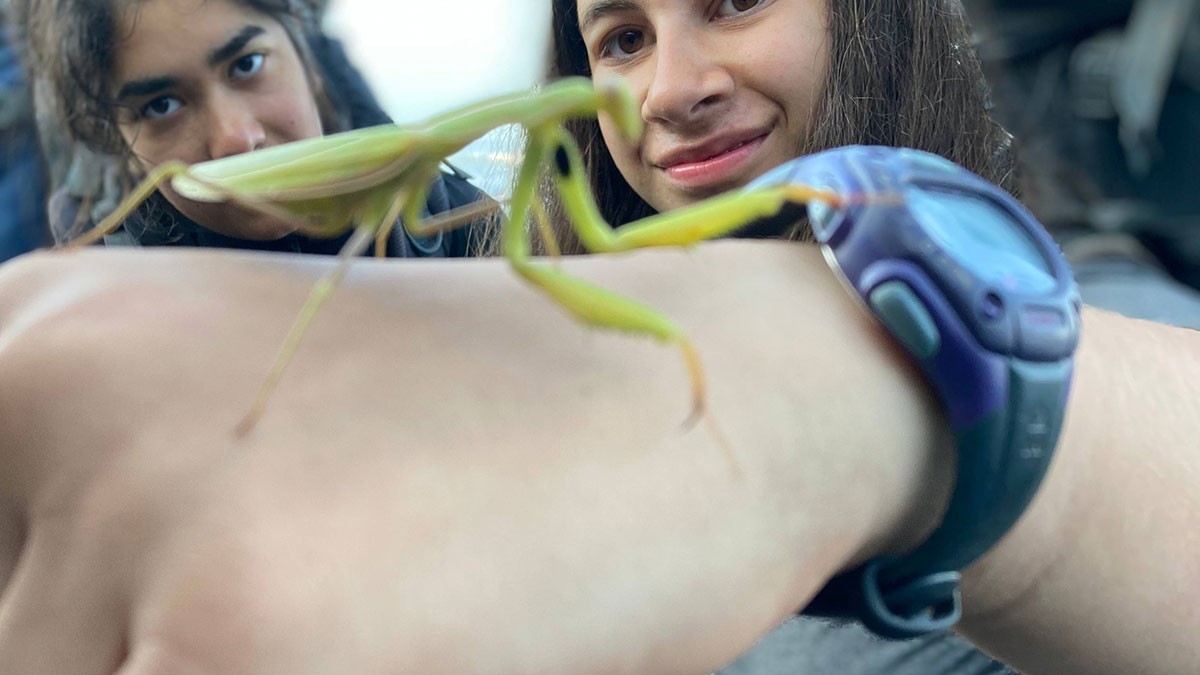
person with praying mantis on hand

I’m afraid of bears! I’m afraid of snakes!

That’s OK! A lot of people are afraid of animals that are potentially dangerous to humans. It is important to remember that the animal attacks in movies and books are extra dramatic to keep you entertained, but are actually extremely rare.

While snakes are scary to many, they have fascinating characteristics that keep them safe from humans—and us safe from them. For example, they don’t have ears, but instead “hear” vibrations through the ground and the air. When a group of 10 people comes hiking up a trail, snakes feel us coming and move out of the way quickly. Most snakes also don’t want to bite you. Whether they have venom, they need to save their energy and tools to capture animals they can actually eat, like mice and small birds.

Black bears are normally very wary of people and steer clear of us. They might exhibit defensive behavior if they feel threatened, which may happen if they are surprised, separated from their cubs, or protecting a food source. While it is possible to startle a bear, that is unlikely to happen when you are traveling in a group, playing games with each other, and singing songs (sounds like an AT backpack to me!). This is why we intentionally make a lot of noise while hiking—it’s one of the best tools we have to prevent an animal encounter.

Additionally, we never keep food sources in our around our tents; we safely store anything that a bear (or any other animal) might perceive as food (this includes any “smelly” item like toothpaste or deodorant) in bear-proof canisters and away from where we sleep.
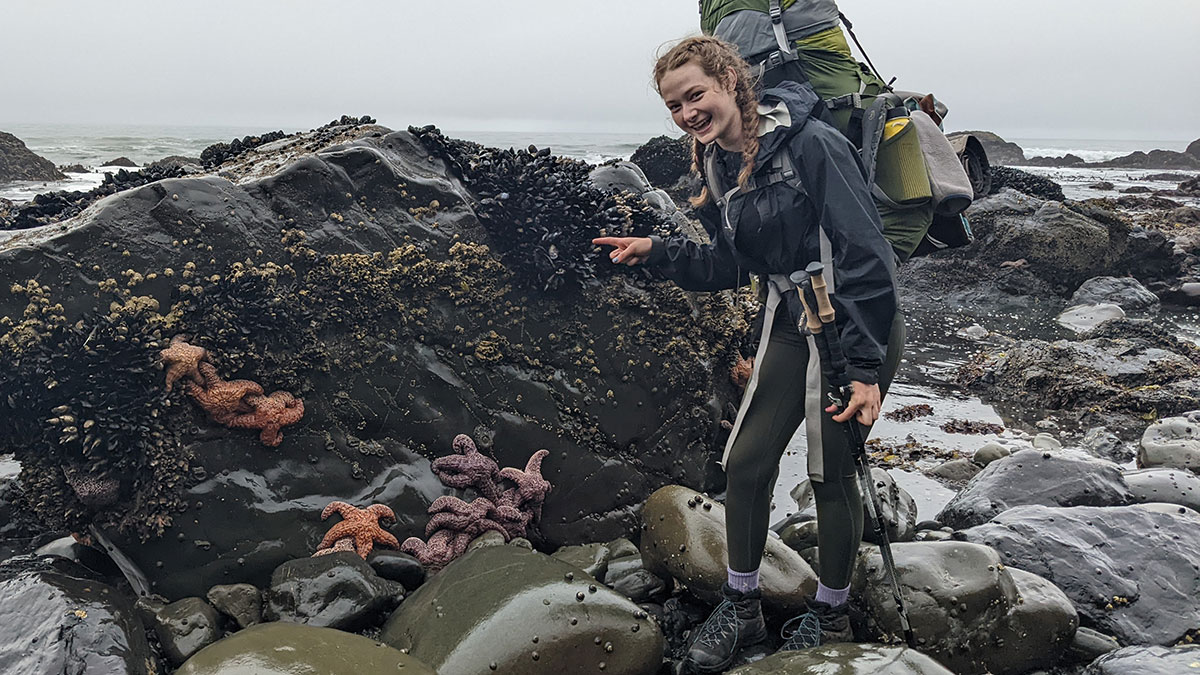
person standing next to marine wildlife on beach

How does practicing Leave No Trace principles apply to wildlife encounters?

You’ll hear a lot about the seven principles of Leave No Trace ethics with Adventure Treks, one of which is “respect wildlife.” In addition to making noise to try to prevent encounters, we’ll also plan ahead in other ways, like the aforementioned food storage containers, bear fences, traveling in groups when in the backcountry, and educating our students and instructors on animal safety and what to do in the event of an encounter.

Respecting wildlife also includes being kind to animals. While offering food to wild animals is an easy way to get closer to them, it teaches the animals that humans are a source of food and increases negative interactions between people and wildlife over time. People are also much more likely to provoke an animal’s defense mechanisms by getting too close—which is why we never feed wildlife. While hiking on the Lost Coast, for example, there are signs that ask you to stay at least 200 feet away from the elephant seals. By respecting their space, you are much less likely to have a scary close encounter.
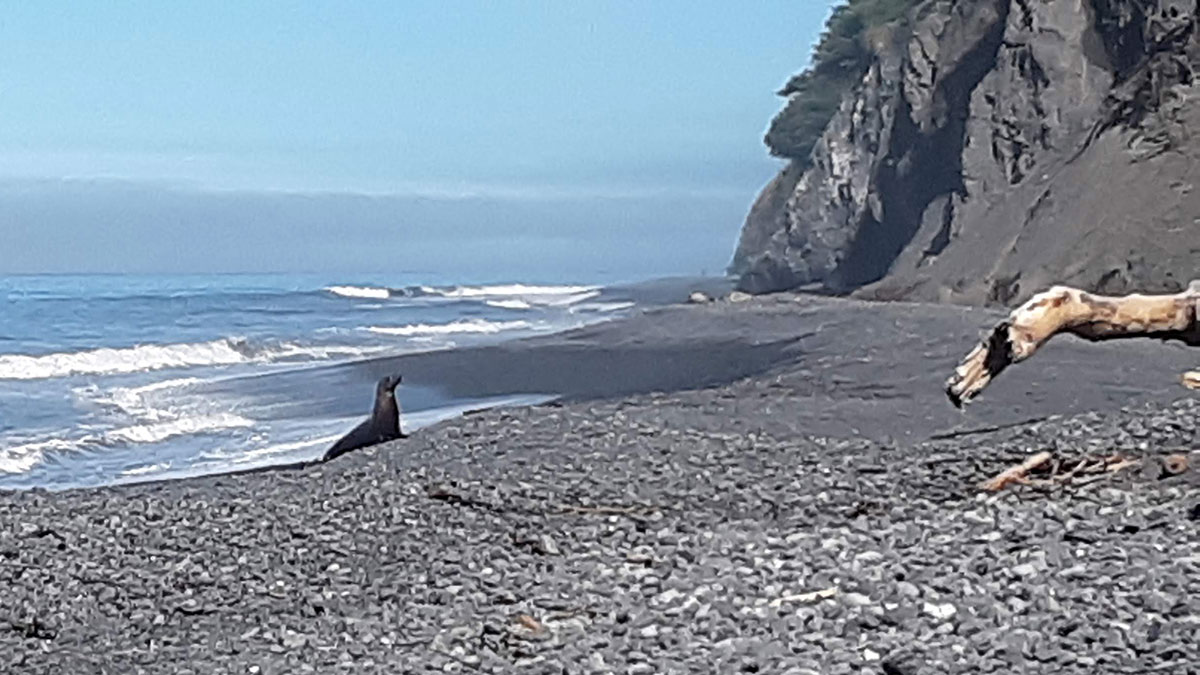
elephant seal on california beach

As a parent, do I need to worry about my child in a place where there are grizzly bears and other potentially dangerous wildlife?

Rest assured that regardless of the area, Adventure Treks instructors will go into great detail about the variety of wildlife that are present in our surroundings and all of the plans in place to prevent any interaction with them. Students will learn what to do in case of an encounter, and the group will practice safety protocols at all times so that everyone feels confident. Encountering wildlife from a safe and respectful distance should be an exciting part of an AT trip, not a nerve-wracking one!
Our students will agree that Adventure Treks instructors are pretty incredible people. From planning 30-person meals for 30 days to fixing broken tent zippers to tending wounds to making sure we’re in the right place at the right time, AT instructors are constantly working to make sure our students are having the best and most fun summer program possible. This passion for empowering teenagers’ personal growth, fostering a fun and cohesive community, and exploring beautiful places with new friends is what makes our instructor team so strong and impactful.

Because our instructors are at the heart and soul of the Adventure Treks experience, we’d love for you to get to know them a little better. How did they end up at AT? What do they do in their free time? What are some fun facts people don’t know about them? We interviewed two of our summer 2022 instructors and are happy to share more about their lives below!

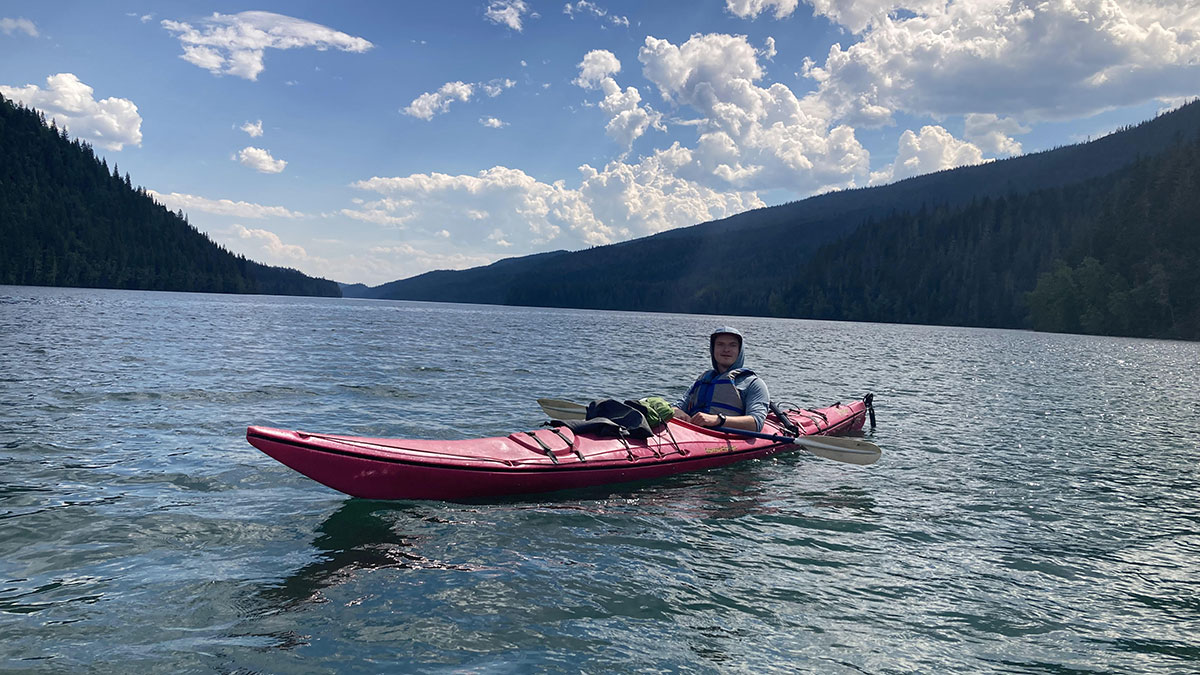
man in a canoe on a lake in canada

Spencer DrakeUnderkoffler

What initially made you pursue outdoor education, and what keeps you coming back to this type of work? I started out leading overnight trips for my college’s outing club. I also went to school to be a therapist. I decided to combine the two and work in wilderness therapy. However, I underestimated the amount the job would drain me. To recoup, I decided to hike the Pacific Crest Trail. While on trail, I came to the conclusion that time is a precious thing that should never be wasted, so I decided to go headfirst into guiding and outdoor ed.

What do you do when not working at Adventure Treks? I’m either ski patrolling or instructing, and this winter I’m working at a backcountry-specific ski mountain doing both. There are no ski lifts, and everyone has to walk up the mountain themselves. I fell in love with this sport because it is a way to travel in the mountains that feels so seamless. I also enjoy hiking and rock climbing whenever I get the chance. I recently started trail running and have been loving that! I look for any excuse to be outside!

Do you have any big and exciting life plans for the near future? I really want to get more experience mountaineering. The little bit of alpine climbing and mountaineering I’ve done has been some of my most exciting adventures to date. Also, moving to Colorado for my new job is gonna be rad!

What is a hobby or passion that you pursue in your daily life that not everyone knows? Cooking. I went to culinary school in Italy for a semester and loved the knowledge I gained from integrating one’s garden knowledge with their kitchen knowledge.

What is a book or article you read recently that really stuck with you? I’m currently reading Braiding Sweetgrass. It gives me hope for the future and grounds me in whatever version of nature I find myself.

Fun fact about Spencer: The most exciting experience for him is getting to see a bison out in the wild!

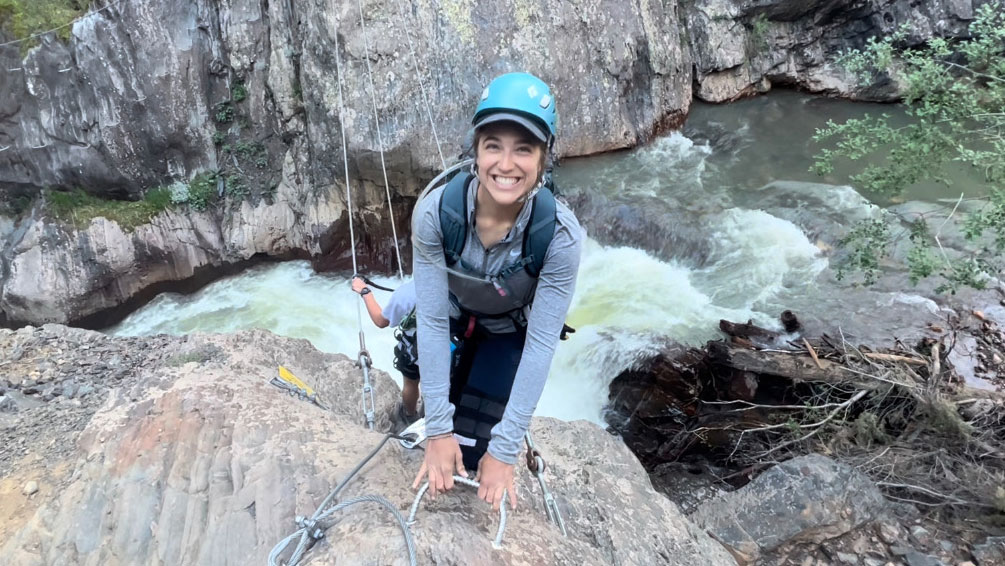
woman rock climbing above a river wearing a helmet

Lauren Richert

What is your favorite memory from Adventure Treks last summer? Performing a choreographed parody version of “I want it that way” by the Backstreet Boys for a hat ceremony with my backpack group. Watch out America’s Got Talent, we’re coming for ya!

What do you do when not working at Adventure Treks? I teach rescue classes to fire departments in southern Colorado and New Mexico and to college students in the International Rescue and Relief Program at Union College. I recently led a disaster response with our program’s team to Florida after Hurricane Ian. It was really impactful work not only for those affected, but possibly more so for me. I always learn so much from the resilience of the deeply affected residents.

I’m also taking a few classes in international development and am thinking about starting a graduate program in that area next year… we’ll see. I’m helping plan an international expedition with my coworker (and fellow AT instructor) Ian Johnson. It’s a blast doing all parts of my job—teaching, planning, and figuring everything out—with the incredible workplace community I have.

When I’m not working, I’m usually doing acro-gymnastics, climbing at the bouldering gym, or reading. And when I should be doing other things, I can usually be found at a local coffee shop conversing with an old friend or new acquaintance. I’m currently stationed in Lincoln, NE, which means it’s tougher to get outside and climb mountains, but it’s definitely challenged my creative capacity for outdoor recreation activities and makes those trips that much more special when I get the chance to take them. Plus, friendly Midwest people and sunsets are top-notch, bar none.

Do you have any big and exciting life plans for the near future? I’m thinking about moving to Durango, CO, to teach rescue full-time and to do some raft guiding! I miss living in the mountains after moving out of my home state WA in 2019, and I want to get back to a place that has more outdoor options for mountain biking, climbing, water sports… the whole shebang.

What is a book or article you read recently that really stuck with you? I never read Harry Potter or watched the movies growing up. I’m on the last book in the series right now, and I love it. I legitimately don’t know what happens at the end, so its quite exciting, and reading it makes me step into a fun, creative, and imaginative world.

Fun fact about Lauren: I think the French horn is the coolest instrument ever. It’s like audio butter. Smooth, gorgeous sound, and super hard to play, so I have mad respect, and you can do so much with it musically. Also, fun fact about my fun fact: the French horn is one of the longest band instruments; all stretched out, it’s over 30 feet long. It’s also not originally French!

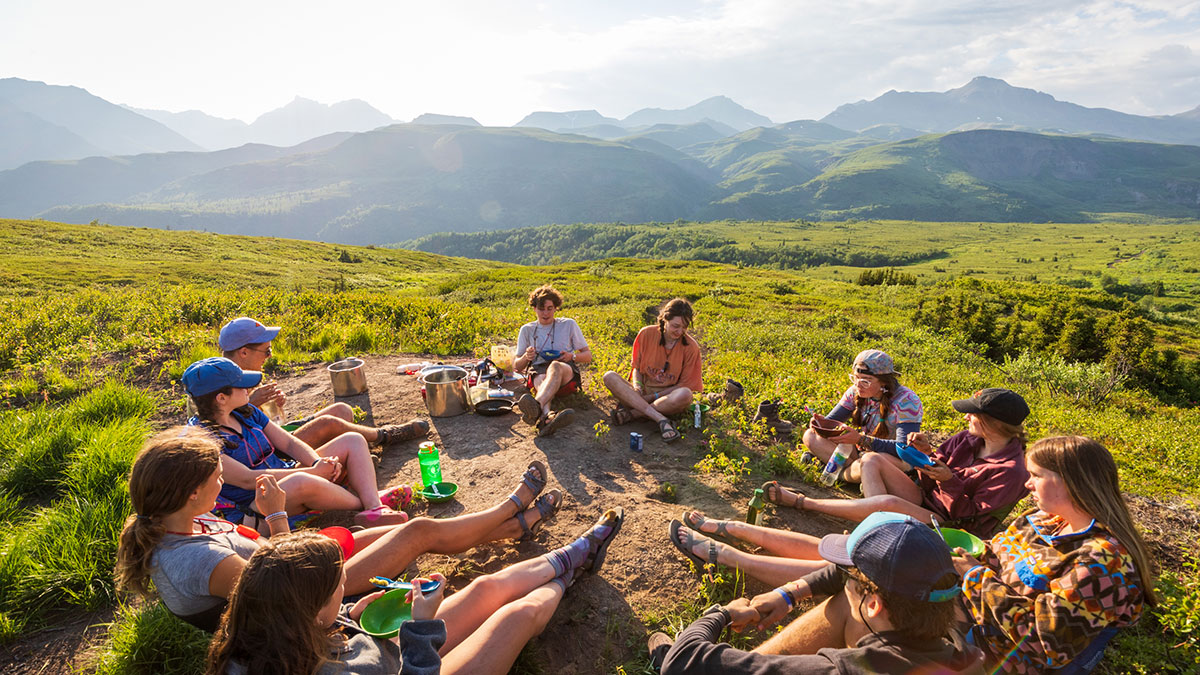
teenagers eating lunch on trail in alaska

Alaska Expedition students eating dinner in the mountains.

Backcountry meals you can make at home

Whether it’s your first summer with Adventure Treks or your fifth, the meals you make on your trip will be memorable. We are known for delicious food! Everything we make outdoors can be made in your kitchen as well. Here are three beloved AT recipes to whip up at home and share with your family while you tell stories of epic adventures.

Please use all the same caution while cooking at home that you use at AT! Don’t know how to work the oven or stove? Ask someone! Wash your hands before cooking, use knives only on secure cutting boards, and be especially careful with hot water and cookware. It is always OK to ask for help! If you are cooking any meat, make sure to follow the directions on the package to ensure it is cooked properly.

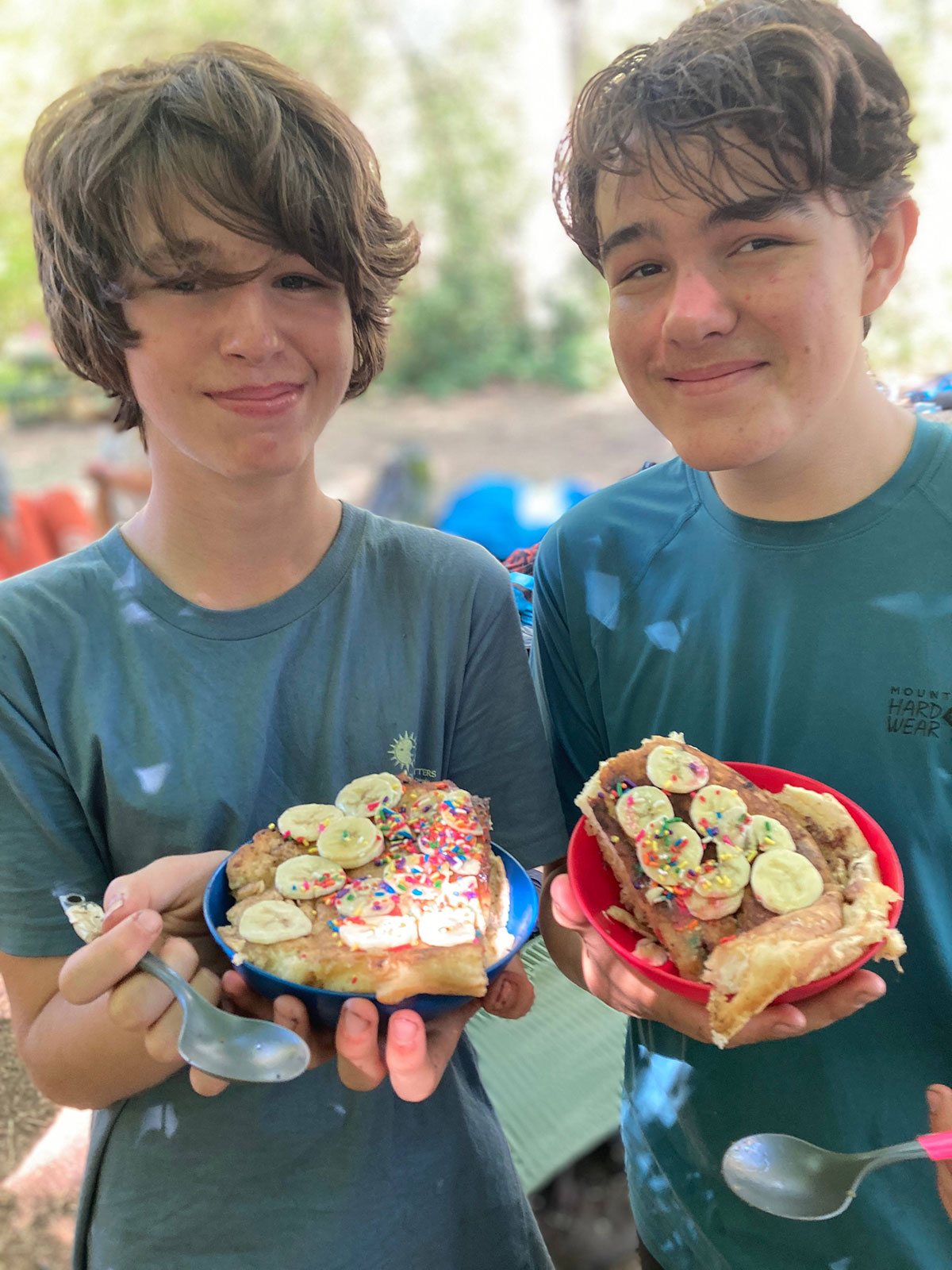
teenage boys eating french toast

British Columbia Adventure students after making French toast for breakfast on day two!

Breakfast: French toast

Had you ever made French toast before your first AT trip? It’s the perfect fun and delicious breakfast, whether you’re waking up in a tent to start an awesome adventure or rolling out of bed for a lazy weekend.

Serves 4

Ingredients:

  • 1 loaf sliced bread (can use gluten-free bread)
  • 4 large eggs
  • ½-1 cup milk
  • Butter
  • Ground cinnamon
  • Toppings: sliced strawberries or bananas, blueberries, apples, chocolate chips, peanut/almond/sun butter, maple syrup, vanilla yogurt, and anything else you can imagine!

Directions: In a wide bowl, whisk together the eggs and milk with a fork. Sprinkle some cinnamon in the mix. Warm up some butter in a frying pan on medium heat. Dip a slice of bread in the egg

mixture, coating both sides, and then place it on the pan. You can cook two or three slices at once depending on the size of your pan! Use a spatula to check the bottom of the toast–when it is golden brown, it’s time to flip! Serve French toast warm with tasty toppings.

Tip: if you’re cooking for a group, set the oven to 300 degrees and store your cooked French toast inside on a cookie sheet to keep it warm until you’re ready to serve!

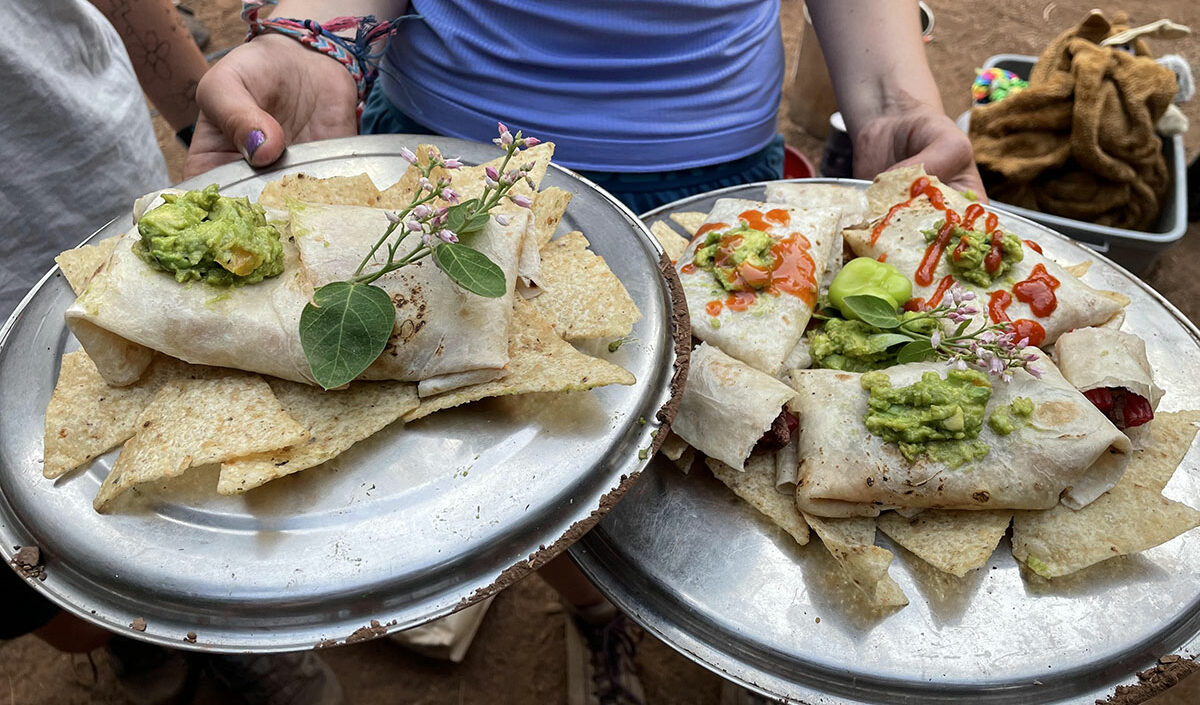
camping food tortillas on plates

An Iron Chef classic: burritos!

Lunch: chicken Caesar wraps

Gather up the following ingredients to put together a fun and tasty wrap for lunch (especially easy when you have leftover chicken from dinner last night). Add extra veggies, sauces, hummus, or even croutons to spice things up!

Serves 2

Ingredients:

  • 1 cup cooked chicken
  • 1/2 cup shredded cheese
  • 1 cup shredded lettuce or spinach
  • 1 tomato sliced
  • Caesar salad dressing
  • Tortillas

Directions: Easy! Spread all your ingredients into the center of a tortilla, tuck in the ends, and roll!

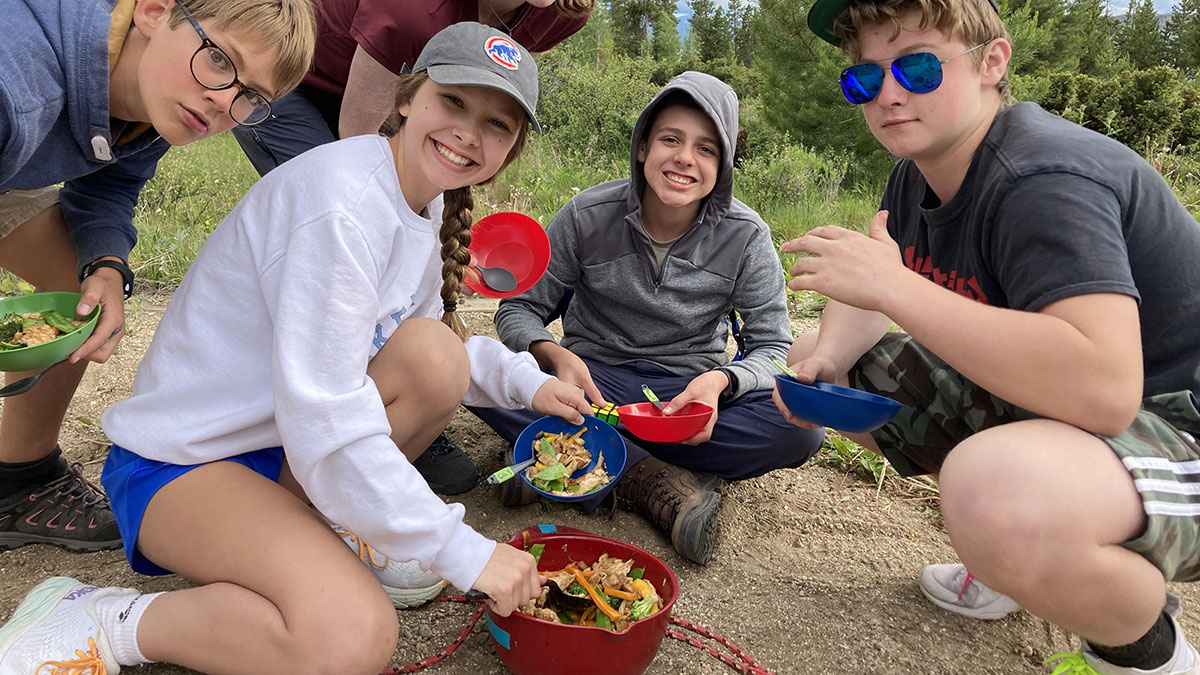
teenagers cooking meals outside while camping

Colorado Explorer students making meals together on trail.

Dinner: mac & trees

Why is macaroni and cheese so delicious at AT? Partly because it’s usually consumed after a long day of backpacking, laughing, and maybe swimming, but we also add a few special ingredients that add both protein and flavor! Mac and trees is an easy staple that covers a lot of bases and is perfect for new chefs, first semester college students, and everyone in between! Broccoli florets (the “trees”) add color and vegetable goodness. This is the most versatile recipe around!

Serves 4

Ingredients:

  • 2 boxes macaroni and cheese
  • 6 oz. cream cheese
  • 2 heads of broccoli
  • 4 servings of sausage of your choice, sliced into bite-size pieces
  • Extras! (see below)

Directions: Chop your broccoli into bite-size pieces. Warm up a tablespoon of olive oil in a frying pan on medium heat, then add the broccoli and a pinch of salt. Stir the broccoli around—it’s finished cooking when it turns bright green and smells good! Small crunchy or slightly burned spots actually make it taste better. Slice up your sausage and cook them in a frying pan the same way. Cook the macaroni according to the instructions on the box. Add a little extra water or milk to the sauce, then stir in the cream cheese. You can add your protein and veggies straight into the mix, or serve them on the side!

Extras and substitutions:

  • Macaroni: If you’re trying to stick as close to the AT classic as possible, we recommend Annie’s brand white cheddar mac and cheese, but whatever your favorite is will work. Gluten free and/or vegan boxed mac and cheese (brands to try: Annie’s, Daiya, Banza) is just as delicious.
  • Veggies: I love to throw onion, peas, sweet potatoes, and zucchini into my mac and cheese for an especially fancy meal. Try out anything you like! Carrots, asparagus, tomatoes, etc.
  • Meat/protein: Classic AT mac and trees uses Lil’ Smokies sausages, but feel free to get fancy here! Italian sausage, grilled chicken, crumbled bacon, or even lobster can add flavor. If you’re vegetarian, you might be familiar with Field Roast sausages, which come in a variety of flavors to best suit your pasta tastes.
  • Spices: If you’re one of those AT students obsessed with hot sauce, this recipe is a great one for it! Your favorite Cholula or Frank’s Red Hot will suffice, or you can add sliced jalapeno peppers, red pepper flakes, or cayenne pepper to the cheese sauce for an extra spicy experience.
  • Crunch: Has your AT trip ever added crushed Cheez-Its to the top of your mac and trees? A crispy topping adds a little excitement to dinner! Cheese crackers are easy, or look up a crunchy panko topping recipe to impress your family.

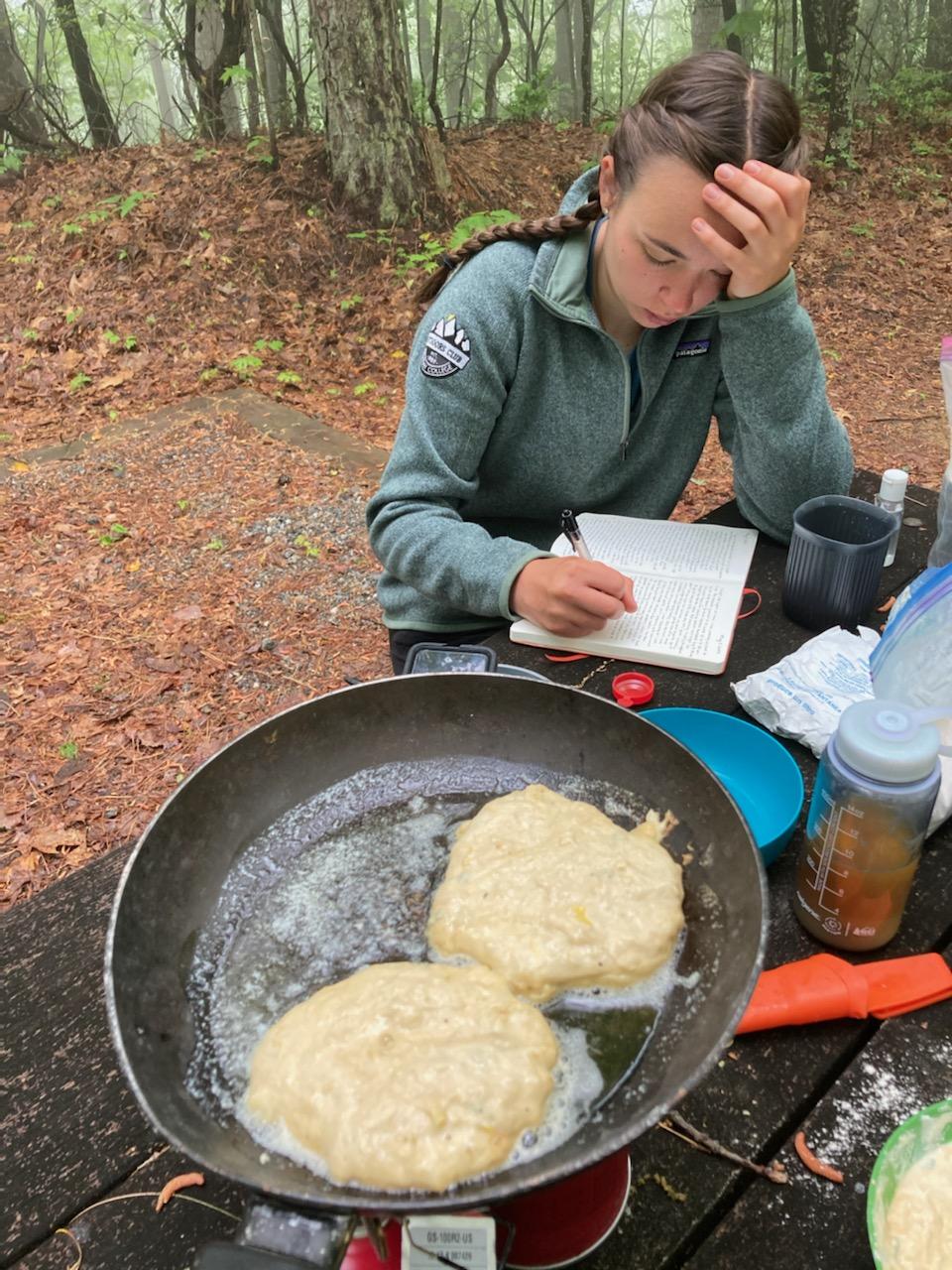
Self-care doesn’t have to pause while you are on an Adventure Treks trip (#treatyoself). Some of the regular practices that we keep in our daily lives can carry us through tough days on trail so we have the energy and mental fortitude to be our best outdoor adventuring selves. I am a big cheerleader of writing in a journal. This is something that I do before bed every night, and I have found many benefits from extending this habit into my Adventure Treks trips as well.

What are some of the benefits of journaling?

There are so many!

How do you journal?

I remember getting stuck on this seemingly simple question at the beginning of my journaling days. I had a few close friends who I considered to be journaling experts, and I asked them this question, wanting to be sure I was also on track to expert level. But, of course, there is no right or wrong way to journal. The art or practice of recording things on the written page can be customized to be of ultimate value to the individual.

Journaling can be about processing your day, setting intentions for the day ahead, tracking your thoughts and emotions to look for patterns—or whatever else you want it to be. What works for you? If you want to write in your journal every day, that is awesome! However, if this does not fit into your schedule, then this goal is probably going to stress you out more than be beneficial to your overall well-being.

What I have learned: Set realistic goals for yourself and be open to the creativity and flow of each entry. Even on days when I thought I had nothing to say, I have been able to find some interesting insights to reflect on.

Where do I start?

A blank white page can be intimidating. I know this on a personal level; every time I start a new writing project (like this blog), it seems like I suddenly have the energy and focus to do anything but write. But never fear! I have compiled a few tips and tricks to help you embark on your journaling journey.

Keep it simple: When I started out, I bought a small 3.5” x 5.5” journal. A smaller page is less overwhelming to fill. I began with bullet journaling (i.e., quick, short line entries), and often go back to this method when I don’t have a lot of time but still want to capture memories or thoughts while they’re fresh.

Utilize prompts: You can create a “cheat sheet” of prompts at the front of your journal. The ideas can set creative boundaries for those times when you can’t decide where to even begin. Below are a few of my favorite prompts that help me process my thoughts.

  • What are you grateful for today?
  • What emotions came up for you in unexpected places today?
  • Describe something you experienced for the first time recently.
  • How did you challenge yourself today, and how do you plan to challenge yourself tomorrow?
  • How did you show up for yourself today, and how do you plan to show up for yourself tomorrow?
  • What are three new things you learned this week?

Create space: Like any new activity, journaling can easily integrate into your daily life if you set yourself up for success (that is, make it a habit). I like to spend 10 to 15 minutes in my tent jotting down thoughts from that day before I fall asleep. I find this is the easiest time for me to journal, and therefore has the highest likelihood that it will actually happen.

Make the experience comfortable with a cup of tea, wrap up in your sleeping bag, or find something soft to sit on. You can also ask yourself these questions to help you figure out your plan of action. “Do I process my thoughts better when I wake up or before I go to sleep? Do I need to be alone or can I do this in the company of others? How much time do I need for each entry? What would block my ability to journal and how can I prevent those barriers from getting in the way?”

Add the “WOW!”

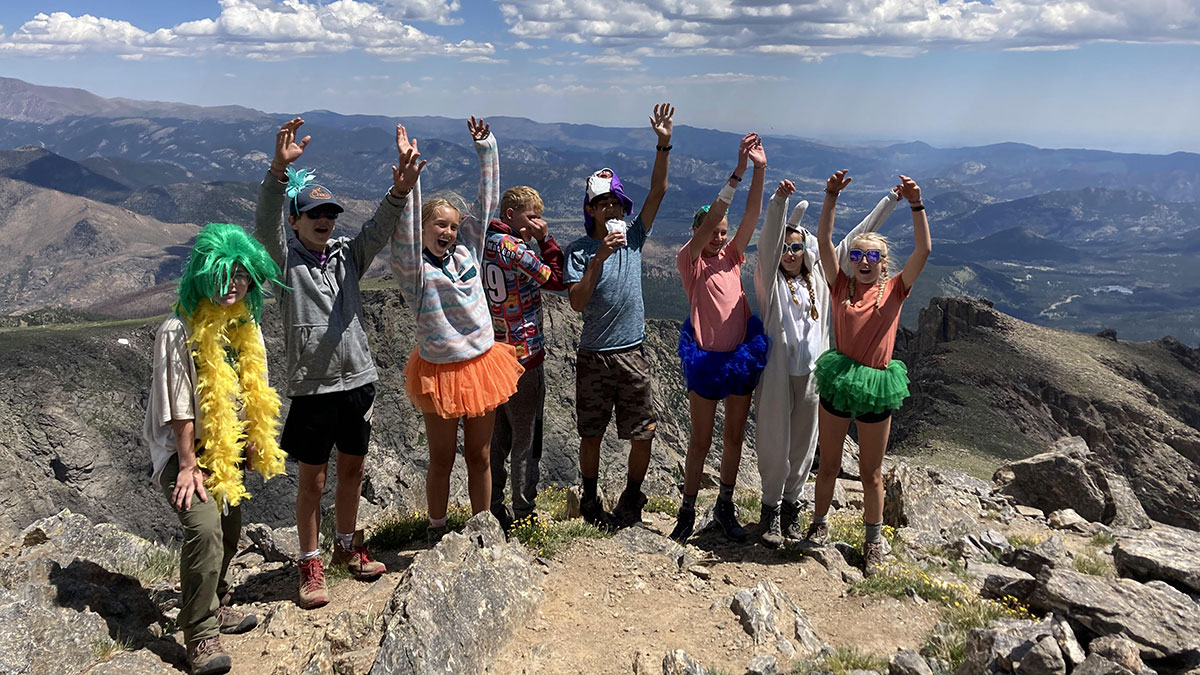
At Adventure Treks, we love adding the “wow” to everything and anything. Wow is the special magic added to events that would otherwise be just everyday activities (this is one reason you’ll see us wearing silly flair at Costco). Journals can also have the AT wow factor. Try adding stickers to the cover of your journal from the locations of your AT trips. Or take scenic photos of all your journal spots during the trip. Wow, like journaling, is all about creativity, so make it personal to you!

One of the neatest things about Adventure Treks is the places we get to visit. In all of our backpacking areas, we have permits from whoever owns the land—often national parks and forests—to recreate (permits are crucial because the most pristine places need the most protection in order to keep inspiring nature lovers!).

Here are some interesting things you might not know about Rocky Mountain National Park, where our Colorado Explorer trips spend a few days backpacking and summiting 12,720-foot Hallett Peak and Flattop Mountain.

1. The Continental Divide of the Americas runs through Rocky Mountain National Park. A continental divide is a natural land feature that separates watersheds—rain that falls on the western side of the Rockies flows towards the Pacific Ocean, while rainfall on the eastern side flows towards the Atlantic Ocean or the Gulf of Mexico! Try it out on this neat map by dropping a raindrop in Grand Lake (west side) or Estes Park (east side).

2. If you’re extra curious, the Continental Divide Trail (or CDT) is a 3,100-mile trail that traverses the spine of the Rockies and is popular for thru-hiking. The CDT is part of the “Triple Crown” of hiking trails, along with the Pacific Crest Trail and Appalachian Trail. All three are National Scenic Trails, which means that they are designated outstanding natural areas with additional environmental protections. Lots of AT instructors have hiked these trails!

3. A number of trails in the park, including the Tonahutu Trail (where many AT groups backpack), were originally used by the native inhabitants of the land. The two major tribes in the area were the Ute and the Arapaho, whose main lands were separated by the Continental Divide but who competed for hunting territory in the mountains. They were hunter-gatherers who moved between grassy plains and higher elevations in search of larger animals.

4. Glaciers played a huge role in the formation of the steep peaks and valleys that characterize the park today. A glacier is a large chunk of snow and ice that doesn’t completely melt during the warmer months, and is so heavy that it constantly shifts downhill. Rocks picked up by the slow-moving ice scrape against the ground under and beside the glacier, carving out valleys over long periods of time.

5. All of the glaciers in Rocky Mountain National Park are cirque glaciers, which are the small leftovers of much larger glaciers from long ago. But the glacial habitat is just one of four found in the park. The montane ecosystem is defined by meadows and hills and supports a wide variety of plants and animals; subalpine forests consist mostly of evergreen trees and host beautiful lakes and wildflower patches; and the alpine tundra ecosystem allows only the hardiest of plants to survive harsh temperatures and weather conditions.

6. A single step can destroy hundreds of years of plant growth in alpine environments. On any AT trip, you’ll learn about the principles of Leave No Trace hiking and camping. In the alpine areas of the Rocky Mountains, many of the plants able to survive extreme cold and high winds grow very close to the ground and are quite fragile. It is extra important to stay on established trails so that our feet don’t squish and damage these plants and the soil they grow in.

7. Rocky Mountain National Park is known for big animals: Moose, elk, bighorn sheep, black bears, mountain lions, and deer are some of the largest. The park is likely to pop up on lists of the best places to view wildlife because these big species are so visible, but there are a whole host of tiny animals in the park as well…

8. … Such as the pika! Pikas live in the alpine tundra ecosystem and look like wild hamsters. These tiny mammals call and sing to each other across their territory, so they are more likely to be heard by humans than seen. Pikas are considered an “indicator species” for climate change because they are so well adapted to the cold that they cannot survive in warm temperatures. The National Park Service is monitoring pika populations in Rocky Mountain National Park to see whether rising global temperatures is affecting them. 

9. Longs Peak is the highest point in Rocky Mountain National Park, though it doesn’t actually make the top 10 highest peaks in Colorado! Climbing to the top is a true mountaineering adventure–usually, even in the height of summer, the summit is covered in snow and ice and requires snow tools to climb!

10. In 2009, most of the park became a designated wilderness area, meaning that extra precautions are taken to make sure it is not permanently impacted by humans. As long as good ethical practices are used, people can still visit the furthest reaches of the wilderness to experience solitude within the beautiful landscapes that Rocky Mountain National Park has to offer. 


Interested in seeing Rocky Mountain National Park firsthand? Check out our trip options here!

The Adventure Treks community at large enjoys spending time outside and cherishes overnight adventures in nature. If you’ve been on an Adventure Treks trip, you know that we spend many months planning our expeditions—a lot goes into organizing each of our trip’s itineraries! If your AT trip has sparked an interest in planning your own multi-day backpacking adventures, we’ve outlined four main steps below to help make the process easier for you.

(Because Adventure Treks is a business and plans trips for up to 30 people, we follow specific rules, hold commercial permits, and follow many more guidelines that are different from personal trips. We’ll assume your first foray into expedition planning will not involve 23 of your closest friends…)

#1: Logistics

Where do you want to go? 

We recommending narrowing your options to a location you’re familiar with, or one that’s a little closer to home. This will take some of the stress off your shoulders; once you gain some experience planning backpacking trips, you can dive into new wilderness areas.

Online forums are a great place to get tips on different hiking trails and, more important, check for recent water and trail conditions!

Do you need a permit?

Some wilderness places require permits for personal trips, while some areas do not. And some permits are easy to obtain, while others are doled out via lottery systems. Places in high demand (like Half Dome in Yosemite National Park, the Narrows in Zion, and Grand Teton and Yellowstone national parks), utilize strict permitting systems to prevent overuse and overcrowding of lands and trails.

Thoroughly research the area you’ll be recreating and comb through its official governing website (e.g., National Forest Service or National Park Service) to find information about permitting, use, and any other restrictions or schedules. You’ll also find information on what’s allowed in that area; for example, whether you can bring your dog, if there are bear boxes to store food, etc.). In western states, be sure to check fire restrictions and specific Leave No Trace ethics (in warmer months, places like Colorado and California may not allow campfires, and many desert regions require all trash and human waste to be packed out… this means no digging catholes! More on LNT below).

Public lands in the United States have their own rules, as they also have unique and individual missions (you can read about some of those differences here). Take as deep a dive as you’d like about the land you’ll be using—but just make sure you know the rules about overnight wilderness trips before you arrive at the trailhead.

Leave No Trace principles

The seven principles of Leave No Trace provide a framework for how to recreate sustainably in the outdoors and leave minimal impact on the land. It also covers a lot of your bases in the overall planning process.

  1. Plan ahead and prepare: As we’ve already covered, decide where you are going ahead of time and research the area. Look at the weather forecast, elevation, and terrain to inform your packing list. Purchase a map or download an app to make sure you know your route, your mileage each day, and what hiking pace to keep to stay on schedule.
  2. Travel and camp on durable surfaces: Stay on the trails to avoid scarring and eroding the landscape around you. Select an appropriate campsite for both you and the environment. Camp on flat ground and pitch your tent on soil, gravel, or sand instead of fragile vegetation. Avoid camping under dead trees and set up camp 200 feet away from rivers and streams.
  3. Dispose of waste properly: Depending on the area, you may be able to dig a cathole to dispose of solid human waste, or you may be required to carry it out (not uncommon in fragile ecosystems in the American west). If catholes aren’t allowed, add “WAG bags” to your packing list in order to carry out your poop (sometimes these are available at the trailhead, but we wouldn’t count on it). Put your poop kit together ahead of time and don’t leave any trash behind.
  4. Leave what you find: Leave wilderness areas as you’ve found them (or better than you found them). You don’t want the people hiking in after you to know exactly what you ate for breakfast because of the food droppings left all over their campsite, or to know exactly where you used the bathroom, or to have to clean up trash that you left. Do not carve your initials into trees, do not remove artifacts or any other items from the forest, and don’t pick the beautiful wildflowers you see.
  5. Minimize campfire impacts: As you know, it’s crucial to be familiar with fire restrictions ahead of time. Some campsites have designated fire rings , while others do not allow fires of any kind, and others yet will allow fires anywhere in the forest.
  6. Respect wildlife: Familiarize yourself with local wildlife and how to minimize potential encounters. If there are black bears in the area, do you need to bring a bear can, or will there be a bear box? Are there rowdy raccoons that may try to steal your food? Are there venomous snakes or other small critters to avoid? Perhaps most important, if you do encounter wildlife, keep your distance!
  7. Be considerate of other visitors: Be friendly with fellow hikers as you pass them on the trail. Respect that people have chosen to explore the outdoors for many reasons, and they may not want to hear your music blaring as you walk along the trail or late at night. If you’re bringing a pet, know the leash laws and do not let your animal run after wildlife.

#2: Food!!!

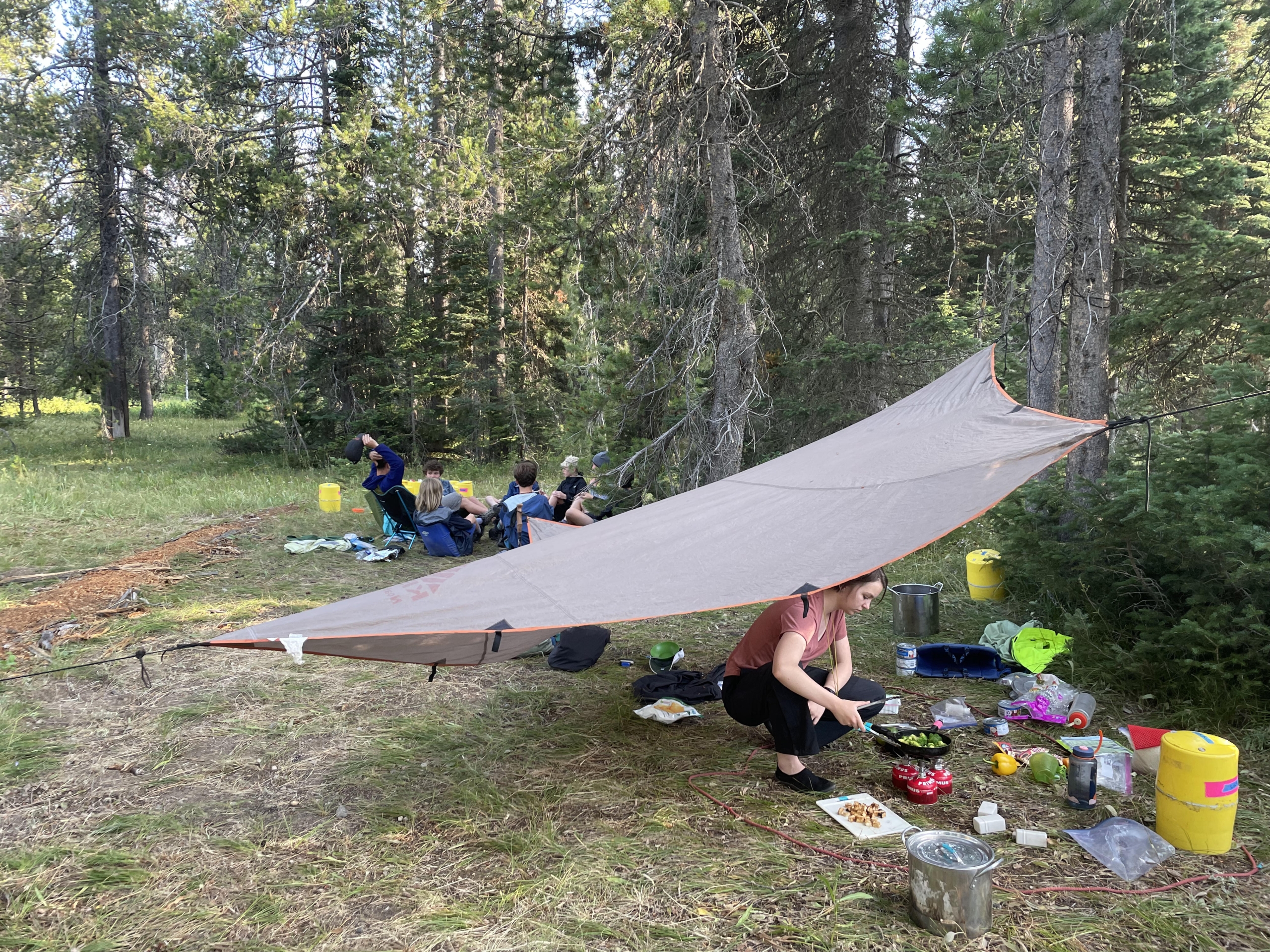
If you’ve been on an Adventure Treks trip, you’ll know that we LOVE food! You don’t need to skimp on meals just because you’re in the backcountry. Take a look at some of our backcountry meals to spark inspiration for your menu. A few handy tips:

  • Bring LOTS of snacks.
  • If you’ll be in a dry environment with little water, think about how “water intensive” your meals are (i.e., don’t plan on pasta, rice, and oatmeal for every meal… instead, think about pita pizzas, wraps, or sandwiches).
  • Pack food that covers all of your nutrient bases to give you energy for long days and hard hikes.
  • AND DON’T FORGET DESSERT! Hot cocoa, brownie mix, chocolate, Skittles… Bring along a treat you can pull out once you reach your campsite or hot cocoa when you get up to watch the sunrise.

Read more about backcountry cooking here.

#3: Gear

Food

Don’t just bring food: Bring the tools you’ll need to cook and eat it! Stove, lighter, gas (extra gas is always a good idea), mess kit, pot, pan, spatula, knife or multitool, spices, and cooking oil. You can use biodegradable soap and a sponge to clean dishes (a small rag can also work for a short trip).

Shelter 

You may prefer bring a tent, tarp, or hammock—check the weather to see which would be best. Bring an extra tarp to create a covered area to hang out and cook if there is any adverse weather in the forecast.

Don’t forget your tent, sleeping pad, and sleeping bag. Instead of a cumbersome pillow, toss your clothes into your stuff sack and use that instead. Of course, we’d be remiss to leave out the ever-present camping chair.

Water

A water purification system is crucial. (You can become extremely ill from drinking untreated water.) We specifically use Aquamira, but there are lots of water purification systems out there. Test your system out beforehand to make sure it works.

Don’t assume you’ll always come across a fresh water supply—rather, use your map to mark rivers, springs, lakes, or other bodies of water to plan how much to bring and where to resupply.

First aid kit

Take the basics: Band-Aids, alcohol wipes, gauze, Ace wraps, blister treatment (like moleskin), ibuprofen and anti-histamine, medical tape… And don’t forget group-specific gear, like Epi-Pens or inhalers. Dive deeper into a detailed first aid kit here.

Navigation

Don’t forget a physical map and compass or an app you can utilize without service. If you’ll be using electronics often, bring a solar or external charger as well.

Clothing

Once you’ve checked the weather, you’ll have a better idea of what to pack for your trip. Check out the following blogs for more information on outdoor clothing and gear: fleece, insulated jackets, trekking poles, headlamp, rain gear, and hiking boots.

Backpacking does not need to be expensive! Most, if not all, of these items might be found in your closet or at a nearby thrift shop. As long as your rain gear is waterproof, your tent doesn’t leak, and your sleeping bag and pad keep you warm, you’re pretty much set!

#4: Fun and flair!

What is a backpack without some flair?! It’s always fun to spice up your hike with a mascot, a silly hat, and a fun game. Here are some other entertainment options:

  • Astrology books or apps
  • Games (One Night Ultimate Werewolf is one of our favorites; you’ll never go back… or trust your friends again)
  • Your best British accent
  • Your spookiest stories
  • A book of stories to read around the campfire
  • A journal, sketchbook, or watercolors

If you have any questions or want to talk through how to plan a trip, use us as a resource! Your former instructors and the AT office would be happy to answer any questions and help wherever we can. We’d also LOVE to see photos of your trip and hear about it!

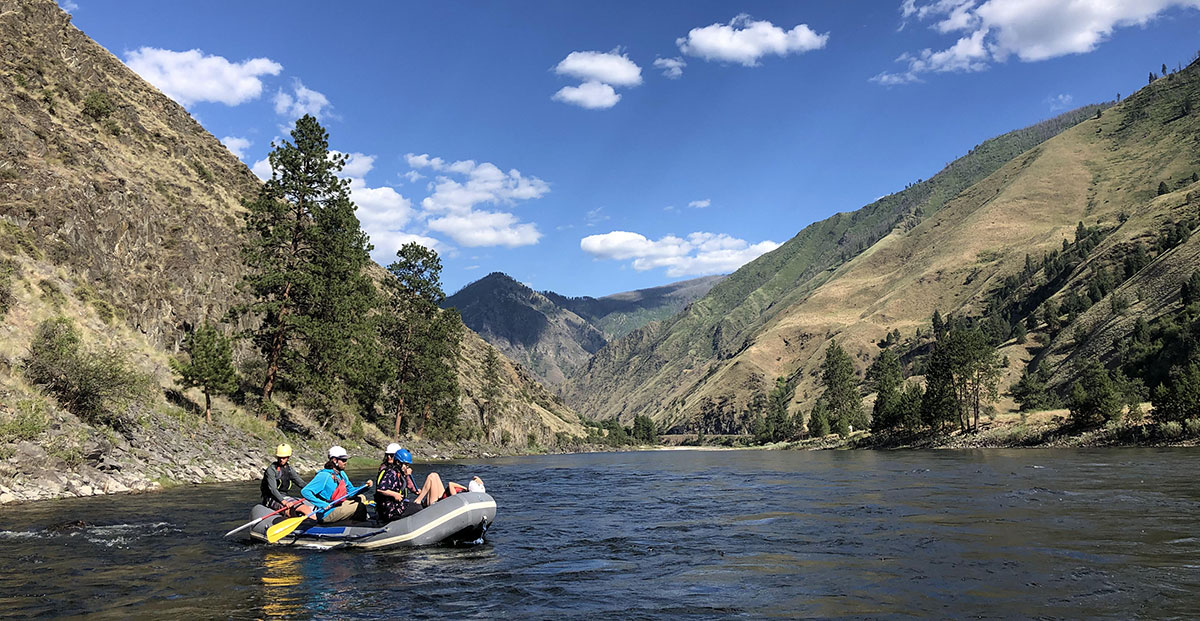
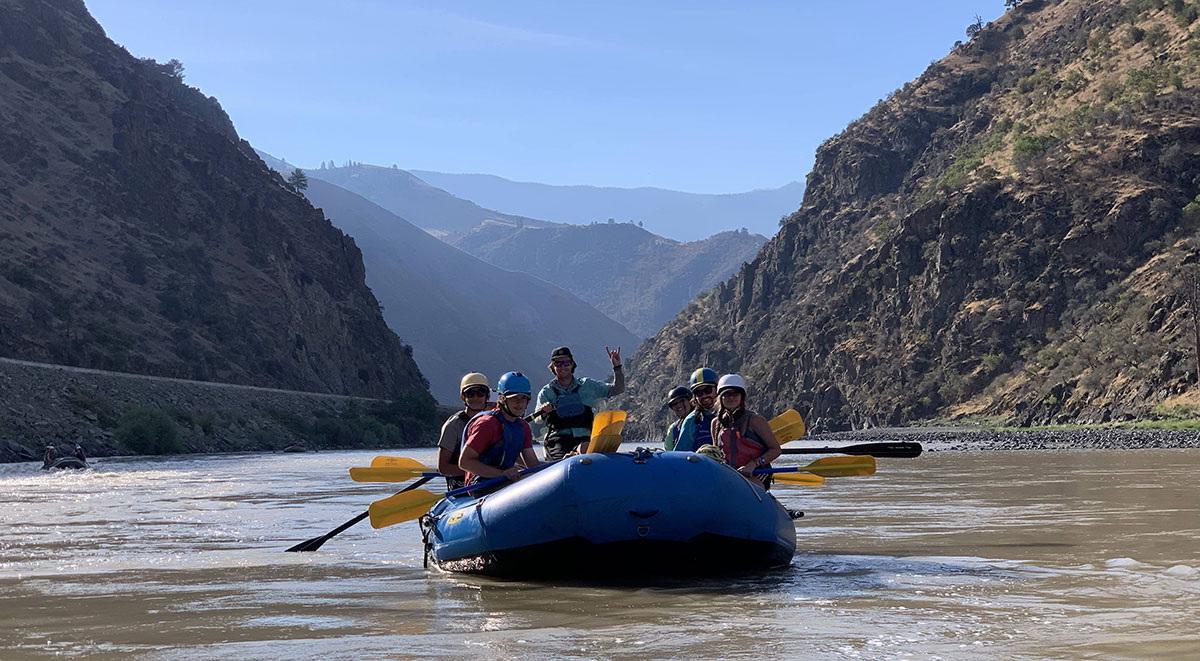
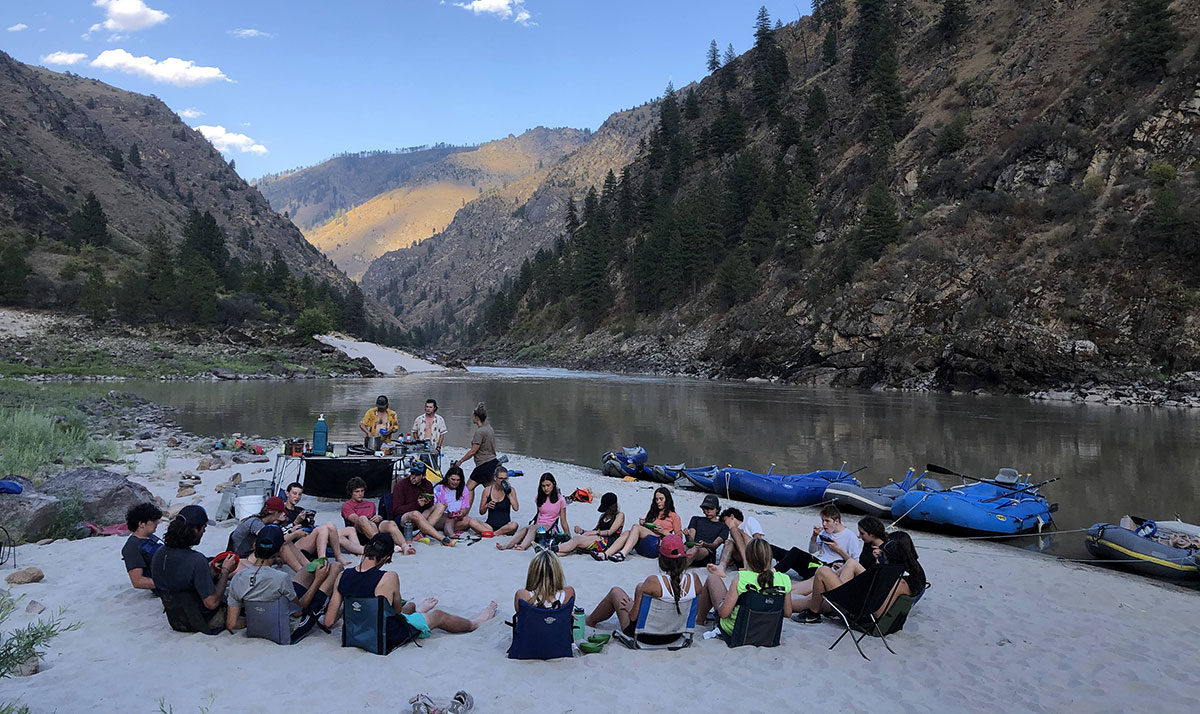
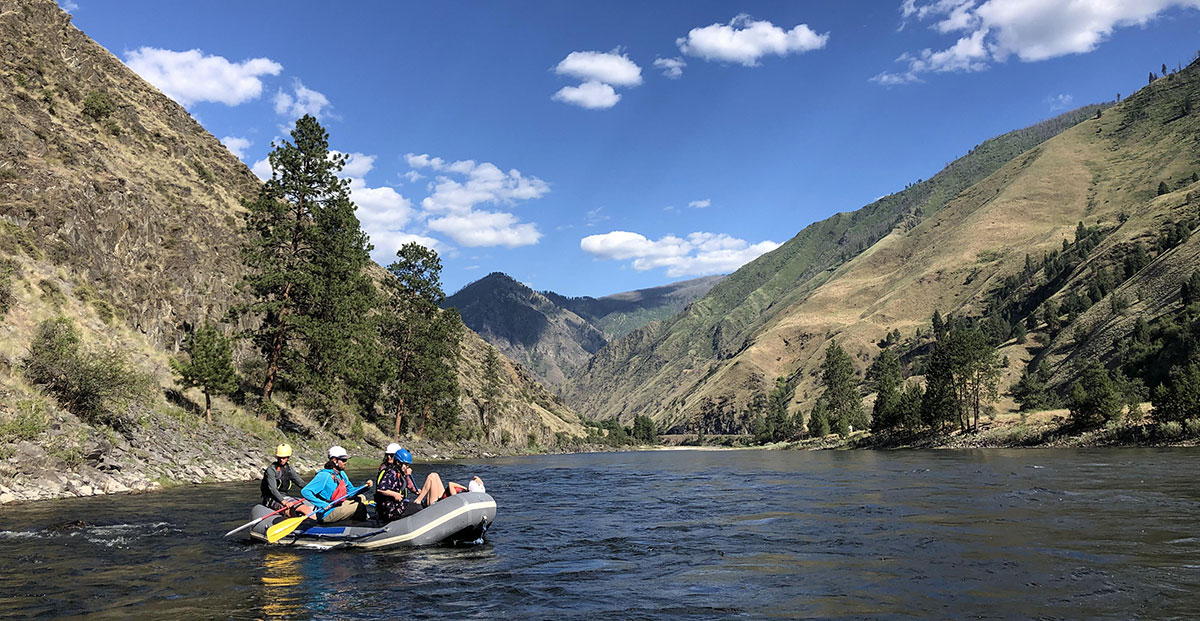
The Yellowstone Teton Adventure might start in the two national parks that give the trip its name, but the second half of the adventure involves a multi-day raft trip on the Salmon River. This section of river is so popular with rafters and kayakers that there is a lottery system that awards permits to a limited number of floaters each year.

Here are some of the things that make this trip such an awesome experience:

1. The Salmon River is 125 miles long. As one of the original eight rivers protected by the Wild and Scenic Rivers Act in 1968, 79 miles are designated “wild” river, and 46 as “recreational.” The “wild” miles are not accessible by road and draw from an unpolluted and undeveloped watershed.

2. The wilderness area that the Salmon flows through is called the Frank Church River of No Return Wilderness… what?! Frank Church was a senator from Idaho and an author of the Wild and Scenic Rivers Act. The area is named for him and the river itself, as the Salmon was once known as the River of No Return.

3. What an imposing title! This river has traditionally been a one-way passage, due to the frequency and difficulty of the rapids. There are now boats that can successfully navigate upstream, but for most of its history, once someone floated down the Salmon, they didn’t return (at least by water).

4. Traditional landowners in the Salmon River watershed include Nez Perce, Shoshone, and Flathead tribes. These peoples were semi-nomadic hunter-gatherers who regarded the Salmon as a sacred place and valuable food source. One important thing to know about the Nez Perce tribe is that they call themselves Nimipuu—the name most people now know them by was given by French Canadian traders and means “pierced nose,” although the tribe never practiced body piercing.

5. Do you remember learning about Sacagawea in history class? She was a very young Shoshone woman who aided Lewis and Clark’s expedition to the Pacific Ocean, and she grew up near the Salmon River. Her story has been rewritten to cast her as a Native American “princess,” but her skills as a naturalist, translator, and navigator are what actually make her legendary.

6. Did you know that the Grand Canyon in Arizona is not the deepest canyon in the U.S.? The deepest is actually Hells Canyon on the Snake River, which is geographically close to the second-deepest canyon in the country—the Salmon River Canyon. For about 180 miles, the canyon created by the Salmon is more than a mile deep.

7. Canyons are formed by a river eroding through many layers of rock. In the case of the Salmon, much of the rock is gneiss, schist, and quartzite, and the oldest of these rocks were formed about 1.5 billion years ago. The canyon was formed 35 to 45 million years ago as the Salmon started to wind its way across and through the area’s interesting geology.

8. Where does the water in the Salmon River go? It flows into the Snake River at the border of Idaho and Oregon, then into the Columbia River in Kennewick, WA. The water travels along the border of Oregon and Washington, passing through Portland, before becoming the Columbia River Estuary and draining into the Pacific Ocean. It’s more than 900 miles from source to sea.

9. You probably won’t be surprised to learn that Chinook salmon live in this river. Salmon return to the place where they hatched to spawn, so if a fish is born in the Rocky Mountains of Idaho in the Salmon River, it swims all the way to the sea and then back to reproduce. Salmon are endangered here, and in most rivers where they live, hydroelectric dams block their ability to swim upstream.

10. Finally, one neat addition to a Salmon River rafting trip is the ability to soak in natural hot springs! Students might not have time to stop and hang out on every trip, but the Salmon runs along a geothermal hot zone, resulting in multiple pools and even waterfalls of hot water alongside the river’s cool flow.

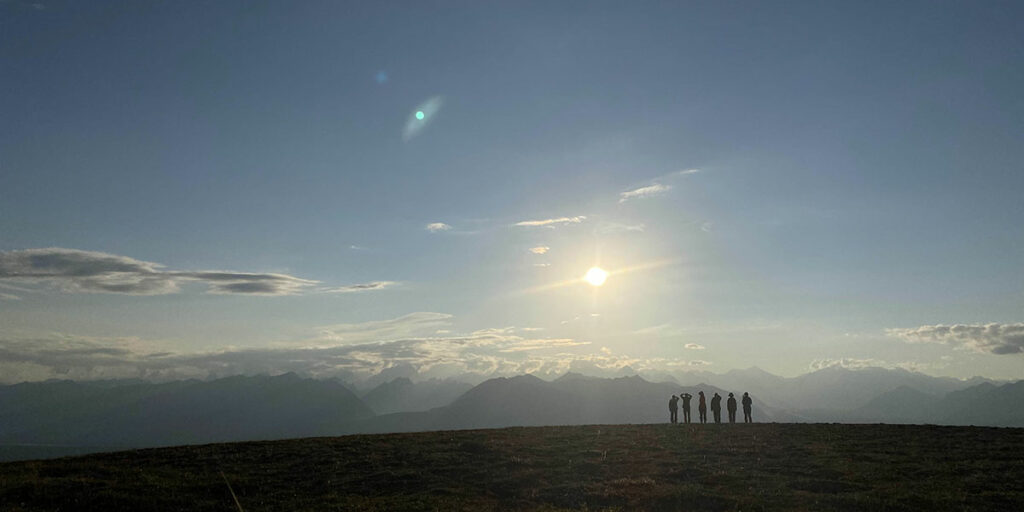
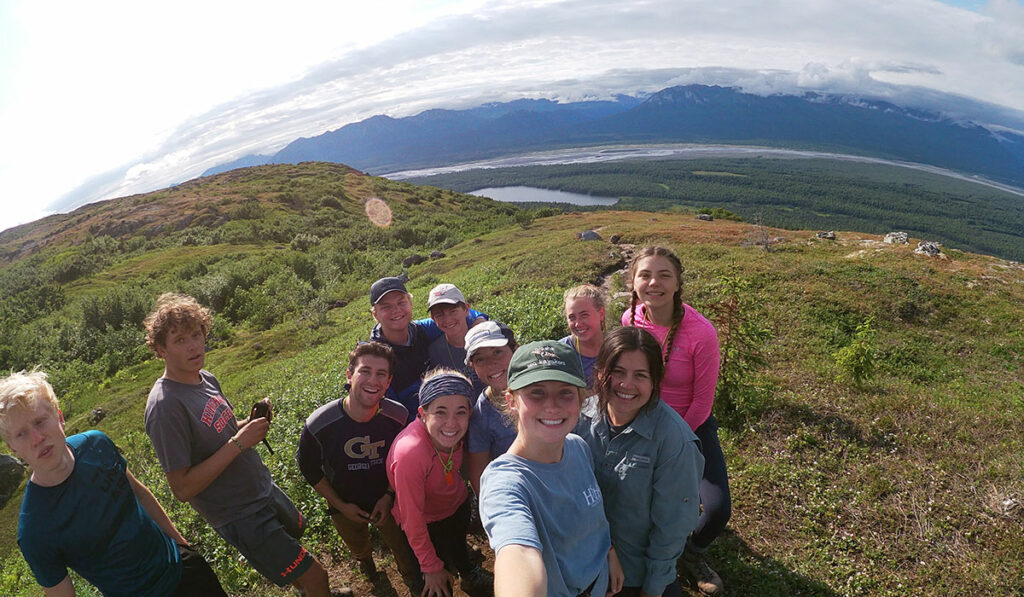
A select number of lucky Adventure Treks students have caught a glimpse of Denali, North America’s tallest mountain, on clear days during our Alaska Expedition. The mountain is located in the third largest national park in the United States, and the backpacking route used by AT students is within Denali State Park, just southeast of the national park. See more fun facts about Denali below!

1. Denali National Park and the surrounding areas are traditional lands of five indigenous peoples. All five are part of the Athabaskan language group and are traditionally nomadic subsistence communities. Summers spent gathering resources in hunting and fishing camps provided for winters full of storytelling, festivals, and other entertainment. Today, indigenous peoples make up about 15 percent of the residents of Alaska.

2. The south peak of Denali is 20,310 feet tall. That makes it the tallest mountain in North America, but on a global scale, Denali doesn’t even make the top 100 tallest peaks. Interestingly, Denali is a pretty topographically isolated peak, meaning it’s very far from anything else that can match its height.

3. Denali is derived from a Koyukon word for the mountain meaning “tall one” or “mountain-big.” It was not the official name of the peak until 2015; previously, it was called Mt. McKinley, after U.S. President William McKinley. Local and indigenous people continued to refer to it as they had for centuries, until enough controversy arose around the name that it was changed to reflect the mountain’s history.

4. There are 160 species of birds, 39 types of mammals, 14 kinds of fish, and 1 amphibian species recorded in Denali National Park. Five large mammals draw most of the wildlife-viewing attention: grizzly bears, wolves, Dall sheep, moose, and caribou. Students who attend Alaska Expedition know that the Denali area is a good place to practice low impact travel so as not to disturb any of these neat animals. They also know that we take bear and moose protocol very seriously! (Though we typically only see these hulking mammals from a safe distance.)

5. Wait—only one amphibian? It’s the wood frog, a teeny-tiny species with the ability to survive harsh winters in the tundra by freezing solid. The frogs’ actual cells do not freeze, but everything between them does. Their hearts and lungs stop working, and the frogs “hibernate” until they are thawed in the spring. Brr.

6. There may be no reptiles found in the national park these days, but that wasn’t always the case. The first dinosaur prints found within the park were discovered in 2005, and since then lots of body parts, footprints, and bones have been unearthed. About four different types of dinos lived in the area, from winged pterosaurs to three-toed theropods.

7. Glaciers cover about 15 percent of the national park’s land, and in about 50 percent of the area, the soil is permanently frozen. This creates a tricky environment for large plants and trees, so much of the land, especially at higher altitudes, is tundra or unvegetated alpine environment. There are also plentiful lowlands where denser forests grow over centuries as glaciers retreat.

8. The aurora borealis, also known as the Northern Lights, is visible from the Denali area. The park sits on the same latitude as southern Norway–not far removed from the Arctic Circle. Due to the lack of development or light pollution in the area, the Northern Lights can be seen from almost anywhere around Denali, but many factors have to align to view a strong display. In the winter, the area receives as little as 4.5 hours of sunlight a day, making for very dark nights and better aurora viewing. In summer, however, our Alaska students see about 22 hours of daylight. Yes, it takes a few days to adapt to sleeping when the sun merely sits lot on the horizon!

9. There is only one road in the entire national park, Denali Park Road, which is 92 miles long. It is opened on a lottery system that allows a very limited number of cars through each day in order to minimize human impact on the wilderness areas of the park’s interior. This helps Denali retain its beautiful wilderness setting.

10. In the winter months, deep snow covers the ground and sunlight is extremely limited. In these times, the park is patrolled by a staff of rangers with sled dogs! The dogs’ kennels are one of the most popular places to visit within the park, and there is even a live “puppy cam” available for watching new pups grow and train to become winter-season park rangers.

Let’s set the scene: It’s the opening day at Adventure Treks! Students have arrived, the group is on their way from the airport to their first campsite, and the van is filled with nervous laughter and typical “get to know you” questions: “where are you from?” “how was your flight?” “have you ever done this before?” Instructors are facilitating icebreakers and cracking corny jokes to keep the conversations flowing. An occasional silence falls to allow a Billie Eilish song to play. Students are away from home, away from the identity they’ve formed at school. Everyone gives each other a little extra distance, feeling slightly reserved, and talking with those nearest them.

On the first day of each trip, a regional director speaks to the group about how Adventure Treks operates, including our goals and expectations for our students. We set the stage for how to create the absolute best AT community ever, one that allows them to create lifelong friends. Sometimes this “speech” gets some skeptical looks, especially from new students, but the instructors and directors share a knowing smile—these teenagers are about to embark on an adventure to build the most authentic friendships and inclusive community they’ve ever experienced. We can’t wait to see this group again on closing day.

Onto act 2: It’s the closing night of the same trip. A regional director arrives to the campsite with pizza and ice cream, eager to see the trip’s community transformation and hear the stories of overcoming adversity, hilarious inside jokes that we won’t understand, alter-egos and dance parties, and every other moment students won’t forget for a long time. The energy is so different from opening day—quite frankly, you can feel a buzz emanating from the group—as everyone is gathered in a circle, huddled close as they reminisce and make sure everyone is included. They’ve each written down their phone numbers and social media handles in the group journal so they can stay in touch after the trip. They’re discussing which AT trip they’ll return to the following summer, and they’re debating which holiday they should plan a reunion for. You can feel the joy radiating from every single person as the final evening meeting reflects on powerful moments throughout the trip.


The power of an Adventure Treks trip has once again created an experience that resulted in authentic, kind, and meaningful friendships. As a regional director in summer 2021, I encountered this over and over again as I visited trips across the North American west. Witnessing friendships forged at AT is a powerful thing, whether it’s multi-year students reuniting on their capstone Alaska trip, or 13-year-olds not wanting their two-week Colorado trip to end.

At Adventure Treks, away from the pressure of academics and athletics, students don’t have to worry about “fitting in” or conforming to a particular identity. They can just be themselves—and be celebrated for that. This is what helps cements the powerful bond that students create through each shared challenge of backpacking trips and mountain summits, of Iron Chef cooking competitions and silly dance-offs. We laud each other’s achievements and successes, we praise others for the kind things they did for each other, and we have vulnerable and honest conversations regarding conflict.

Students often say that the friends they make at AT are the strongest ones in their lives; this is evidenced by stories of reunions, backpacking trips planned by the students themselves, AT-themed birthday parties, evening meetings held over FaceTime or Zoom, and the ever-active group texts.

Many former students have even become instructors; in summer 2021, we had 12 AT alumni on staff. Not only do they remember their student days fondly, but as instructors, they’ve also created incredibly meaningful relationships with their staff teams and students who now look up to them.

To further illustrate the lasting power of AT friendships, we’ve asked Laura Gaines, a former-student-turned-instructor, about the friendships she’s made on her three student trips and four seasons on staff.

Friendships without preconceived notions or distractions

On the first day of each AT trip, whether it’s a student’s first or fifth adventure, everyone is essentially in the same boat.

“With no preexisting social strata established, and without the pressures of school, sports, and social media, friendships at AT form among people who have no reason to be anything other than their most authentic selves. The friends I made at AT are people who truly understand and know the best and most genuine version of me, and they remind me of it when I might feel lost,” Laura says.

Overcome adversity and building trust creates a lasting bond

As full of wonderful and fun moments Adventure Treks, we also face challenges that must be worked through. Laura says that her friendships have lasted because they can endure life beyond an AT trip.

“A friendship formed through adversity [backpacking in the rain, taking a wrong turn, a dried-up water source] is a friendship you can lean on in adversity. I have spent a night stranded on a ridge with my AT friends; I have endured rain, lightning, wind, and sickness alongside them. The sad reality is that most hardships in the ‘real world’ are not as full of adventure and excitement as the ones you face at Adventure Treks. Since graduating as a student, I have continued to lean on my AT friends when I was sad or going through a tough time—because I learned to trust them during hard times, like when we were stuck in a rainstorm in Alaska.”

After finishing their capstone Leadership Summit course, Laura and her AT peers reunited for a personal backpacking trip.

“We modeled our trip after an Adventure Treks trip; we even made ramen extreme during our backpack in Yosemite National Park. It had been a year since I’d seen most of those people, yet as we soaked our feet in the river after a long hike, I felt that I was back in a community where I was truly seen as a person.”

Friendship created for the right reasons

Unlike in school, an AT trip is unique in that you don’t need to “find” your friends. The nature of this program allows communities to flourish naturally.

“I didn’t ‘choose’ my Adventure Treks friends—they just happened to be on the same trip as me. People I probably wouldn’t have ever talked to in school are the same people with whom I have confided my truths and hardships and would trust with my life. Adventure Treks provides this cool opportunity to become close with people from across the country, across the world, or even next door.

“My 2016 Leadership Summit trip was among the best communities I have ever been a part of. We were all friends, and everybody was in on every joke, antic, and conversation. I very distinctly remember an evening meeting we held on a dock in Sequim, WA. The water had bioluminescent algae in it, so when you dipped a finger in, tiny flecks of light would sparkle. It struck me how incredibly lucky we were to have found each other, even though we came from all over. Of all the places to be, we were sitting in a circle on a dock, experiencing a rare and uniquely beautiful natural phenomenon. I have chased this feeling for the entirety of my adult life.”

Friendships with long-lasting support

What qualities in a friend do you look for? Laura expressed the importance of friends who are with you no matter what, not just when it is convenient for them. She says “‘fair weather friendships’ simply do not exist at AT, considering weather is often fickle rather than fair. My AT friends have seen me at the top of the world (literally, if you count a mountaintop) and in the darkest depths… yet they never fail to see me.  [From AT, I have] people in my life who know and understand the person I am underneath.”

Unique and powerful shared experiences

Friendships at Adventure Treks grow quickly and strongly because you get to create your a unique experience “separate from the world where we live our daily lives. Adventure Treks trips are truly unique and valuable experiences. They changed me forever, and I cherish the people who were there alongside me when I discovered a world I truly loved. My friends at AT understand what it’s like to grow so much in such a short period of time, and to witness the stunning wilderness areas we visited. To this day, I have never been able to fully describe what the wilderness of California or Alaska or Washington is like… but my AT friends get it.”

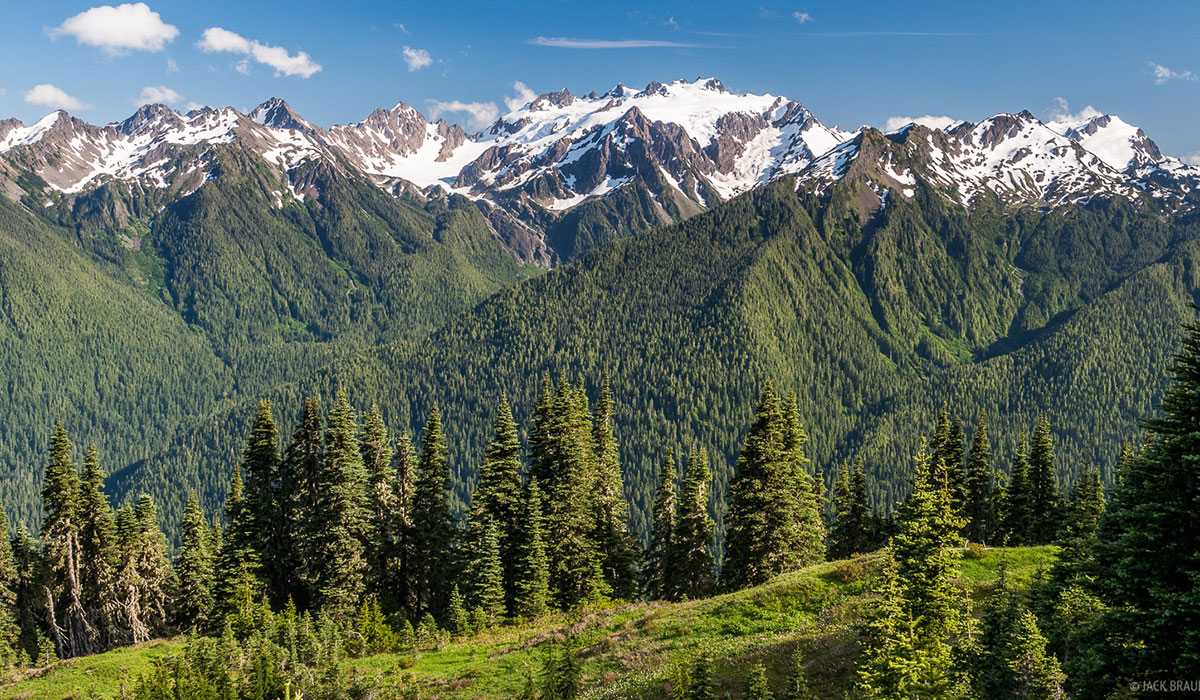
Adventure Treks has been visiting the Pacific Northwest for 28 years; in fact, our very first trip took place in Washington and Oregon! A favorite spot of students and instructors alike, Olympic National Park offers every kind of terrain, from rugged seashores to high alpine peaks, with biodiverse flora and fauna in between. Here are some fun facts about the ninth-most visited national park.
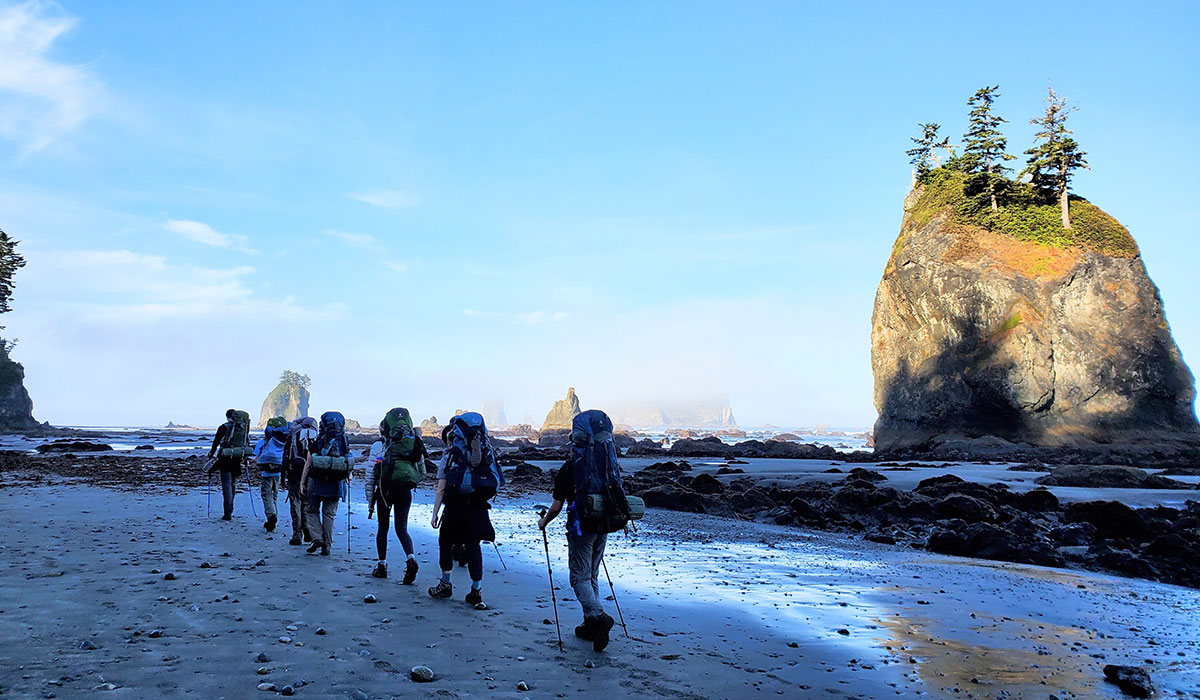
1. Olympic National Park boasts 73 miles of wilderness coastline. On each Pacific Northwest trip, students hike about 17-20 of those pristine miles. Here’s where it gets interesting: Because of the tide schedule, we don’t always hike from morning to afternoon. In order to make tide crossings (i.e., hiking at low tide so that we don’t get stranded at high tide), we’ll often hike late at night under the stars. This makes for especially memorable walks!

2. The Makah people have inhabited the northern part of the Olympic Peninsula since about 3,000 years ago. The Makah crafted a variety of canoes for different types of fishing, whaling, and sealing; their relationship with the land and sea was respectful and in balance with the seasons.

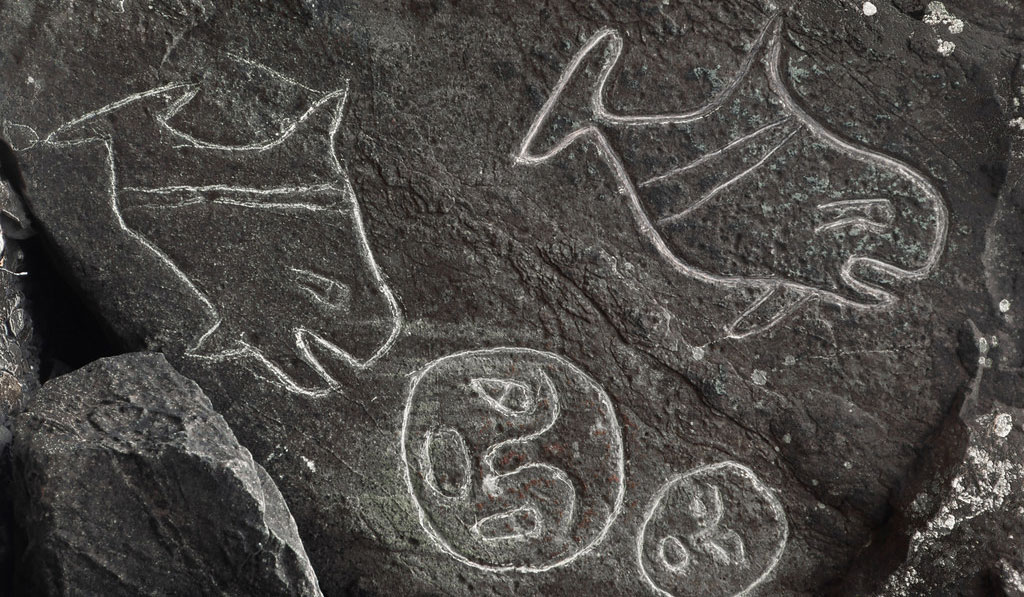
3. Hike on the northern shore of the Oly P and you’ll come across the Wedding Rocks, a collection of carvings decorating a rock outcropping. The carvings were made 200–500 years ago by the Makah people and depict human faces and sea animals, including killer whales. These images give insight into the Makah hunting and fishing traditions. Students on most Pacific Northwest trips are likely to walk past this landmark and get to explore it in person.

4. The dramatic pillars rising along the coast of the Olympic Peninsula (aka Oly P) are called sea stacks. These are created over many years as water crashes against the cliffs, slowly eroding tunnels and eventually separating the clump of rock from the shoreline altogether. Sea stacks are found on all seven continents.

5. The Hoh Rainforest gets 12–14 feet (that’s right—feet!) of rain per year. For comparison, New York City gets about four feet per year, and Denver, CO, gets a little more than a foot. Some of the trees in the forest are over 1,000 years old. Thousands of epiphytes—plants that grow on other plants without harming them—cover the trees to make this forest visually unique. Also, did you know that mushrooms are not plants?

6. Until 2014, the Elwha river was disrupted by two large dams. The river traditionally flowed from the Olympic Mountains to the Strait of Juan de Fuca and housed a sizable salmon population that fed the people of the area. Restoring the river’s natural course has been the largest dam removal project in the U.S. to date.

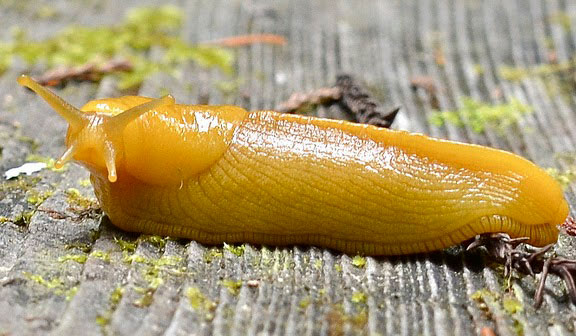
7. An inhabitant of the area’s rainforests, banana slugs, can grow up to 10 inches long! The rumor that licking a banana slug makes your tongue numb is true… yuck! The slime that coats a banana slug is both slippery and sticky, depending on what the slug needs. They can even create a slime strand to rappel from heights (like a spider on a silk string).

8. Six different types of environment exist within Olympic National Park: coastal forest, lowland forest, temperate rainforest, montane forest, subalpine, and alpine. This vast array creates habitat for diverse species of plants and animals—16 endemic animals, 8 endemic plants, 20 reptile and amphibian species, 37 native fish species, 300 bird species, and 56 mammal species, to be exact!

9. Olympic National Park houses the area’s largest herd of Roosevelt Elk. These are the largest elk variety (cows can weigh 600–700 pounds, with bulls weighing up to 1,000 pounds), and were named for President Theodore Roosevelt, who put in place many of the rules that protect Olympic National Park and the elk habitat.

10. Olympic National Park has a large range of elevation. Sea-level coastal environments sweep all the way up into alpine range and glaciers on Mt. Olympus, which stands at 7,980 feet. Our Leadership Summit students get to backpack to and summit Mt. Olympus, learning skills like traveling in rope teams across snowfields and glaciers.

Learn more fun facts about Olympic National Park at nps.gov